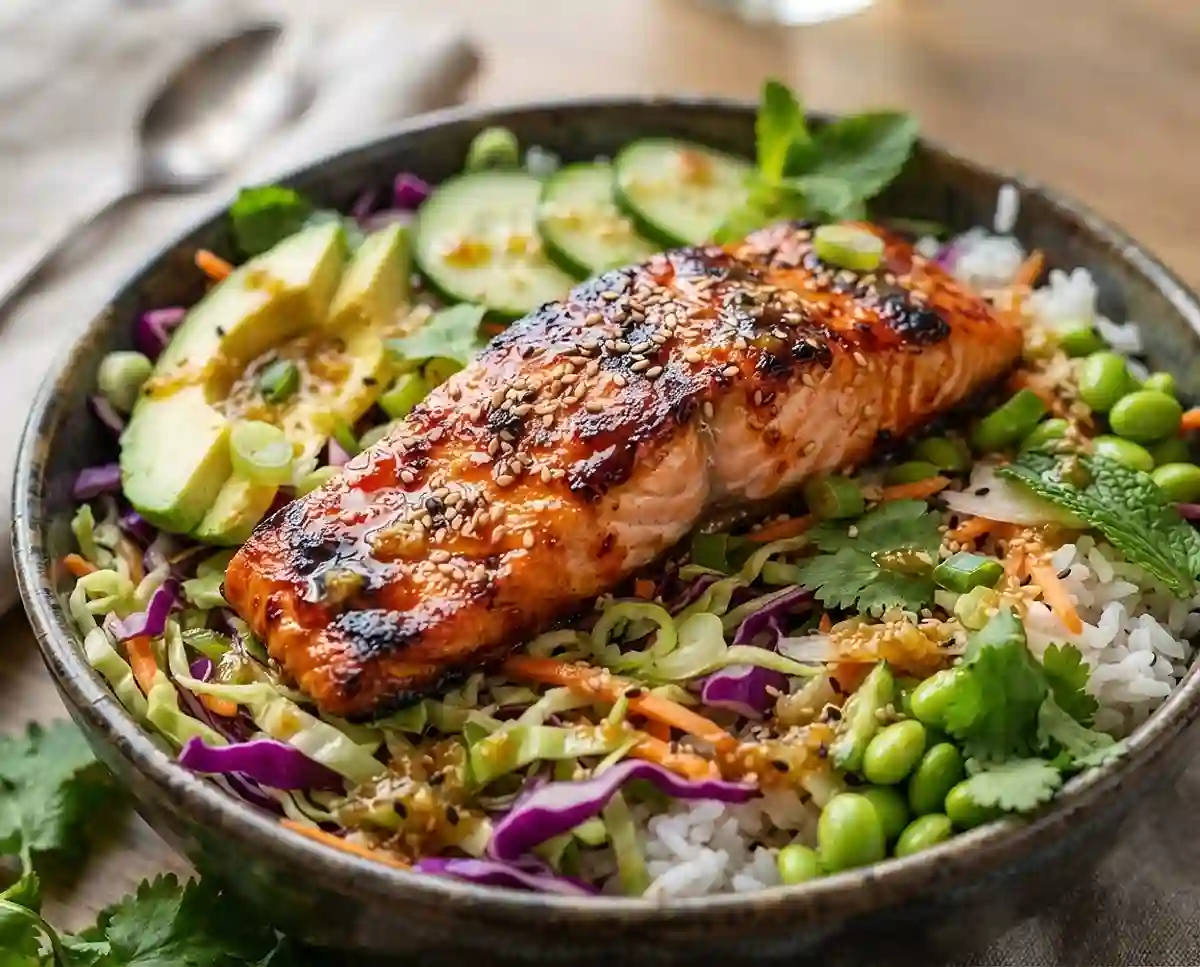
Gochujang Salmon Slaw Bowl
This Gochujang Salmon Slaw Bowl came together on a Tuesday night when I had a salmon fillet, half a cabbage, and zero patience for anything complicated. Twenty minutes later, my family was fighting over the last piece of that glossy, caramelized fish.
The magic is in the layers — sticky-sweet gochujang salmon over a crunchy rainbow slaw, creamy avocado, fluffy rice, and a sesame-lime dressing that ties it all together. Can you really get all of that on the table on a weeknight? Yes, and faster than delivery.
Seriously, once you nail the gochujang glaze, you’ll find yourself putting it on everything. It’s the kind of recipe that makes September dinner salads feel genuinely exciting, not like a consolation prize for skipping the drive-through.
Table of Contents
Ingredients
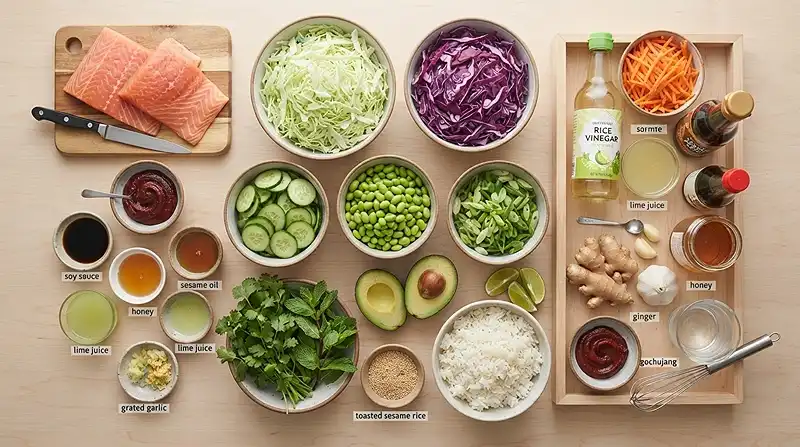
| Category | Ingredient | Amount | Notes |
|---|---|---|---|
| Gochujang Salmon | Salmon fillets, skin removed | 1½ lbs (680 g) | Steelhead trout is a great swap |
| Gochujang Salmon | Gochujang | 2 tbsp | Find it at most grocery stores or Asian markets |
| Gochujang Salmon | Low-sodium soy sauce | 1 tbsp | Tamari for gluten-free |
| Gochujang Salmon | Honey | 1 tbsp | Maple syrup works too |
| Gochujang Salmon | Toasted sesame oil | 1 tbsp | Don’t substitute — the flavor is essential |
| Gochujang Salmon | Fresh lime juice | 1 tbsp | |
| Gochujang Salmon | Garlic clove, finely grated | 1 | ¼ tsp garlic powder if needed |
| Gochujang Salmon | Fresh ginger, finely grated | 1 tsp | ½ tsp ground ginger works in a pinch |
| Gochujang Salmon | Black pepper | ½ tsp | |
| Slaw | Green cabbage, finely shredded | 4 cups | Napa cabbage is more tender |
| Slaw | Purple cabbage, finely shredded | 2 cups | Adds color and crunch |
| Slaw | Shredded carrots | 1 cup | Pre-shredded bag saves time |
| Slaw | English cucumber, thinly sliced | ½ | |
| Slaw | Shelled edamame, cooked and cooled | 1 cup | Frozen shelled edamame, thawed, works great |
| Slaw | Green onions, thinly sliced | 3 | |
| Slaw | Fresh cilantro, chopped | ¼ cup | Omit or swap for flat-leaf parsley if needed |
| Slaw | Fresh mint, chopped | 2 tbsp | Optional but adds brightness |
| Slaw | Avocado, sliced | 1 | Add right before serving |
| Slaw | Toasted sesame seeds | 1 tbsp | |
| Sesame-Lime Dressing | Rice vinegar | 2 tbsp | Unseasoned preferred |
| Sesame-Lime Dressing | Fresh lime juice | 1 tbsp | |
| Sesame-Lime Dressing | Toasted sesame oil | 1 tbsp | |
| Sesame-Lime Dressing | Low-sodium soy sauce | 1 tbsp | Tamari for gluten-free |
| Sesame-Lime Dressing | Honey | 1 tbsp | |
| Sesame-Lime Dressing | Fresh ginger, grated | 1 tsp | |
| Sesame-Lime Dressing | Garlic clove, finely grated | 1 small | |
| Sesame-Lime Dressing | Gochujang | 1 tsp | Adds a gentle heat to the dressing |
| Sesame-Lime Dressing | Water, as needed | 1–2 tbsp | Thin to a pourable consistency |
| For Serving | Cooked jasmine or brown rice | 3 cups | Cauliflower rice for lower carb |
| For Serving | Lime wedges | As needed | |
| For Serving | Extra green onions and sesame seeds | As needed | For garnish |
Instructions
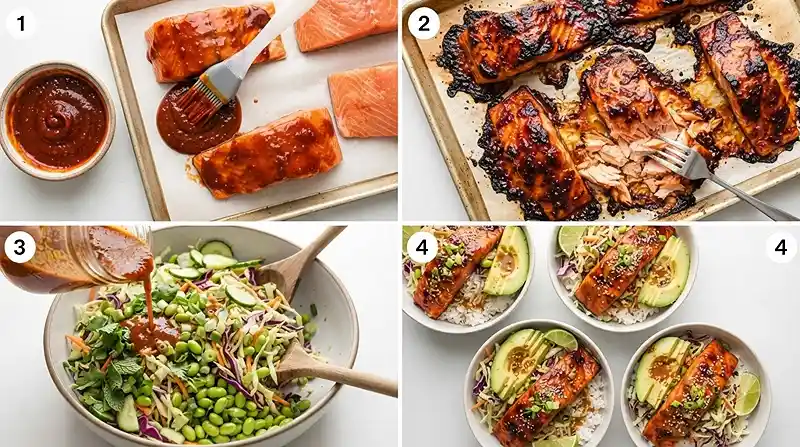
Step 1: Prepare the Salmon
Preheat your oven to 425°F (220°C) and line a baking sheet with parchment paper. Pat the salmon fillets completely dry with paper towels — this is the step most people skip, but dry salmon takes a glaze so much better than damp fish. Place the fillets on the prepared sheet.
Step 2: Make the Gochujang Glaze
Whisk together the gochujang, soy sauce, honey, sesame oil, lime juice, garlic, ginger, and black pepper in a small bowl. The glaze should be deep brick-red, glossy, and smell like something you’d want to eat by the spoonful. Brush it generously over every surface of the salmon.
Step 3: Roast the Salmon
Roast for 10–14 minutes, depending on the thickness of your fillets, until the salmon flakes easily when pressed and reaches 145°F (63°C) at the thickest part. For extra caramelization — the kind that looks like lacquered mahogany — broil for the final 1–2 minutes, watching closely so it doesn’t burn.
In my testing, thicker center-cut fillets need the full 14 minutes, while thinner tail pieces are perfectly done at 10. Check early and trust the flake test over the clock.
Step 4: Make the Sesame-Lime Dressing
Whisk together the rice vinegar, lime juice, sesame oil, soy sauce, honey, ginger, garlic, and gochujang until smooth. Add water one tablespoon at a time until it reaches a thin, pourable consistency — like a light vinaigrette, not a thick sauce. Taste and adjust the lime or honey to your preference.
Step 5: Prepare the Slaw
Combine the green cabbage, purple cabbage, carrots, cucumber, edamame, green onions, cilantro, and mint in a large bowl. The mix should look like a celebration — deep purple, bright orange, and vivid green all at once. Drizzle about two-thirds of the dressing over the slaw and toss well to coat.
Step 6: Build the Bowls
Divide the cooked rice evenly among four bowls. Pile on a generous portion of the dressed slaw, then top each bowl with a piece of gochujang salmon and several slices of avocado. The contrast of warm, caramelized salmon against cool, crunchy slaw is what makes this bowl so satisfying.
Step 7: Finish and Serve
Drizzle the remaining sesame-lime dressing over each bowl. Scatter sesame seeds and extra green onions on top, then tuck in a lime wedge on the side. Serve immediately — the slaw holds up well, but the avocado is at its best right away.
Substitutions and Variations
Make It Gluten-Free
Swap both the soy sauce in the glaze and the dressing for tamari. Every other ingredient in this high protein gochujang salmon bowl is naturally gluten-free, so that single swap is all you need. Double-check your gochujang label, as brands vary.
Lower the Heat
Gochujang varies in spice level by brand. If you’re cooking for kids or spice-sensitive guests, start with 1 tablespoon in the glaze and ½ teaspoon in the dressing. After making this dozens of times, I’ve found that Bibigo brand gochujang runs milder than some others — a good starting point.
Swap the Protein
The gochujang glaze works beautifully on shrimp (roast 6–8 minutes), tofu (press and roast at 400°F for 25 minutes), or even chicken thighs. For a fully plant-based bowl, crispy baked tofu with the same glaze is genuinely excellent.
Change the Base
Brown rice adds a nuttier flavor and more fiber, making this an even heartier healthy gochujang salmon slaw for September dinner salads. Cauliflower rice keeps it low-carb. Or skip the grain entirely and double the slaw for a lighter lunch bowl version.
Expert Tips and Troubleshooting
Don’t Skip Drying the Salmon
Patting the salmon completely dry before glazing is the single most important step. Moisture on the surface creates steam during roasting, and steam is the enemy of caramelization. Dry fish plus a hot oven equals that gorgeous, lacquered crust. Wet fish equals disappointingly pale fillets.
Dress the Slaw at the Right Time
Cabbage is more forgiving than lettuce — it can sit dressed for up to an hour without going limp, which makes this ideal for make ahead salmon slaw for lunch box meals. For longer storage, keep the dressing separate and toss right before eating. The FDA’s seafood safety guidance recommends consuming cooked salmon within 3–4 days when refrigerated, which aligns perfectly with weekly meal prep.
The Broil Finish Makes a Difference
Those final 1–2 minutes under the broiler take the glaze from “cooked” to “caramelized.” Watch it closely — gochujang has sugar that can go from perfect to scorched in under a minute. Pull it the moment you see the edges darken and blister slightly.
Storage and Meal Prep
| Component | Storage Method | Duration |
|---|---|---|
| Cooked Gochujang Salmon | Airtight container in the fridge | Up to 3 days |
| Slaw (undressed) | Airtight container in the fridge | Up to 4 days |
| Sesame-Lime Dressing | Sealed jar in the fridge | Up to 1 week |
| Cooked Rice | Airtight container in the fridge | Up to 5 days |
| Sliced Avocado | Squeeze lime juice over, wrap tightly | Same day only |
| Assembled Bowl | Not recommended — assemble fresh | Serve immediately |
This bowl was built for meal prep. Make the salmon, slaw, dressing, and rice on Sunday, then pack them separately into meal prep containers for the week. Add fresh avocado and dressing right before eating — lunch boxes sorted for four days straight.
Serving Suggestions
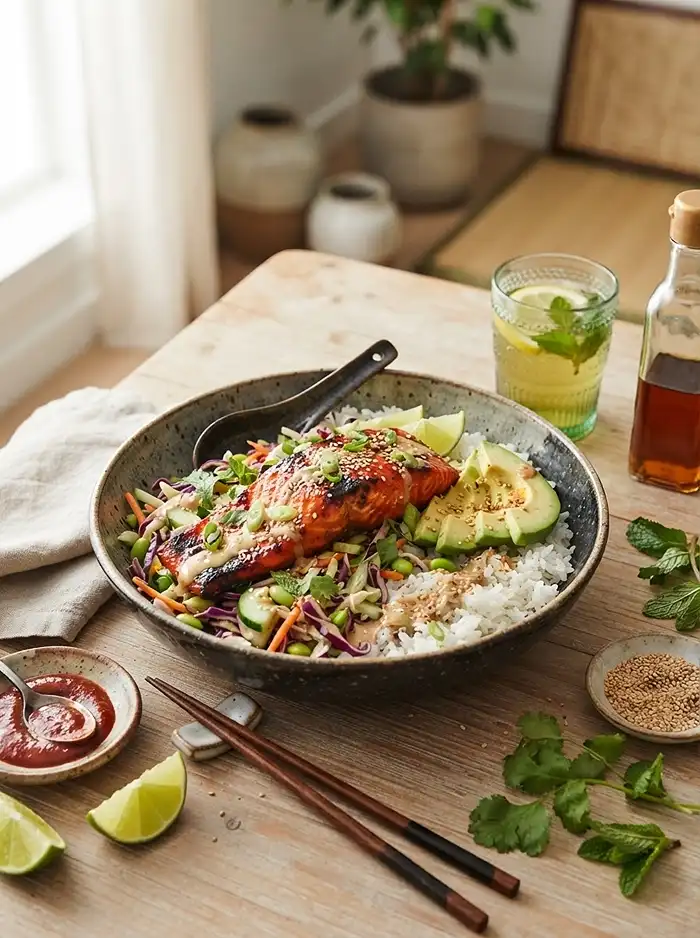
This Gochujang Salmon Slaw Bowl is satisfying enough to stand alone, but it pairs well with a light miso soup or a simple cucumber side salad. For a bigger spread — like a Lunar New Year dinner or a casual summer gathering — serve it alongside our roasted honeynut squash arugula salad for a colorful, crowd-pleasing table.
Leftovers shine as next-day rice bowls with a fried egg on top. The gochujang salmon flakes perfectly over whatever vegetables you have on hand — it’s one of those recipes that keeps giving all week.
Frequently Asked Questions
Can I make this bowl ahead of time?
Yes — prep all the components up to 4 days ahead and store them separately. The slaw, rice, salmon, and dressing all keep well on their own. Assemble each bowl fresh and add avocado just before eating for the best texture.
What is gochujang and where do I find it?
Gochujang is a Korean fermented red chili paste with a deep, savory-sweet heat. You’ll find it in the international aisle of most major grocery stores, at Asian markets, or online. Bibigo and CJ Haechandle are two widely available brands.
How do I know when the salmon is cooked through?
The salmon is done when it flakes easily with a fork and reaches an internal temperature of 145°F (63°C). If you don’t have a thermometer, press the thickest part gently — it should feel firm but still have a slight give, not rubbery.
Can I use a different protein instead of salmon?
Absolutely. The gochujang glaze works on shrimp (6–8 minutes at 425°F), chicken thighs (20–25 minutes), or pressed tofu (25 minutes at 400°F). Adjust cook times accordingly and check for doneness using the same temperature guidelines.
Why does my slaw get watery after sitting?
Cabbage releases moisture over time, especially once salted or dressed. For meal prep, keep the slaw undressed and add the sesame-lime dressing right before eating. If you do dress it ahead, a quick toss just before serving refreshes the texture.
Conclusion
This Gochujang Salmon Slaw Bowl is one of those weeknight recipes that sounds impressive but takes less time than waiting for delivery. Glossy salmon, crunchy slaw, creamy avocado — it genuinely has it all.
Well, if you make it, come back and let me know in the comments how it turned out. And if you’re building a collection of easy, flavor-packed bowls, this one is absolutely worth saving to Pinterest for those “what’s for dinner?” moments.
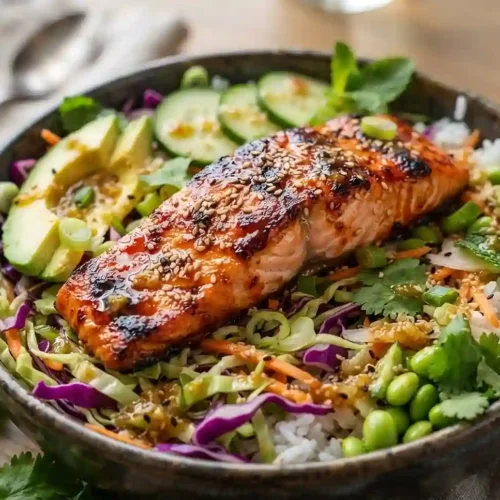
Gochujang Salmon Slaw Bowl
Equipment
- oven
- Baking sheet
- Parchment paper
- Paper towels
- Small bowl
- Whisk
- Large mixing bowl
Ingredients
Gochujang Salmon
- 1½ lbs (680 g) Salmon fillets, skin removed Steelhead trout is a great swap
- 2 tbsp Gochujang Find it at most grocery stores or Asian markets
- 1 tbsp Low-sodium soy sauce Tamari for gluten-free
- 1 tbsp Honey Maple syrup works too
- 1 tbsp Toasted sesame oil Don’t substitute — the flavor is essential
- 1 tbsp Fresh lime juice
- 1 Garlic clove, finely grated ¼ tsp garlic powder if needed
- 1 tsp Fresh ginger, finely grated ½ tsp ground ginger works in a pinch
- ½ tsp Black pepper
Slaw
- 4 cups Green cabbage, finely shredded Napa cabbage is more tender
- 2 cups Purple cabbage, finely shredded Adds color and crunch
- 1 cup Shredded carrots Pre-shredded bag saves time
- ½ English cucumber, thinly sliced
- 1 cup Shelled edamame, cooked and cooled Frozen shelled edamame, thawed, works great
- 3 Green onions, thinly sliced
- ¼ cup Fresh cilantro, chopped Omit or swap for flat-leaf parsley if needed
- 2 tbsp Fresh mint, chopped Optional but adds brightness
- 1 Avocado, sliced Add right before serving
- 1 tbsp Toasted sesame seeds
Sesame-Lime Dressing
- 2 tbsp Rice vinegar Unseasoned preferred
- 1 tbsp Fresh lime juice
- 1 tbsp Toasted sesame oil
- 1 tbsp Low-sodium soy sauce Tamari for gluten-free
- 1 tbsp Honey
- 1 tsp Fresh ginger, grated
- 1 small Garlic clove, finely grated
- 1 tsp Gochujang Adds a gentle heat to the dressing
- 1–2 tbsp Water Thin to a pourable consistency
For Serving
- 3 cups Cooked jasmine or brown rice Cauliflower rice for lower carb
- As needed Lime wedges
- As needed Extra green onions and sesame seeds For garnish
Instructions
- Preheat the oven to 425°F (220°C) and line a baking sheet with parchment paper. Pat the salmon fillets completely dry with paper towels and place them on the prepared sheet.
- Whisk together the gochujang, soy sauce, honey, sesame oil, lime juice, garlic, ginger, and black pepper in a small bowl. Brush the glaze generously over every surface of the salmon.
- Roast the salmon for 10–14 minutes, depending on the thickness of the fillets, until it flakes easily and reaches 145°F (63°C) at the thickest part. For extra caramelization, broil for the final 1–2 minutes, watching closely to prevent burning.
- Whisk together the rice vinegar, lime juice, sesame oil, soy sauce, honey, ginger, garlic, and gochujang until smooth. Add water one tablespoon at a time until the dressing reaches a thin, pourable consistency. Taste and adjust the lime or honey as desired.
- Combine the green cabbage, purple cabbage, carrots, cucumber, edamame, green onions, cilantro, and mint in a large bowl. Drizzle about two-thirds of the dressing over the slaw and toss well to coat.
- Divide the cooked rice evenly among four bowls. Add a generous portion of dressed slaw, then top each bowl with a piece of gochujang salmon and several slices of avocado.
- Drizzle the remaining sesame-lime dressing over each bowl. Scatter sesame seeds and extra green onions on top, add a lime wedge, and serve immediately.