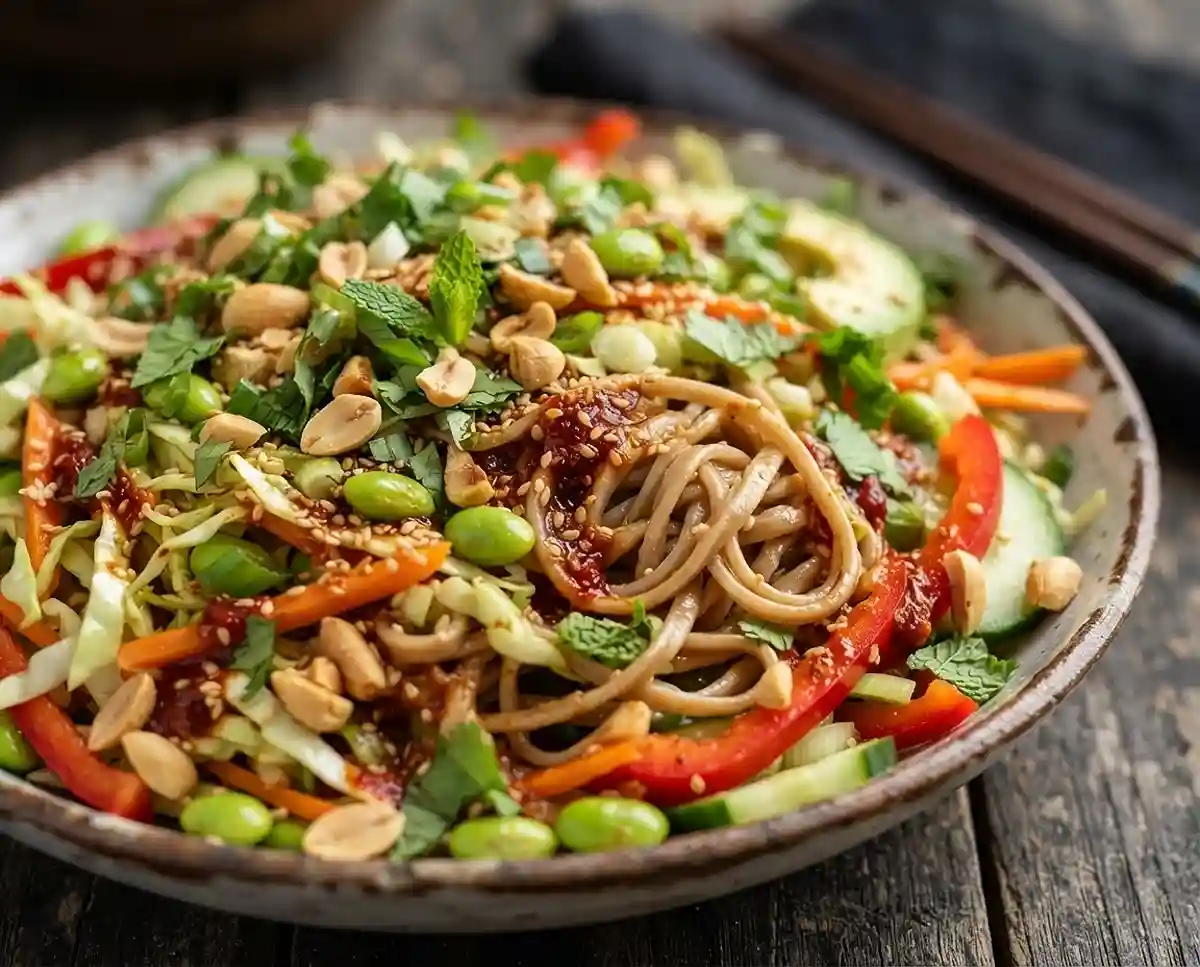
Gochujang Peanut Noodle Salad
This Gochujang Peanut Noodle Salad is everything you want in a no-fuss dish — spicy, nutty, tangy, and loaded with crisp vegetables that hold up beautifully whether you’re eating now or tomorrow.
I first made this on a whim the week before Labor Day, staring at a jar of gochujang and leftover soba noodles. Twenty minutes later, my husband was scraping the bowl. Sound like your kind of cooking challenge?
Seriously, this is the dish to bring to a September picnic table or a football tailgate spread. It travels well, feeds a crowd, and gets even better after a short rest in the fridge.
Table of Contents
Ingredients
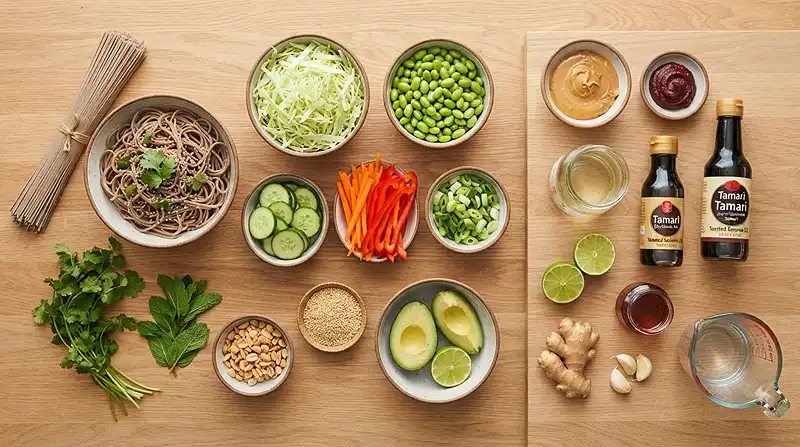
| Category | Ingredient | Amount | Notes |
|---|---|---|---|
| Salad Base | Noodles (soba, rice noodles, or spaghetti) | 8 oz (225 g) | Soba adds an earthy, nutty depth |
| Salad Base | Green cabbage, finely shredded | 2 cups | Pre-shredded bag works perfectly |
| Salad Base | Shelled edamame, cooked and cooled | 1 cup | Frozen edamame, thawed, is fine |
| Salad Base | Large carrot, julienned | 1 | Pre-shredded carrot saves time |
| Salad Base | English cucumber, thinly sliced | 1 | Persian cucumbers work too |
| Salad Base | Red bell pepper, thinly sliced | 1 | Orange or yellow also great |
| Salad Base | Green onions, thinly sliced | 3 | |
| Salad Base | Fresh cilantro, chopped | ¼ cup | Omit if you don’t enjoy cilantro |
| Salad Base | Fresh mint, chopped | 2 tbsp | Adds a bright, cooling note |
| Salad Base | Roasted peanuts, roughly chopped | ⅓ cup | Cashews are a great swap |
| Salad Base | Toasted sesame seeds | 1 tbsp | |
| Salad Base | Avocado, sliced | 1 | Optional but highly recommended |
| Gochujang Peanut Dressing | Creamy peanut butter | ¼ cup | Natural or regular both work |
| Gochujang Peanut Dressing | Gochujang | 2 tbsp | Start with 1 tbsp for mild heat |
| Gochujang Peanut Dressing | Rice vinegar | 2 tbsp | Apple cider vinegar in a pinch |
| Gochujang Peanut Dressing | Low-sodium soy sauce or tamari | 1 tbsp | Tamari keeps it gluten-free |
| Gochujang Peanut Dressing | Toasted sesame oil | 1 tbsp | Don’t skip — it’s essential |
| Gochujang Peanut Dressing | Fresh lime juice | 1 tbsp | |
| Gochujang Peanut Dressing | Honey or maple syrup | 1 tbsp | Maple syrup makes it fully vegan |
| Gochujang Peanut Dressing | Fresh ginger, finely grated | 1 tsp | Frozen ginger grates easily |
| Gochujang Peanut Dressing | Garlic clove, finely grated | 1 | |
| Gochujang Peanut Dressing | Warm water, as needed | 2–4 tbsp | Adjusts consistency |
Instructions
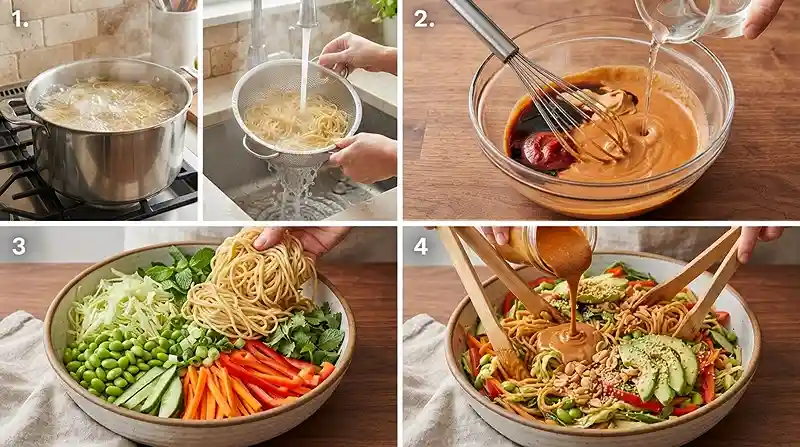
Step 1: Cook the Noodles
Cook the noodles according to package directions until just tender — you want them with a little bite left, not soft. Drain and rinse thoroughly under cold running water to stop the cooking and remove excess starch.
Drain well and shake off extra water before setting aside. Wet noodles will water down your dressing, and nobody wants a diluted gochujang peanut situation.
Step 2: Make the Gochujang Peanut Dressing
Whisk together the peanut butter, gochujang, rice vinegar, soy sauce, sesame oil, lime juice, honey, ginger, and garlic in a bowl or jar. The mixture will look thick and almost paste-like at first — that’s exactly right.
Gradually whisk in warm water, one tablespoon at a time, until the dressing turns glossy and pourable. In my testing, I found two to three tablespoons of water hits the perfect consistency — thick enough to cling but loose enough to toss.
Step 3: Prepare the Vegetables
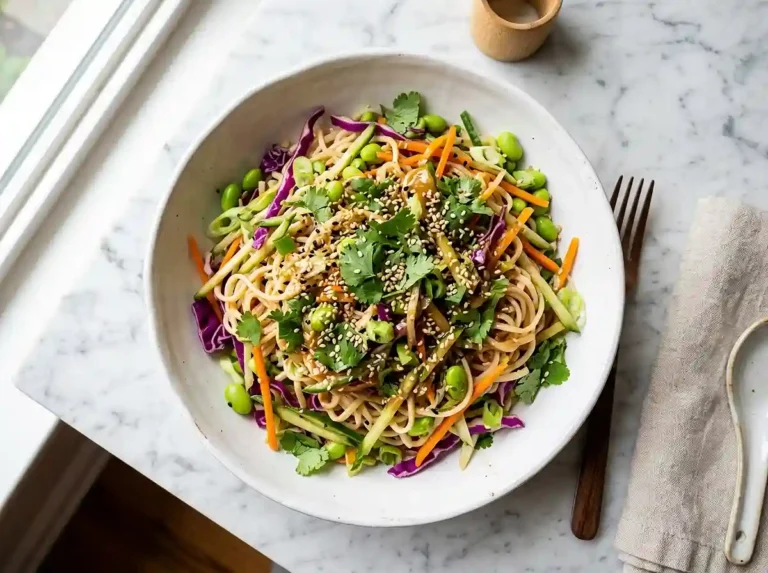
Add the cabbage, edamame, carrot, cucumber, bell pepper, green onions, cilantro, and mint to a large mixing bowl. The colors at this stage are stunning — jade green, vivid orange, crimson red, all piled together like a farmers market display.
Step 4: Combine
Add the cooled noodles to the vegetable bowl. Pour about two-thirds of the dressing over everything and toss gently with tongs or two large spoons until every noodle strand is coated in that deep, rust-colored sauce.
Step 5: Finish and Taste
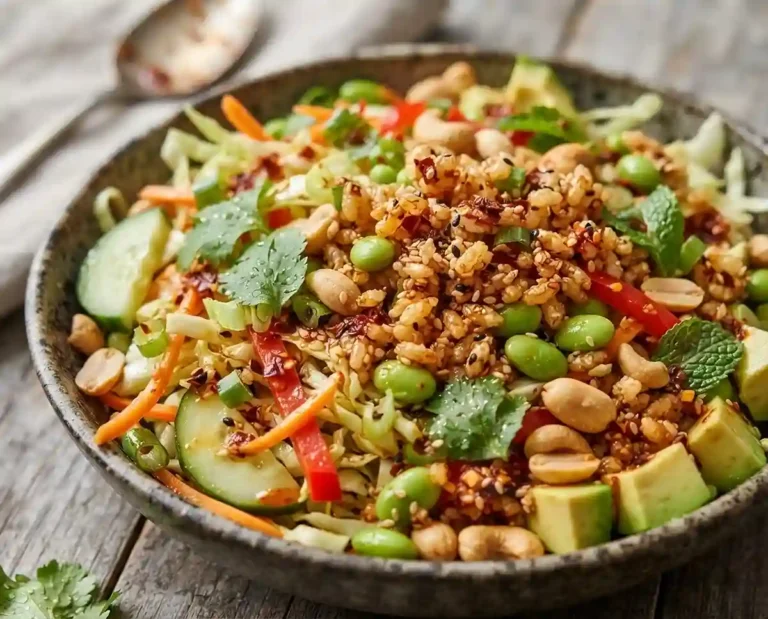
Scatter the chopped peanuts and sesame seeds over the top and toss once more. Taste and add more dressing if you want more heat or richness. Top with avocado slices if using — their cool creaminess against the spicy noodles is the best part.
Step 6: Chill and Serve
Refrigerate for 15 to 20 minutes before serving if you have time — the noodles absorb the dressing and the flavors deepen beautifully. Garnish with extra peanuts, sesame seeds, and green onions right before bringing it to the table.
Substitutions and Variations
Make It Gluten-Free
Use rice noodles or soba made from 100% buckwheat, and swap soy sauce for tamari. Everything else in the dressing and salad is naturally gluten-free. Double-check your gochujang label — most brands are gluten-free, but a few contain wheat.
Make It Vegan
This easy gochujang peanut noodle recipe is nearly vegan already. Just swap honey for maple syrup in the dressing. No other changes needed — the edamame and peanuts provide plenty of plant-based protein.
Add More Protein
This salad is a natural base for extra protein at a football tailgate or potluck. Sliced grilled chicken, sauteed shrimp, baked tofu, or shredded rotisserie chicken all work wonderfully. Toss the protein in a little dressing before adding it to the bowl.
Swap the Noodles
Soba brings a nutty, earthy quality that pairs especially well with the gochujang peanut dressing. Rice noodles keep it lighter and gluten-free. Regular spaghetti or linguine works in a pinch and makes this a true pantry-staple meal.
Expert Tips and Troubleshooting
Why Your Dressing Seizes Up
Peanut butter can clump when it hits cold or acidic ingredients. Always start with room-temperature peanut butter and whisk in warm — not hot — water gradually. After making this dozens of times, I can confirm that this step alone prevents the most common dressing disasters.
How to Keep Noodles from Clumping
According to Serious Eats’ guide to cold noodle salads, tossing drained noodles with a small drizzle of sesame oil immediately after rinsing prevents sticking. This is especially helpful if you’re cooking the noodles ahead and storing them before assembling.
Make It Ahead for a Crowd
For crowd-pleasing peanut noodle dishes at Labor Day potlucks, make the dressing and prep the vegetables the day before. Cook and oil the noodles, store separately. Combine and toss everything the morning of the event — it gives the noodles time to drink up the dressing without going soggy.
Storage and Meal Prep
| Component | Storage Method | Duration |
|---|---|---|
| Assembled Salad | Airtight container, refrigerator | 2 days |
| Gochujang Peanut Dressing | Sealed jar, refrigerator | 1 week |
| Cooked Noodles (plain) | Lightly oiled, airtight container | 3 days |
| Prepped Vegetables | Dry, airtight container | 3 days |
The assembled salad keeps well in the fridge for up to two days — the noodles soak up the dressing and the flavors actually improve overnight. Add avocado, extra peanuts, and fresh herbs only when serving to keep everything looking its best.
Leftover dressing is excellent on grain bowls, roasted vegetables, or as a dipping sauce. It pairs especially well with the cool crunch in our creamy dill garden cucumber salad — try both on the same spread.
Serving Suggestions
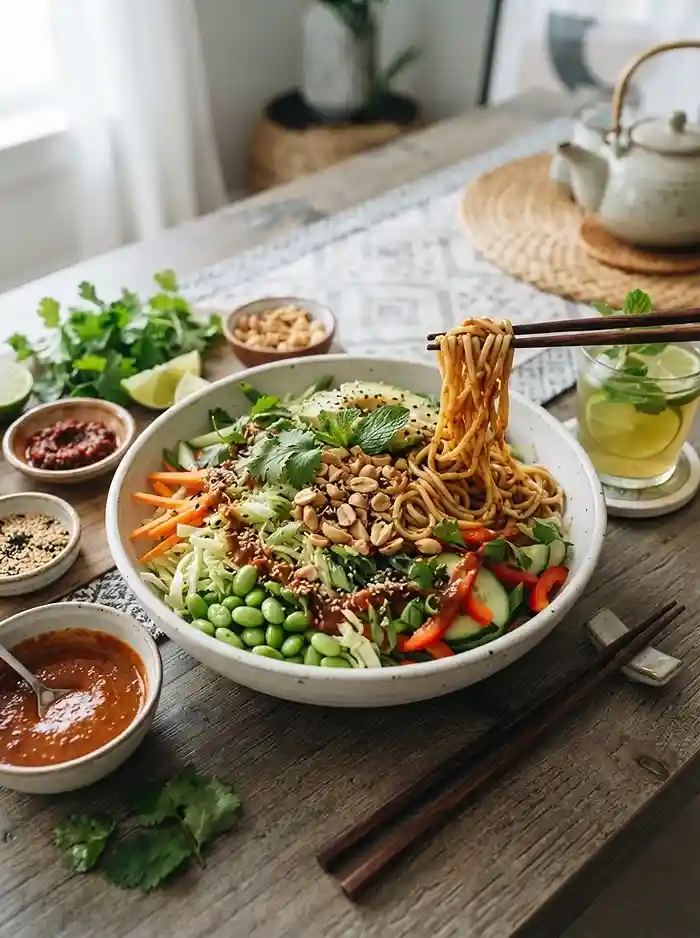
This gochujang peanut noodle salad is substantial enough to serve as a main, but it shines as a side next to grilled proteins. It’s a natural partner for our Nashville Chicken Pickle Slaw Bowl — bold flavors on both sides of the table.
For a lighter pairing, serve alongside our pear cucumber pecan salad. The crisp sweetness of that dish balances the heat of the gochujang beautifully at any gather.
Gochujang Peanut Noodle Salad FAQs
Can I make this Gochujang Peanut Noodle Salad ahead of time?
Yes — this salad is ideal for making ahead. Prep all components separately and toss together the morning of your event. The assembled salad keeps well in the fridge for up to 2 days, with flavors deepening as it rests.
What is gochujang and where can I find it?
Gochujang is a Korean fermented chili paste with a deep, savory heat and a slight sweetness. You can find it in the international aisle of most grocery stores, at Asian markets, or online. Sriracha can substitute in a pinch, though the flavor will be less complex.
How do I make this salad less spicy?
Start with 1 tablespoon of gochujang instead of 2, and increase the honey or maple syrup slightly to balance the heat. Taste the dressing before tossing — you can always add more gochujang, but you can’t take it out.
Why do my noodles clump together?
Noodles clump when they sit undressed after draining. Rinse them under cold water, drain thoroughly, then toss immediately with a small drizzle of sesame oil. This keeps them loose and ready to absorb the dressing when you toss the salad.
Best way to serve this at a potluck or tailgate?
Transport the dressing separately in a sealed jar and toss on-site for the freshest result. Pack garnishes like peanuts, sesame seeds, and green onions in a small bag to add at the end. This keeps the noodles from over-softening during transport.
Ready to Make This Bowl?
Well, now you’ve got everything you need to pull off this Gochujang Peanut Noodle Salad like a pro — whether it’s for a weeknight dinner or a packed Labor Day spread.
Save it to Pinterest so it’s easy to find when the craving hits, and leave a comment below to tell me which noodle you used. I love hearing how it turns out!
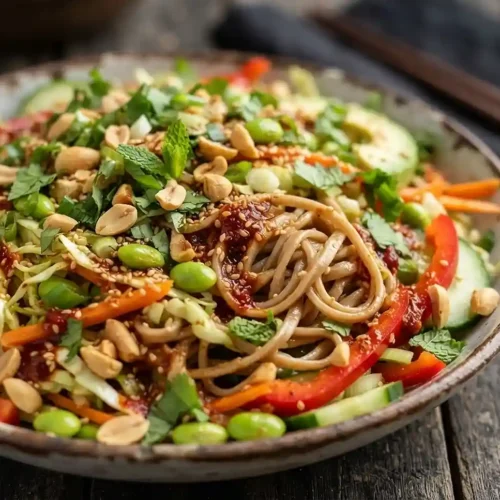
Gochujang Peanut Noodle Salad
Equipment
- Large pot
- Colander
- Large mixing bowl
- Small bowl or jar
- Whisk
- Tongs
Ingredients
Salad Base
- 8 oz Noodles 225 g; soba, rice noodles, or spaghetti; soba adds an earthy, nutty depth
- 2 cups Green cabbage, finely shredded Pre-shredded bag works perfectly
- 1 cup Shelled edamame, cooked and cooled Frozen edamame, thawed, is fine
- 1 Large carrot, julienned Pre-shredded carrot saves time
- 1 English cucumber, thinly sliced Persian cucumbers work too
- 1 Red bell pepper, thinly sliced Orange or yellow also work well
- 3 Green onions, thinly sliced
- ¼ cup Fresh cilantro, chopped Omit if you don’t enjoy cilantro
- 2 tbsp Fresh mint, chopped Adds a bright, cooling note
- ⅓ cup Roasted peanuts, roughly chopped Cashews are a great swap
- 1 tbsp Toasted sesame seeds
- 1 Avocado, sliced Optional but highly recommended
Gochujang Peanut Dressing
- ¼ cup Creamy peanut butter Natural or regular both work
- 2 tbsp Gochujang Start with 1 tbsp for mild heat
- 2 tbsp Rice vinegar Apple cider vinegar works in a pinch
- 1 tbsp Low-sodium soy sauce or tamari Tamari keeps it gluten-free
- 1 tbsp Toasted sesame oil Essential for the dressing’s flavor
- 1 tbsp Fresh lime juice
- 1 tbsp Honey or maple syrup Maple syrup makes it fully vegan
- 1 tsp Fresh ginger, finely grated Frozen ginger grates easily
- 1 Garlic clove, finely grated
- 2–4 tbsp Warm water Add as needed to adjust consistency
Instructions
- Cook the noodles according to package directions until just tender. Drain and rinse thoroughly under cold running water to stop the cooking and remove excess starch. Drain well and shake off excess water.
- Whisk together the peanut butter, gochujang, rice vinegar, soy sauce, sesame oil, lime juice, honey or maple syrup, ginger, and garlic. Gradually whisk in warm water, 1 tablespoon at a time, until the dressing is glossy and pourable.
- Add the cabbage, edamame, carrot, cucumber, bell pepper, green onions, cilantro, and mint to a large mixing bowl.
- Add the cooled noodles to the vegetables. Pour about two-thirds of the dressing over everything and toss gently with tongs or large spoons until the noodles and vegetables are evenly coated.
- Scatter the chopped peanuts and sesame seeds over the salad and toss once more. Taste and add more dressing if desired. Top with avocado slices if using.
- Refrigerate for 15 to 20 minutes before serving if desired. Garnish with extra peanuts, sesame seeds, and green onions just before serving.