Toasted Walnut Balsamic Dressing
Make toasted walnut balsamic dressing in 10 minutes. Creamy, nutty, and tangy, it keeps for a week and turns weeknight salads into something special.
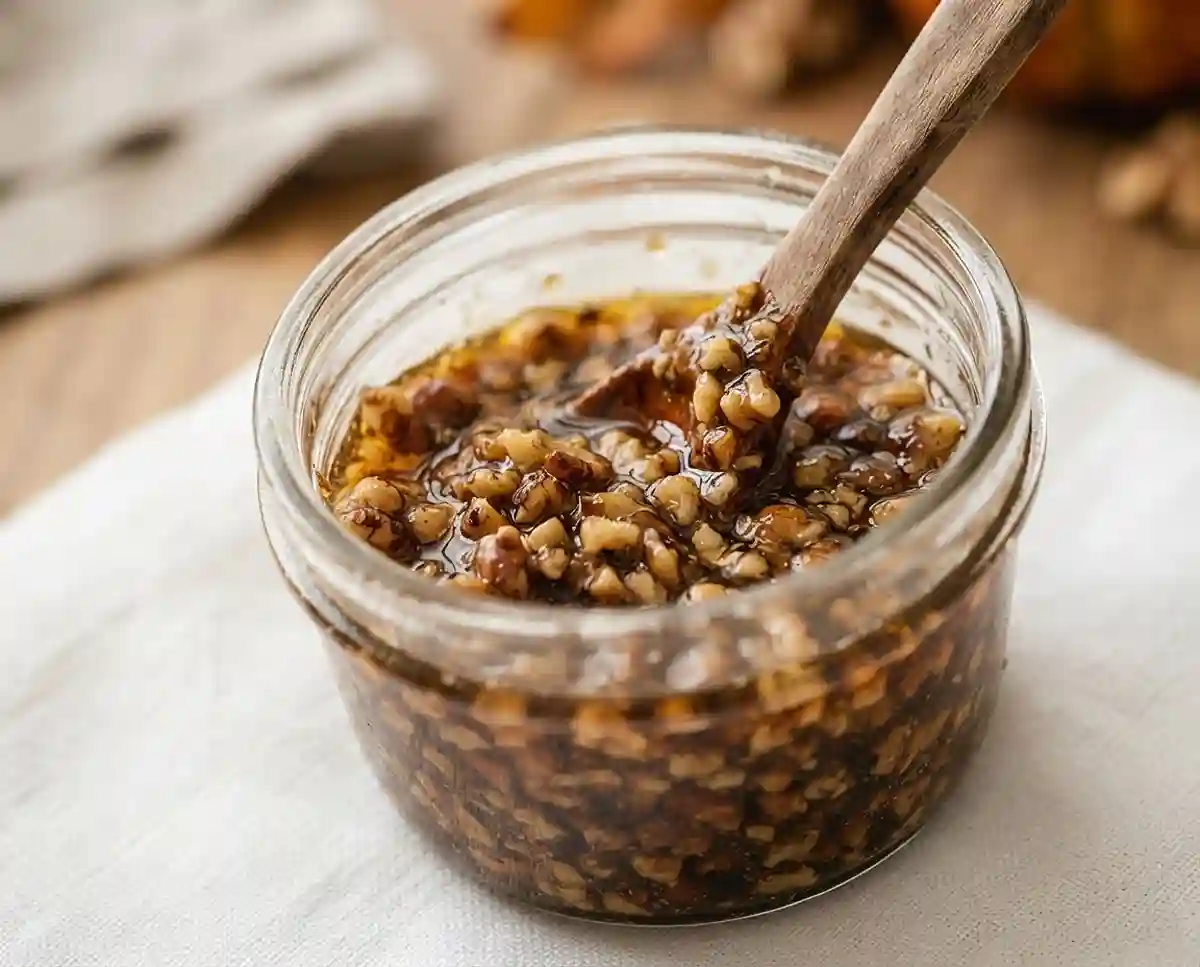
The first clue is the smell: walnuts turning golden in a dry skillet, warm and buttery. That aroma is why toasted walnut balsamic dressing tastes richer than anything from a bottle. In my community kitchen classes, students are always surprised that nuts alone can make a dressing creamy.
Why settle for store-bought when 10 minutes gets you a jar for the whole week? Truthfully, I brought this to a Thanksgiving potluck once, and people asked for the recipe before the turkey was carved. What sets this version apart is a quick blend that turns the walnuts silky.
What You’ll Need for Toasted Walnut Balsamic Dressing
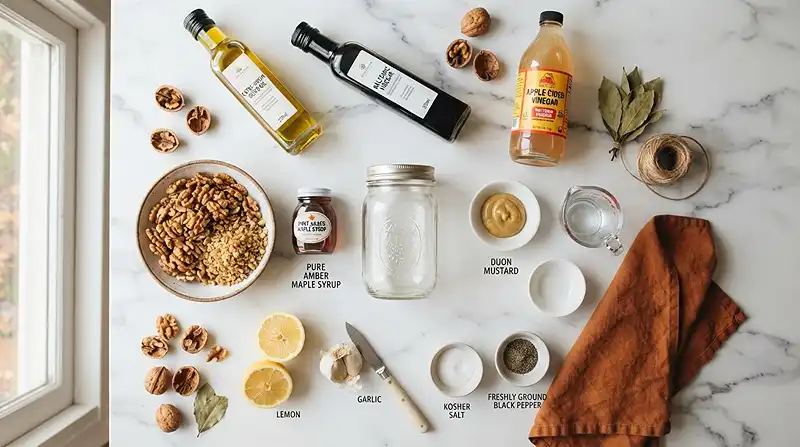
You need 11 simple pantry ingredients to make about 3/4 cup of dressing, which is enough for roughly six salads.
| Component | Ingredient | Quantity | Swap Ideas |
|---|---|---|---|
| Base | Extra-virgin olive oil | 1/3 cup | Avocado oil for a milder flavor |
| Acid | Balsamic vinegar | 2 tbsp | White balsamic for a lighter color |
| Acid | Apple cider vinegar | 1 tbsp | Red wine vinegar |
| Creamy & Nutty | Toasted walnuts, finely chopped | 1/4 cup | Toasted pecans for a sweeter note |
| Sweet | Pure maple syrup | 1 tbsp | Honey, if you don’t need it vegan |
| Emulsifier | Dijon mustard | 1 tsp | Whole-grain mustard for more texture |
| Brightness | Fresh lemon juice | 1 tsp | Orange juice for a softer tang |
| Aromatics | Garlic clove, finely grated | 1 small | 1/8 tsp garlic powder |
| Seasoning | Kosher salt | 1/4 tsp | Use half as much fine sea salt |
| Seasoning | Freshly ground black pepper | 1/4 tsp | White pepper for less bite |
| Thinner | Water | 1-2 tbsp, as needed | Warm water blends a little smoother |
Fresh walnuts make all the difference. Old ones taste bitter and a bit like crayons, so give them a sniff before you toast them. They should smell sweet and mild.
This is easy homemade toasted walnut dressing built for everyday salad bowls, so it doesn’t need fancy vinegar. A basic balsamic from the grocery store works well, since the maple and walnuts round it out.
Grate the garlic on a microplane so it melts into the dressing instead of leaving sharp bites. Raw garlic gets stronger as it sits, so one small clove is plenty for this toasted walnut balsamic dressing.
Use real maple syrup, not pancake syrup. Pancake syrup is mostly corn syrup and tastes flat, while pure maple adds a woodsy sweetness that pairs beautifully with the walnuts and balsamic.
How to Make Toasted Walnut Balsamic Dressing
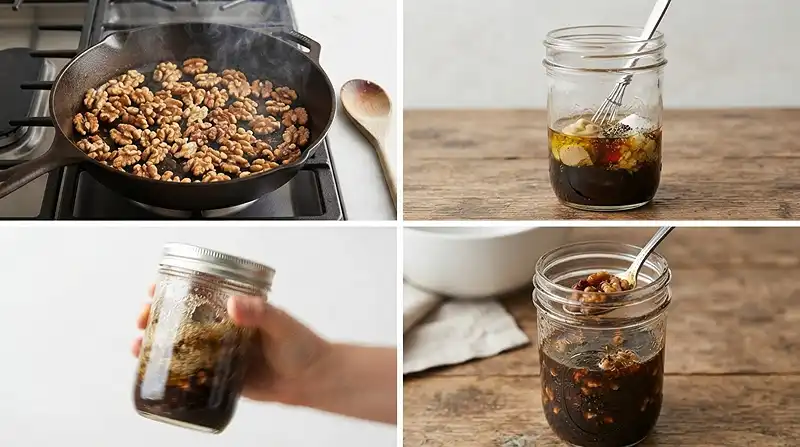
You can make this dressing in about 10 minutes with a skillet and a small jar.
- Toast the walnuts in a dry skillet over medium heat for 2-3 minutes, stirring often. You’ll know they’re ready when they smell nutty and look a shade darker. Slide them onto a plate right away, since they keep cooking in the hot pan, and let them cool completely.
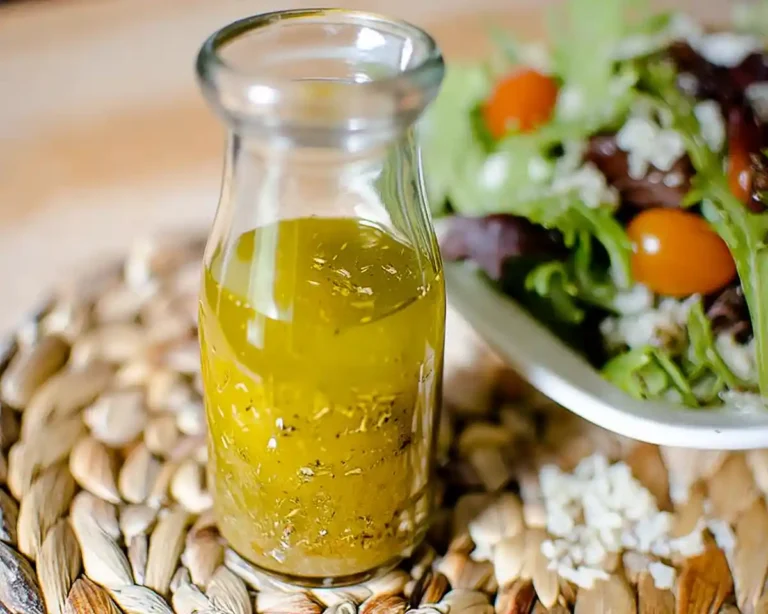
- Combine the olive oil, balsamic vinegar, apple cider vinegar, maple syrup, Dijon, lemon juice, garlic, salt, and pepper in a small jar. At this point the oil will float in a golden layer over the dark vinegar.
- Shake the sealed jar hard for 20-30 seconds. The color shifts from streaky to a smooth, opaque brown, like coffee the moment the cream melts in. You can also whisk everything in a bowl.
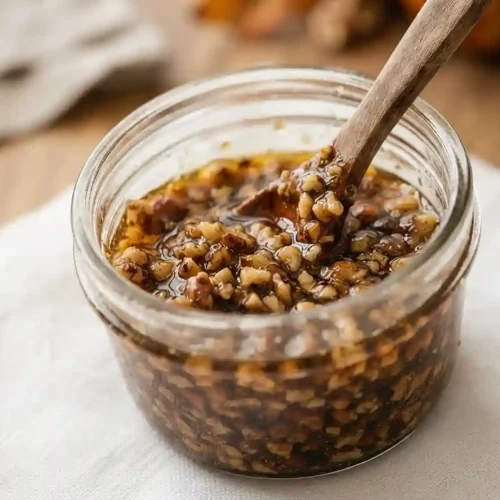
- Stir in the cooled walnuts for a rustic, chunky dressing. For a smoother one, blend everything in a small blender for 20-30 seconds. After testing both ways, I landed on blending whenever I’m dressing sturdy greens like kale.
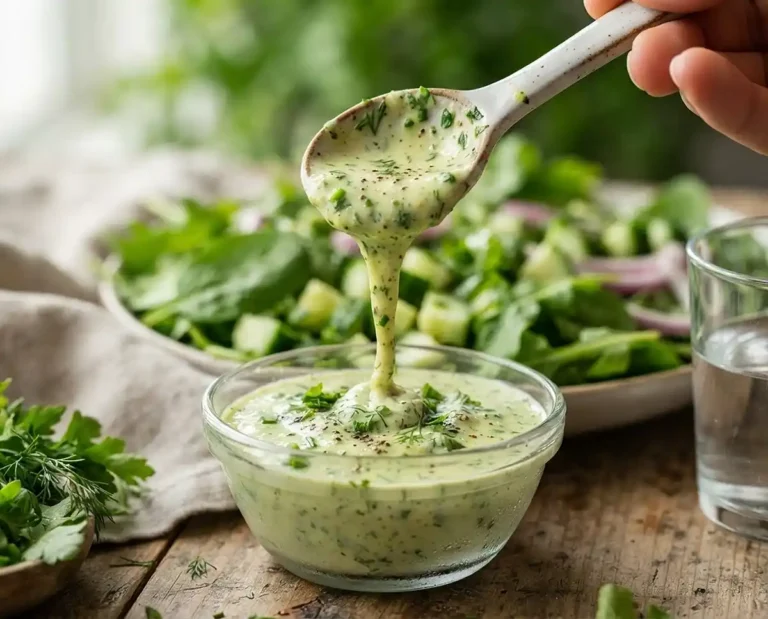
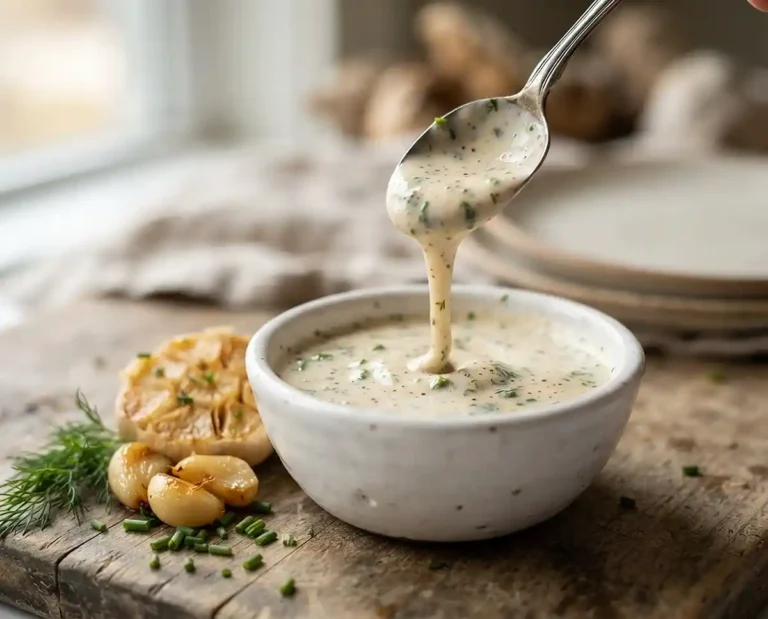
- Adjust by adding 1-2 tablespoons of water if the dressing is too thick. Dip a lettuce leaf in and taste it. The dressing should coat the back of a spoon and slide off slowly.
- Rest the dressing for 5-10 minutes before serving. The garlic mellows, the flavors meld, and the dressing thickens slightly. Give the jar one more shake before you pour.
Make It Your Own
This dressing is easy to adapt for different diets without losing its nutty, tangy character.
It’s already plant-based thanks to the maple syrup, and it’s naturally gluten-free as long as your Dijon label says so. For a nut-free version, swap the walnuts for toasted pepitas.
Want a protein-packed bowl? Spoon the dressing over lentils, chickpeas, or grilled chicken. For creamy flavorful walnut balsamic for fall lunch salads, blend in a spoonful of white beans. It gets thicker and silkier.
Need a thicker dressing? Skip the water and use it as a spread for sandwiches or a dip for raw vegetables.
Fixes for Common Salad Problems
Most dressing problems come down to texture, balance, or timing, and each one has a quick fix.
Why Is My Dressing Too Thick?
Chilled olive oil and ground walnuts both thicken as they sit. Whisk in a teaspoon of water at a time until it pours easily, or let the jar sit at room temperature for 10 minutes first.
Why Did My Dressing Separate?
Separation is normal and doesn’t mean anything went wrong. Shake the jar for 20 seconds, or blend it again. The Dijon helps hold everything together, so don’t skip it.
Why Does It Taste Flat or Too Sharp?
Look at the balance first. If it’s too sharp, add a half teaspoon of maple syrup. If it tastes flat, add a pinch of salt or a few drops of lemon juice. Taste after each change so you don’t overshoot.
Why Are My Toppings Getting Soggy?
Dressed salads soften fast, especially with tender greens. When I tested this side by side, bowls dressed right before eating stayed crisp far longer than ones tossed ahead. Pack the dressing on the side.
Why Does My Dressing Taste Bitter?
Walnut skins turn bitter if they scorch. Pull the nuts off the heat the moment they smell fragrant, and skip any that look dark brown. Old walnuts taste sharp and soapy, so start with a fresh bag if yours have been in the pantry for months.
How Do I Know When It’s Gone Bad?
Toss it if it smells sour or rancid, or if you see mold. Fresh garlic and nuts shouldn’t sit for long, so check the USDA’s cold food storage chart for safe refrigerator times.
How to Store Toasted Walnut Balsamic Dressing
Toasted walnut balsamic dressing keeps for 5 to 7 days in the refrigerator when stored in an airtight jar.
| What to Store | How | How Long |
|---|---|---|
| Dressing | Airtight jar, refrigerated | 5-7 days |
| Toasted walnuts | Airtight container, refrigerated | Up to 1 week |
| Washed greens | Paper towel-lined container | 3-4 days |
Make ahead toasted walnut balsamic for weeknight dinner salads by keeping the dressing and the greens in separate containers. On Sunday, toast the nuts and wash the greens. Then you only need to shake the jar and toss.
The oil firms up in the fridge, so let the jar sit out for 10 minutes before using it. Leftover dressing makes a great marinade for chicken, or a drizzle over roasted squash and sweet potatoes.
What to Serve With It
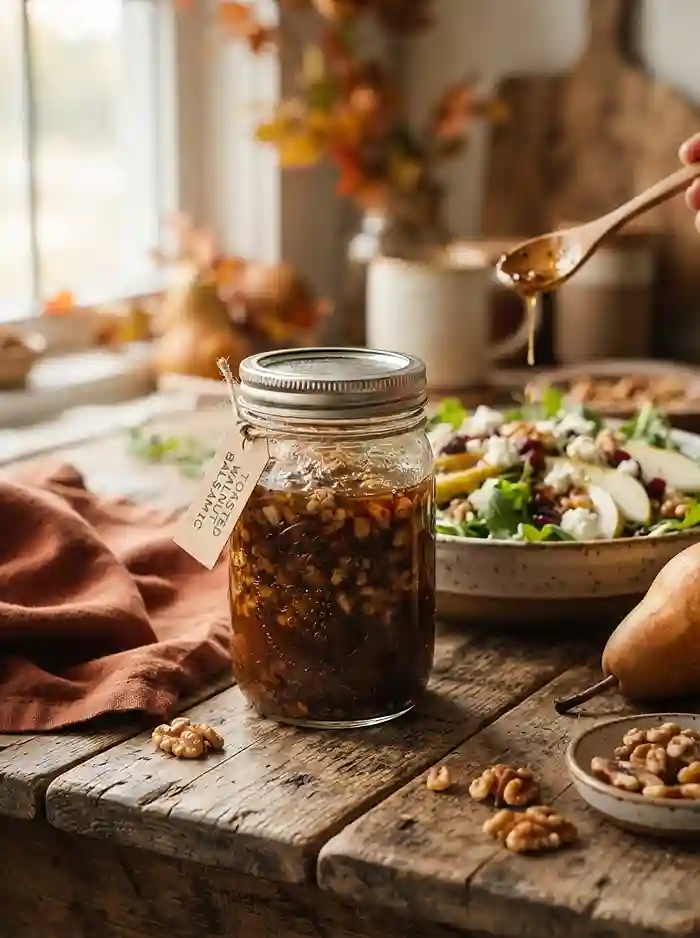
This dressing is best on salads with a little sweetness and plenty of crunch.
For a quick weeknight dinner, toss it with roasted Brussels sprouts, sliced pears, and a handful of greens. It also works as a dip for raw carrots and cucumber slices when you need an easy snack.
Try it on a crunchy arugula pear pepita salad or a delicata apple tahini crunch salad. The balsamic and walnuts match the roasted fall flavors well.
It also brings warmth to a miso chickpea cucumber crunch bowl. Drizzle a spoonful over the top for a nutty finish.
Toasted Walnut Balsamic Dressing FAQs
Can I use raw walnuts instead of toasted?
You can, but toasting makes a big difference. Raw walnuts taste slightly bitter and flat, while toasted ones add a deep, buttery flavor that makes the dressing taste richer.
How long does the dressing last in the fridge?
It keeps for 5 to 7 days in an airtight jar. Walnuts and fresh garlic don’t hold up forever, so discard it if it smells sour or rancid.
What’s the difference between balsamic and apple cider vinegar here?
Balsamic brings deep, mellow sweetness, while apple cider vinegar adds a sharper brightness. Together they keep the dressing tangy without tasting harsh.
Is it okay to skip the blender?
Yes, a jar and a good shake work fine. You’ll get a chunkier dressing with more texture, which is lovely on sturdy greens and grain bowls.
Should I serve it cold or at room temperature?
Room temperature is best. Cold oil is thick and clings unevenly, so let the jar sit out for about 10 minutes and shake it before drizzling.
Final Thoughts
Pin this toasted walnut balsamic dressing to your Pinterest board so it’s ready the next time a salad needs a boost. Then tell me in the comments how you made it your own. Okay, go grab a jar.
Weeknight Toasted Walnut Balsamic Dressing
Equipment
- Dry skillet
- Small jar with lid
- Small Blender
Ingredients
Base
- ⅓ cup Extra-virgin olive oil Avocado oil can be used for a milder flavor.
Acid
- 2 tbsp Balsamic vinegar White balsamic can be used for a lighter color.
- 1 tbsp Apple cider vinegar Red wine vinegar can be used as a substitute.
Creamy & Nutty
- ¼ cup Toasted walnuts, finely chopped Toasted pecans can be used for a sweeter note.
Sweet
- 1 tbsp Pure maple syrup Honey can be used if the dressing does not need to be vegan.
Emulsifier
- 1 tsp Dijon mustard Whole-grain mustard can be used for more texture; check the label for gluten-free certification if needed.
Brightness
- 1 tsp Fresh lemon juice Orange juice can be used for a softer tang.
Aromatics
- 1 small Garlic clove, finely grated Use 1/8 tsp garlic powder as a substitute.
Seasoning
- ¼ tsp Kosher salt Use half as much fine sea salt.
- ¼ tsp Freshly ground black pepper White pepper can be used for less bite.
Thinner
- 1-2 tbsp Water Add as needed; warm water blends slightly smoother.
Instructions
- Toast the walnuts in a dry skillet over medium heat for 2-3 minutes, stirring often, until fragrant and slightly darker. Transfer them to a plate immediately and let them cool completely.
- Combine the olive oil, balsamic vinegar, apple cider vinegar, maple syrup, Dijon mustard, lemon juice, garlic, salt, and black pepper in a small jar.
- Seal the jar and shake vigorously for 20-30 seconds until the dressing becomes smooth and opaque. You can also whisk the ingredients together in a bowl.
- Stir in the cooled toasted walnuts for a rustic, chunky dressing. For a smoother dressing, blend everything in a small blender for 20-30 seconds.
- Add 1-2 tablespoons of water as needed if the dressing is too thick. The finished dressing should coat the back of a spoon and slide off slowly.
- Let the dressing rest for 5-10 minutes before serving so the garlic mellows and the flavors meld. Shake once more before drizzling.