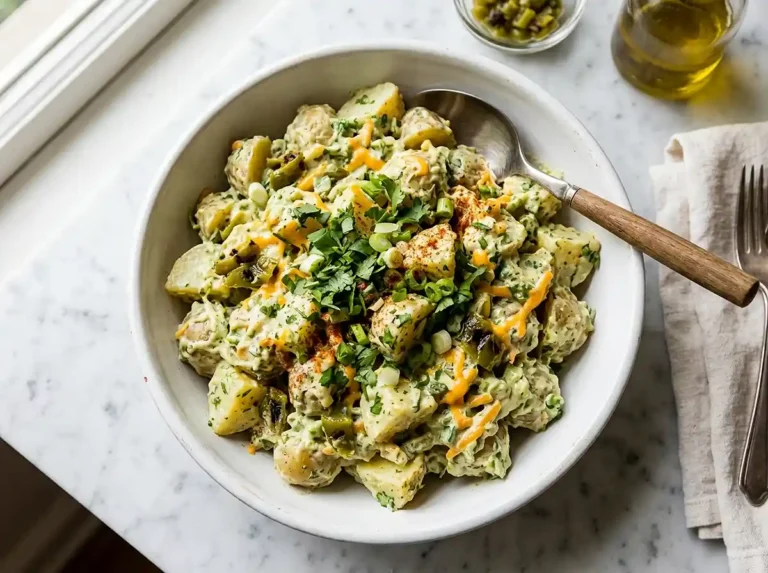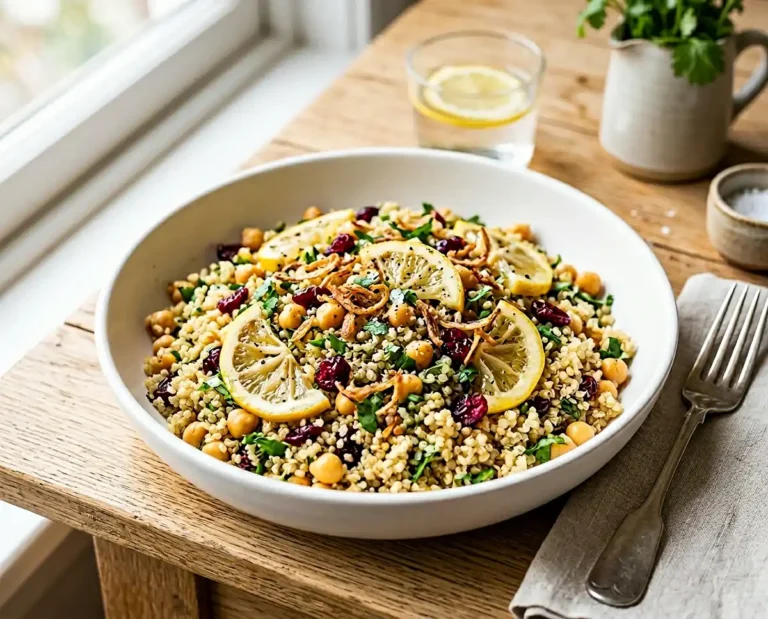
Roasted Squash Sage Potato Salad
This roasted squash sage potato salad pairs caramelized squash, crispy sage, and creamy maple-Dijon dressing for a make-ahead fall side dish for gatherings.
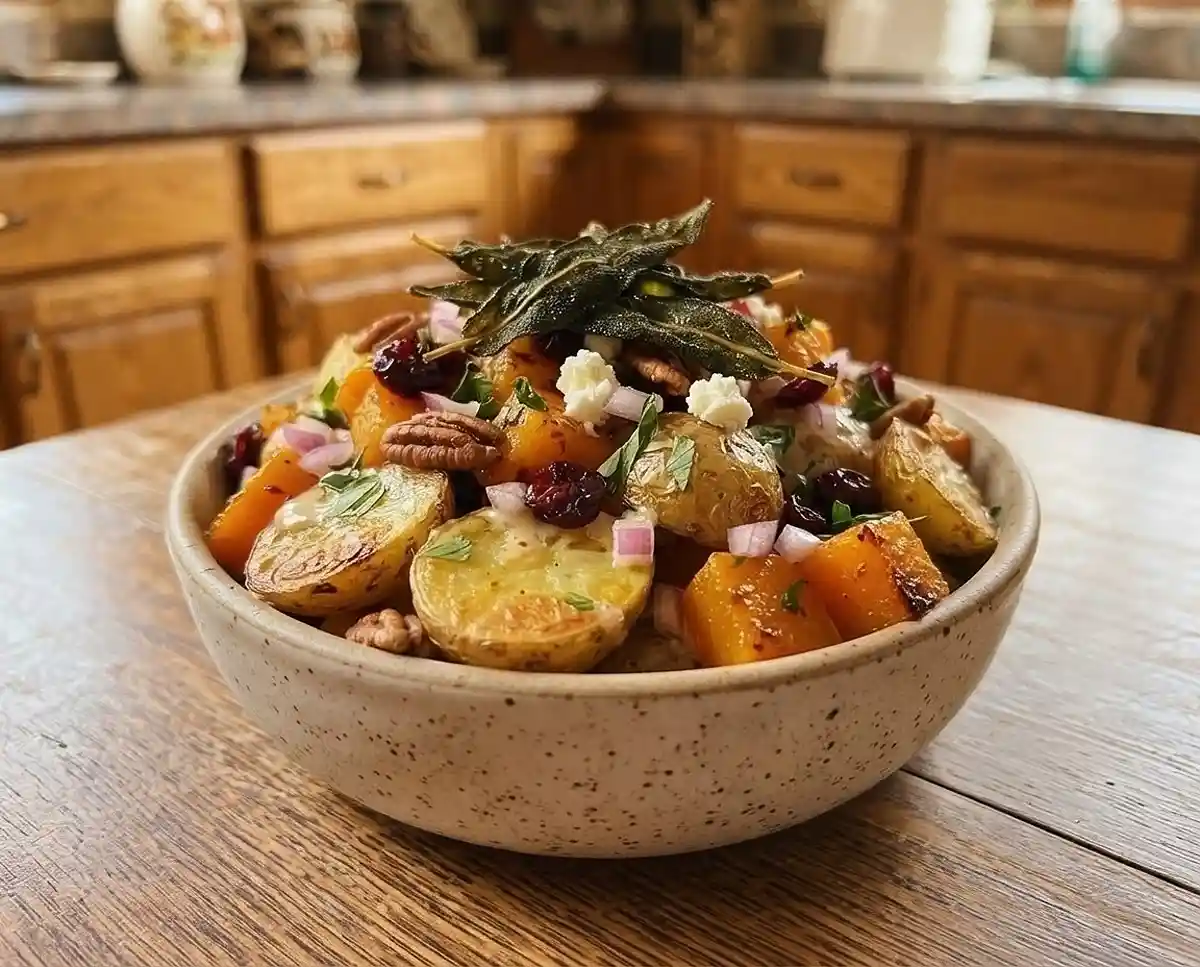
The first time I made this roasted squash sage potato salad, the whole kitchen smelled like browned butter, sage, and maple. Golden potatoes, orange squash, and ruby cranberries sat in a creamy dressing, topped with dark, crackly sage leaves that looked like tiny edible jewels.
I brought it to a Thanksgiving potluck as a twist on classic potato salad, and it was gone before the turkey was sliced. Why do holiday tables have so many creamy sides but so few with real texture? Honestly, crispy sage and toasted pecans are the secret that gets guests to ask for the recipe.
The maple-Dijon dressing is tangy, a little sweet, and creamy without being heavy. It’s an easy November potluck side dish that tastes great warm or at room temperature, so you can make it hours ahead and still enjoy the party.
Table of Contents
Why This Roasted Squash Sage Potato Salad Works
Roasting Beats Boiling
Roasting concentrates the sweetness of the squash and gives the potatoes crisp edges instead of a soggy texture. Boiled potatoes can turn watery and dull. Roasted ones stay firm and full of flavor, which makes this salad hold up for hours.
Crispy Sage Adds Savory Crunch
Fresh sage fried in olive oil turns crisp, earthy, and fragrant. It adds the kind of savory crunch you’d normally find in a restaurant dish. A few leaves scattered on top make the salad look as fancy as it tastes.
It’s a Make-Ahead Dish That Travels
Everything can be roasted and mixed ahead of time, and the dressing comes together in minutes. If you usually bring a make ahead holiday pasta salad, this is a heartier, roasted-vegetable alternative that fits the fall table.
Ingredients for Roasted Squash Sage Potato Salad
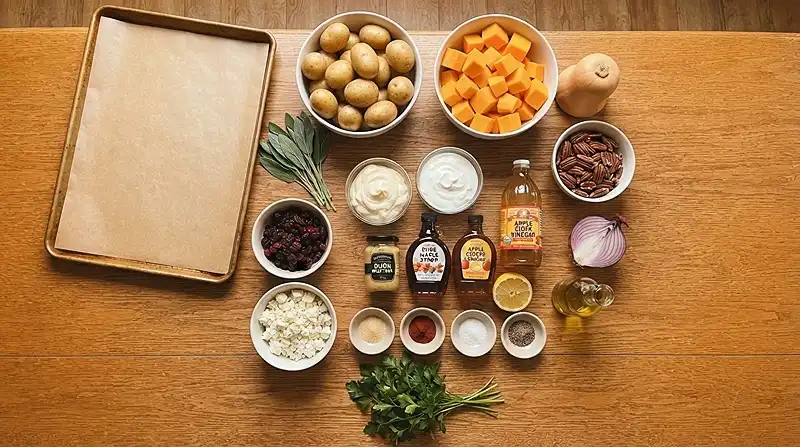
| Category | Ingredient | Amount | Notes |
|---|---|---|---|
| Roasted Vegetables | Baby Yukon Gold potatoes, halved or quartered | 1½ lb | Red potatoes also work |
| Roasted Vegetables | Butternut squash, peeled, ½-inch cubes | 2 cups | Sweet potato or acorn squash |
| Roasted Vegetables | Olive oil, divided | 2 tbsp | Use some for the sage |
| Roasted Vegetables | Garlic powder | ½ tsp | Won’t burn like fresh garlic |
| Roasted Vegetables | Smoked paprika | ½ tsp | Sweet paprika for milder flavor |
| Roasted Vegetables | Salt and black pepper | ½ tsp and ¼ tsp | Season before roasting |
| Crispy Topper | Fresh sage leaves | 8 to 10 | Fresh only; dried won’t crisp |
| Creamy Dressing | Mayonnaise | ⅓ cup | Vegan mayo works too |
| Creamy Dressing | Plain Greek yogurt | 2 tbsp | Dairy-free yogurt |
| Creamy Dressing | Dijon mustard | 1 tbsp | Whole-grain mustard |
| Creamy Dressing | Pure maple syrup | 1 tbsp | Honey |
| Creamy Dressing | Apple cider vinegar | 1 tbsp | White wine vinegar |
| Creamy Dressing | Fresh lemon juice | 1 tsp | Extra vinegar |
| Creamy Dressing | Garlic powder | ½ tsp | Onion powder |
| Creamy Dressing | Salt and black pepper | To taste | Taste with a potato cube |
| Creamy Dressing | Water | 1 to 2 tbsp | Add gradually to thin |
| Salad Mix-Ins | Red onion, finely diced | ¼ small | Rinse in cold water to soften the bite |
| Salad Mix-Ins | Dried cranberries | ¼ cup | Dried cherries |
| Salad Mix-Ins | Fresh parsley, chopped | 2 tbsp | Chives |
| Toppings | Pecans, chopped, toasted | ¼ cup | Walnuts |
| Toppings | Crumbled feta cheese (optional) | ¼ cup | Goat cheese |
Cutting Squash and Potatoes So They Cook Evenly
Cut the potatoes and squash to roughly the same size, about half an inch. Smaller potatoes can stay halved, while larger ones should be quartered. Even pieces brown at the same pace, so none turn mushy or stay hard.
Choosing Fresh Sage
Pick sage leaves that look silvery green and feel velvety, with no brown spots. Fresh leaves crisp up beautifully in the oven. Dried sage won’t give you the same crunch, so skip it for the topping.
Why Toast the Pecans?
A few minutes in a dry skillet brings out the pecans’ natural sweetness and gives them a crisp crunch against the soft potatoes. Watch them closely, because they go from golden to burnt quickly.
How to Make Roasted Squash Sage Potato Salad
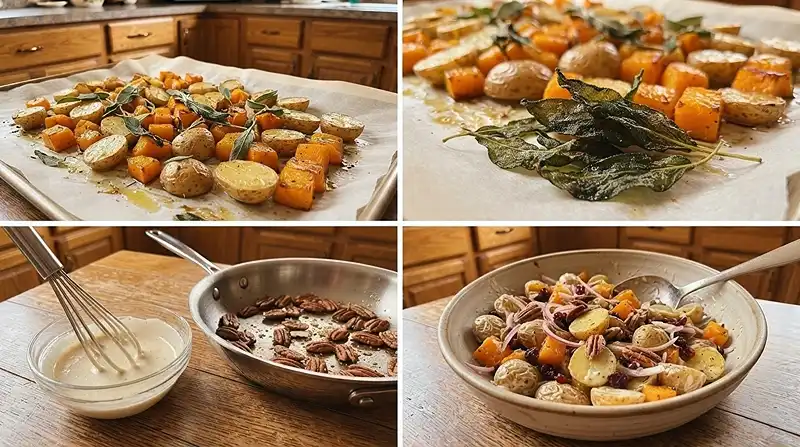
- Heat the oven to 425°F (220°C) and line a large baking sheet with parchment paper. Wait until the oven is fully hot so the vegetables start browning the moment they hit the pan.
- Place the potatoes and squash in a large bowl. Add 1½ tablespoons of the olive oil, the garlic powder, paprika, salt, and pepper. Toss until every piece glistens and smells smoky and savory.
- Spread the vegetables in a single layer and roast for 30 to 35 minutes, turning halfway. They’re ready when the potatoes are fork-tender and the squash looks lacquered, like glazed ceramic. After making this dozens of times, I’ve found a crowded pan is the biggest mistake.
- During the last 5 minutes, toss the sage leaves with the remaining ½ tablespoon of oil and add them to the pan. They’re ready when they stop sizzling and turn dark green, fragrant, and crisp. Watch them closely so they don’t burn. You can also crisp them in a small skillet.
- Whisk the mayonnaise, Greek yogurt, Dijon, maple syrup, vinegar, lemon juice, garlic powder, salt, and pepper in a bowl. Add water a little at a time until the dressing looks creamy and ribbons off the whisk.
- Toast the pecans in a dry skillet over medium heat for 3 to 5 minutes, stirring often. They’re ready when they smell nutty and darken slightly. Let them cool on a plate.
- Let the roasted vegetables cool for about 10 minutes, until the steam stops rising. Transfer them to a large serving bowl and add the red onion, cranberries, parsley, and pecans.
- Pour the creamy maple-Dijon dressing over the vegetables and toss gently until everything looks evenly coated. Fold carefully so the squash cubes stay whole and don’t turn to mush.
- Sprinkle the crispy sage and the optional feta over the top. Serve slightly warm or at room temperature, and listen for the crunch of the sage and pecans.
Substitutions & Variations
Vegan and Dairy-Free Version
Use vegan mayonnaise and a dairy-free plain yogurt, and skip the feta. Swap maple syrup for any honey. The roasted vegetables and crispy sage still carry plenty of flavor, so nobody will miss the cheese.
Gluten-Free Notes
This salad is naturally gluten-free, but check your Dijon, mayonnaise, and yogurt labels to be sure. Cross-contact can sneak in through condiments, so a quick label check is worth it for guests with celiac disease.
Turn It Into a Squash Sage Pasta Salad Idea
For a squash sage pasta salad idea, fold in two cups of cooked, cooled orzo or small shells. Add a little extra dressing to coat the pasta. My family’s favorite variation uses gluten-free orzo for extra heartiness.
High-Protein Version
Stir in roasted chickpeas, shredded rotisserie chicken, or chopped hard-boiled eggs. Any of these turns this side dish into a satisfying lunch or dinner. Keep the crispy sage and pecans for the top.
Seasonal Swaps
Pears or diced apples can add a juicy crunch, and dried cherries can stand in for cranberries. Both keep the sweet-tart balance this salad needs. A handful of pomegranate seeds adds a bright burst of ruby color on top.
Expert Tips & Troubleshooting
Why Are My Potatoes Soggy?
A crowded pan steams potatoes instead of roasting them. Use two baking sheets if needed, and leave space between the pieces. Pat the potatoes dry before oiling so they can brown and crisp.
Why Is My Dressing Too Thick or Too Thin?
Mayonnaise-based dressings thicken as they chill. Whisk in a teaspoon of water at a time to loosen it. If it’s too thin, add a spoonful more mayonnaise. In my testing, a final splash of water before serving gave the best texture.
How Do I Keep the Squash From Falling Apart?
Squash is softer than potatoes, so handle it gently. Fold the salad with a wide spatula instead of stirring hard, and let the vegetables cool for ten minutes first. Warm squash is fragile, and cooling lets it firm up slightly.
How Much Dressing Is Enough?
You want the vegetables lightly coated and creamy, not swimming. Start with about three-quarters of the dressing, fold, and look at the bowl. Add more a spoonful at a time until everything shines, and keep a little extra for serving.
Why Does the Salad Taste Flat?
Cold potatoes mute flavor, so season a little boldly. Add a pinch of salt first, then a squeeze of lemon. Seriously, a tiny bit of acid right before serving wakes the whole bowl up.
Is It Safe to Leave Potato Salad Out at a Potluck?
Mayo-based salads need careful handling. Perishable food shouldn’t sit out longer than two hours, or one hour above 90°F. The USDA guide to leftovers and food safety explains how to chill food quickly.
This University of Florida extension post on the 2-hour rule explains why it matters. Set the bowl on a tray of ice if it will be out for a while.
Storage & Meal Prep
| Component | Storage Method | Duration |
|---|---|---|
| Assembled, dressed salad | Airtight container, refrigerated | 2 to 3 days |
| Roasted potatoes and squash | Airtight container, refrigerated | 3 to 4 days |
| Dressing | Sealed jar, refrigerated | 1 week |
| Crispy sage | Airtight container + paper towel, room temperature | 1 day |
| Toasted pecans | Airtight jar, room temperature | 1 week |
For a make-ahead plan, roast the vegetables and whisk the dressing the day before. On the day, crisp the sage, toss everything together, and top it just before serving. This keeps the sage crunchy and the pecans crisp.
Waste not: stuff leftovers into a wrap or a pita, or fold them into a frittata. Spoon any extra dressing onto roasted vegetables. Sage stems can be tossed into soup for extra flavor.
Serving Suggestions
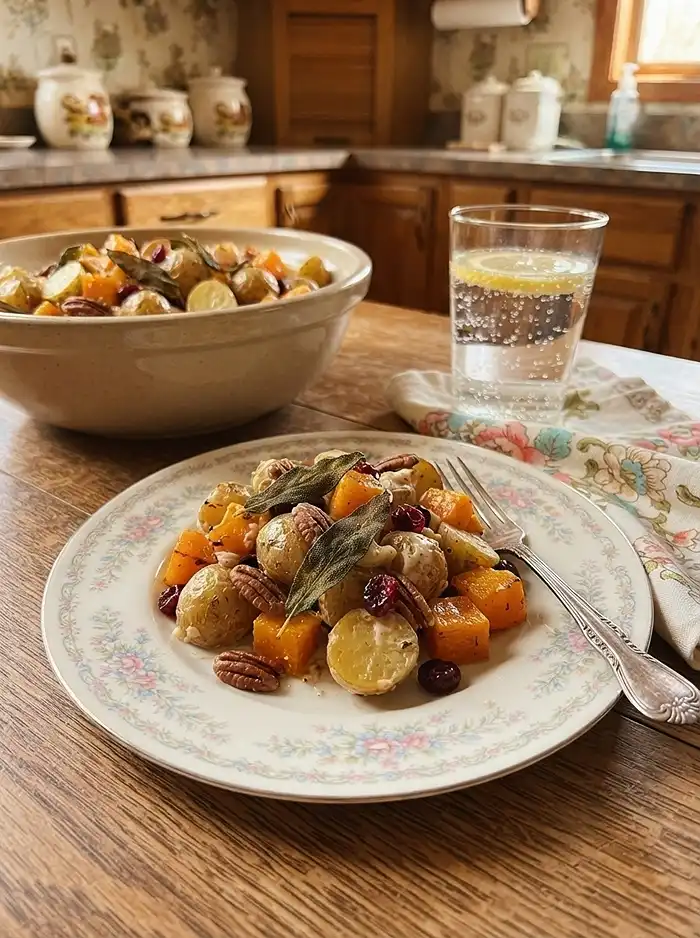
This salad pairs beautifully with roast turkey, glazed ham, or a simple roasted chicken. For a bright, crunchy contrast, add the sweet potato feta arugula salad to the spread.
Want a heartier grain option? Try the harvest grape walnut couscous salad. And for a tangy finishing drizzle on greens, the pomegranate honey balsamic dressing is a great match.
As a side, this recipe makes about six generous portions. To turn it into a lighter main, plan on a larger bowl per person and add chickpeas or chicken for staying power. Bring extra dressing to the table in a small jar for guests who like it creamier.
For a buffet, set the bowl on a bed of ice and keep a serving spoon in it. Refresh the ice as it melts. Add the crispy sage at the last minute so it stays crunchy while guests go back for seconds.
Frequently Asked Questions
Can I use sweet potatoes instead of butternut squash?
Yes, sweet potatoes are the easiest swap. They roast in the same 30 to 35 minutes when cut to the same size. They taste a little sweeter, so you may want slightly less maple syrup in the dressing.
How do I peel and cube butternut squash safely?
Trim both ends, stand the squash on a flat end, and peel it with a sturdy vegetable peeler. Cut it in half, scoop out the seeds, and slice it into half-inch cubes. A sharp knife and a stable cutting board make it much safer.
What’s a good substitute for mayonnaise?
Extra Greek yogurt or a vegan mayonnaise both work. Yogurt makes the dressing tangier and lighter, while vegan mayo keeps it creamy. Add a pinch more salt if you use yogurt.
Why does my sage turn bitter?
Burnt sage tastes bitter. Pull the leaves out as soon as they stop sizzling and look dark green. If some brown at the edges, discard those leaves and use fresh ones.
Best way to reheat leftovers?
Skip reheating, and serve leftovers cold or at room temperature. Mayonnaise-based dressings can separate when heated. If you want it warm, warm the vegetables separately and add the dressing afterward.
Final Thoughts
Save this roasted squash sage potato salad to your Pinterest board so it’s ready for your next holiday spread. Then leave a comment and tell me how you made it your own. Well, I can’t wait to hear your twist.
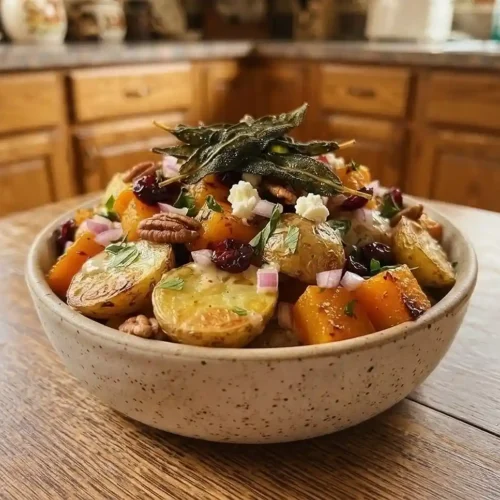
Roasted Squash Sage Potato Salad
Equipment
- oven
- Large baking sheet
- Parchment paper
- Large mixing bowl
- Small mixing bowl
- Whisk
- Dry skillet
- Measuring Cups
- Measuring Spoons
- Knife
- Cutting board
- Vegetable Peeler
- Wide spatula
- Serving bowl
Ingredients
Roasted Vegetables
- 1½ lb Baby Yukon Gold potatoes Halved or quartered
- 2 cups Butternut squash Peeled and cut into ½-inch cubes
- 2 tbsp Olive oil Divided; 1½ tbsp for vegetables and ½ tbsp for sage
- ½ tsp Garlic powder
- ½ tsp Smoked paprika
- ½ tsp Salt
- ¼ tsp Black pepper
Crispy Topper
- 8 to 10 Fresh sage leaves Fresh only; dried sage will not crisp
Creamy Dressing
- ⅓ cup Mayonnaise Check label for gluten-free status; vegan mayonnaise works too
- 2 tbsp Plain Greek yogurt Check label for gluten-free status; dairy-free yogurt can be substituted
- 1 tbsp Dijon mustard Check label for gluten-free status
- 1 tbsp Pure maple syrup
- 1 tbsp Apple cider vinegar Check label for gluten-free status
- 1 tsp Fresh lemon juice
- ½ tsp Garlic powder
- Salt and black pepper To taste
- 1 to 2 tbsp Water Add gradually to thin the dressing
Salad Mix-Ins
- ¼ small Red onion Finely diced
- ¼ cup Dried cranberries
- 2 tbsp Fresh parsley Chopped
Toppings
- ¼ cup Pecans Chopped and toasted
- ¼ cup Crumbled feta cheese Optional; goat cheese can be substituted
Instructions
- Preheat the oven to 425°F (220°C) and line a large baking sheet with parchment paper.
- Place the halved or quartered potatoes and cubed butternut squash in a large bowl. Add 1½ tablespoons of olive oil, garlic powder, smoked paprika, salt, and black pepper. Toss until all the vegetables are evenly coated.
- Spread the vegetables in a single layer on the prepared baking sheet. Roast for 30–35 minutes, turning halfway, until the potatoes are fork-tender and the squash is caramelized. Avoid overcrowding the pan.
- During the last 5 minutes of roasting, toss the fresh sage leaves with the remaining ½ tablespoon of olive oil and add them to the baking sheet. Roast until dark green, fragrant, and crisp. Watch carefully to prevent burning. Alternatively, crisp the sage in a small skillet.
- Whisk together the mayonnaise, Greek yogurt, Dijon mustard, maple syrup, apple cider vinegar, lemon juice, garlic powder, salt, and black pepper in a bowl. Gradually add 1–2 tablespoons of water until the dressing is creamy and pourable.
- Toast the chopped pecans in a dry skillet over medium heat for 3–5 minutes, stirring frequently. Transfer to a plate and let cool.
- Allow the roasted potatoes and squash to cool for about 10 minutes. Transfer them to a large serving bowl and add the diced red onion, dried cranberries, chopped parsley, and toasted pecans.
- Pour about three-quarters of the creamy maple-Dijon dressing over the vegetables. Toss gently with a wide spatula until evenly coated, adding more dressing as needed.
- Top with the crispy sage leaves and optional crumbled feta cheese. Serve slightly warm or at room temperature.