Lemon Herb Couscous Salad
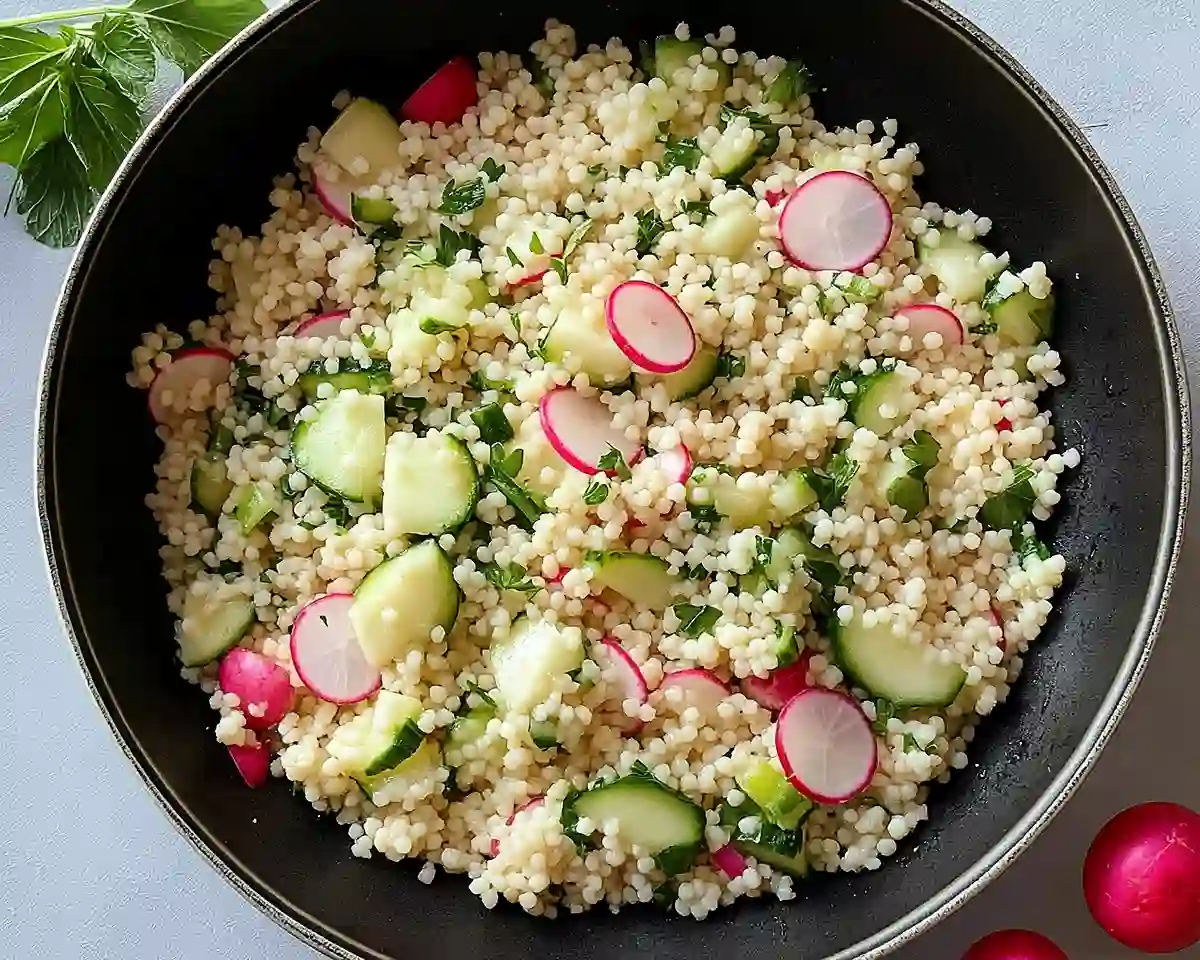
Fresh lemon herb couscous salad with cucumber and radishes—bright, herbaceous, and perfect for busy weeknights. This easy herb couscous with veggies comes together in 20 minutes!
There’s something magical about opening your fridge on a Friday afternoon and realizing you’ve got everything for a meal that tastes like summer in a bowl. That’s exactly what happened to me when I first threw together this lemon herb couscous salad with cucumber and radishes—it was pure kitchen magic with ingredients I already had on hand.
The bright, citrusy dressing combined with tender couscous pearls and crisp vegetable bites created something so satisfying and herbaceous that I’ve made it at least twice a week ever since.
What I love most is how effortless this lemon couscous salad truly is. You know how sometimes the easiest recipes end up being the most impressive? This herb couscous with veggies is that winning combination—it takes barely 20 minutes from start to finish, yet tastes like you spent hours planning the perfect summer meal.
Table of Contents
Ingredients
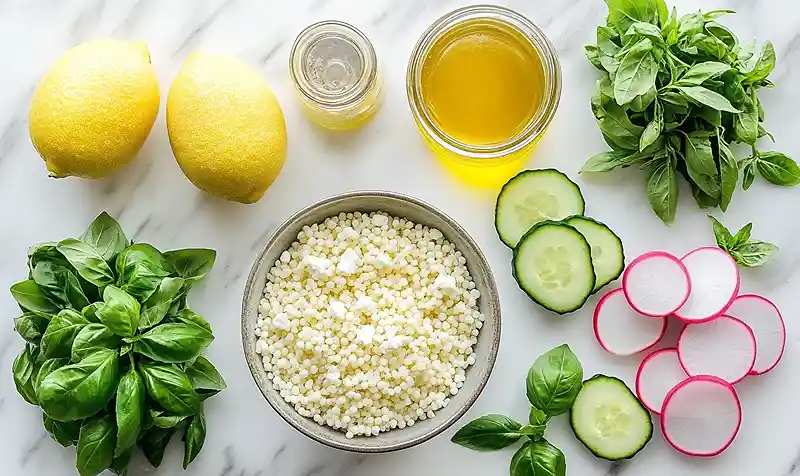
| Component | Ingredient | Amount |
|---|---|---|
| Vinaigrette | Olive oil | ¼ cup |
| Fresh squeezed lemon juice | ¼ cup | |
| Dijon mustard | 1 tsp | |
| Honey | 1 tsp | |
| Diced shallot | 2 tbsp | |
| Fresh basil, roughly chopped | ¼ cup | |
| Fresh parsley, roughly chopped | ¼ cup | |
| Salt & pepper | To taste | |
| Salad | Pearl (Israeli) couscous, uncooked | 1.5 cups |
| Baby cucumbers (or English cucumber), diced | 3 (or 1 large) | |
| Diced radishes | ½ cup | |
| Crumbled feta cheese | 4–5 oz |
Instructions
Step 1: Cook Your Couscous
Bring salted water to a boil in a medium pot and add your couscous, stirring occasionally to prevent sticking. Cook according to package directions—usually 8–10 minutes—until the grains are tender yet still hold their pearlescent shape and slight firmness. Drain thoroughly in a fine-mesh colander and spread onto a baking sheet to cool slightly, which helps each grain stay distinct rather than clumping together.
Step 2: Build Your Vinaigrette
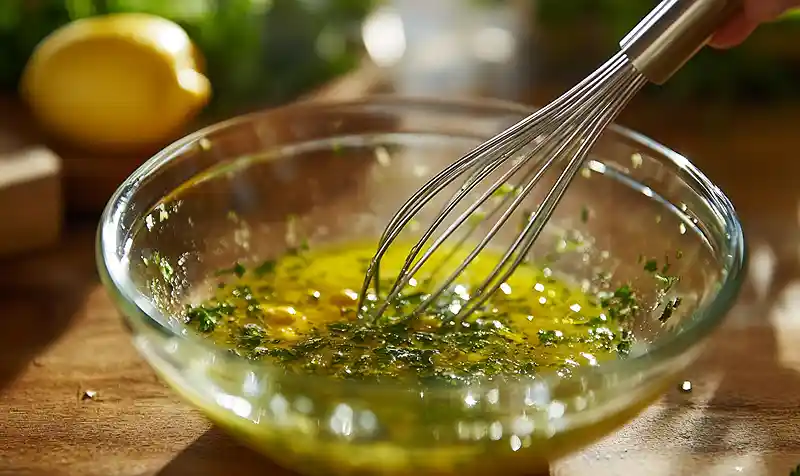
In a small bowl, whisk together the olive oil, fresh lemon juice, Dijon mustard, and honey until the mixture emulsifies into a silky, golden dressing that clings beautifully to a spoon. Fold in your minced shallot, torn basil, and chopped parsley—these fresh herbs transform your dressing from simply tangy into something herbaceous and alive. Taste and adjust seasoning with salt and pepper, remembering that the feta will add saltiness, so go easy at first.
Step 3: Combine & Create Magic
In a large mixing bowl, gently toss your cooled couscous with the diced cucumbers, radishes, and creamy feta crumbles until everything glistens with that bright lemon vinaigrette. The couscous pearls should shine like tiny jewels as they soak up the dressing, while the crisp vegetables maintain their refreshing snap—as delicate as fresh spring blossoms in texture. Serve immediately while the vegetables are at peak crispness, or refrigerate for up to 4 days and enjoy chilled or at room temperature.
Substitutions For Herb Couscous with Veggies
Use Fresh Dill or Chives Instead of Basil
Well, if basil isn’t in your garden or pantry, fresh dill brings a totally different but equally delicious herbaceous note to this lemon couscous salad. Use the same quantity of dill or chives, and you’ll get a slightly more sophisticated, anise-forward flavor that pairs beautifully with cucumber. Some folks prefer this version for summer entertaining—it feels elegant and unexpected while keeping the recipe just as simple.
Swap Feta for Goat Cheese or Ricotta Salata
Creamy goat cheese crumbles work wonderfully in this herb couscous with veggies, offering a softer, more spreadable texture that melts slightly into the warm grains. Ricotta salata, on the other hand, gives you a firmer, more salty bite that some people find even more satisfying. Either option shifts the flavor profile slightly while maintaining that cool, creamy element.
Substitute Lemon with Lime or White Wine Vinegar
This lemon herb couscous salad is incredibly flexible with its acid component—try fresh lime juice for a tropical twist, or swap in white wine vinegar for something a touch more subtle. You might lose some brightness but gain earthiness, and honestly, every version tastes wonderful depending on what you’re in the mood for.
Replace Cucumbers with Zucchini or Celery
If cucumber isn’t calling to you, thin slices of crisp raw zucchini or diced celery both work beautifully in this recipe. Zucchini stays tender and slightly sweet, while celery adds a sharp, snappy crunch that transforms the overall texture profile. Both are equally fresh and crisp as cucumber, just with their own distinct personality.
Make It Grain-Free with Chickpeas
Want to skip the grain and keep it herbaceous and light? Substitute the couscous with 1½ cups of drained, rinsed chickpeas for a protein-packed twist on this cucumber radish couscous salad. The chickpeas soak up all that lemon vinaigrette beautifully while adding heartiness and staying completely plant-forward.
Explore more fresh grain-based salads by checking out our simple salad dressing tutorials for creating vibrant vinaigrettes from scratch. If you’re looking to expand your herb-forward recipes, our collection of high-protein lunch salads offers wonderful inspiration for adding substance to lighter meals. You’ll also love our easy prep-ahead vegetable ideas that pair beautifully with this lemon couscous salad.
Troubleshooting Tips On Your Cucumber Radish Couscous Salad
Couscous Tastes Bland or One-Dimensional
This usually means your vinaigrette needs more punch—taste it on its own first. A squeeze more fresh lemon juice, an extra pinch of salt, or even a touch more honey can wake everything up. Remember that couscous is neutral and absorbs flavors beautifully, so don’t be shy with seasoning your dressing before it hits the grains.
Vegetables Seem Watery or Release Too Much Liquid
Pat your diced cucumbers and radishes dry with a clean kitchen towel before mixing them in, especially if you’re prepping ahead. If liquid pools at the bottom after refrigerating, simply drain it off gently or serve the salad using a slotted spoon. You can also reduce the amount of fresh lemon juice by a tablespoon if you’re making this ahead and storing it longer.
Feta Cheese Overwhelms the Other Flavors
If your salad tastes overly salty or the feta dominates, reduce the amount to 3 ounces and increase your fresh herbs instead. Sometimes the quality of your feta matters too—milder, creamier varieties work better here than very salty, crumbly blocks. You could also pre-rinse your feta under cold water briefly to reduce surface salt.
Herbs Taste Wilted or Lose Their Freshness
Always use the most vibrant, perky herbs you can find, and add them to your vinaigrette just before mixing with the salad if you’re not serving immediately. If you’re prepping ahead, keep your herbs separate and fold them in right before serving. Fresh herbs fade quickly once dressed, so timing matters for that bright, herbaceous quality.
Storage & Meal Prep
Storing Your Salad
This lemon herb couscous salad keeps beautifully in an airtight container in the refrigerator for up to 4 days, making it an absolute dream for meal prep. The couscous actually absorbs more dressing flavor as it sits, deepening in taste—some people think it tastes even better on day two or three. The vegetables stay crisp longer than you’d expect, though radishes soften slightly over time, which some folks find preferable.
Meal Prep Strategy
Cook your couscous and make your vinaigrette on Sunday, storing them separately in airtight containers until you’re ready to assemble. Keep your vegetables diced and refrigerated separately as well, then combine everything the night before you’ll eat it, allowing flavors to meld beautifully. This approach keeps components fresh while giving you grab-and-go meals that taste like you just made them.
Serving Suggestions
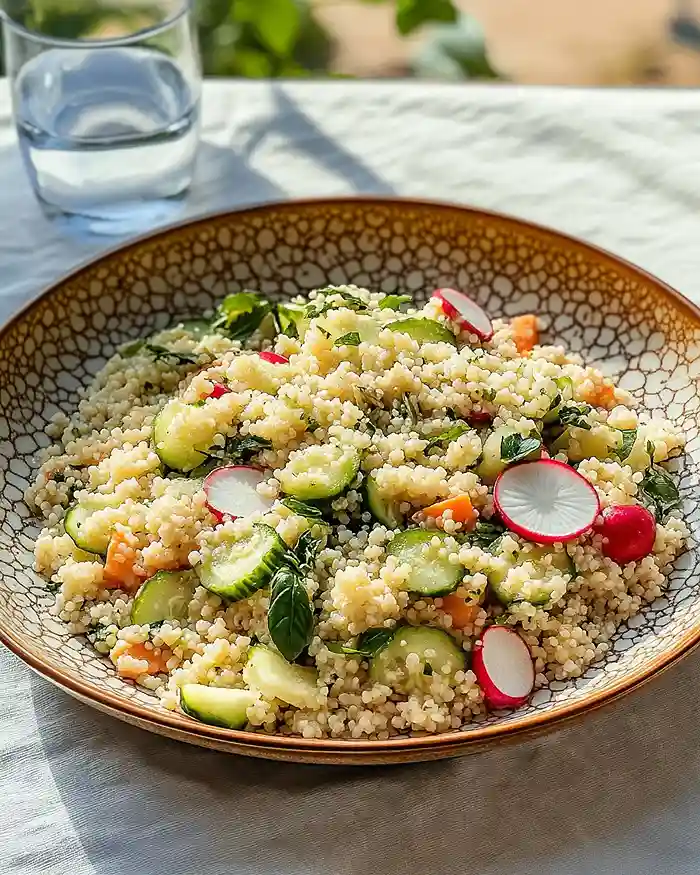
Serve this lemon couscous salad chilled straight from the fridge, or let it sit at room temperature for 15 minutes to let flavors brighten and soften slightly. It pairs beautifully alongside grilled chicken, baked salmon, or falafel for a Mediterranean-inspired feast, or enjoy it solo as a refreshing lunch that keeps you satisfied for hours.
You can also spoon it into lettuce cups for a lighter wrap situation, or layer it in mason jars for portable picnic meals.
Variations For Lemon Couscous Salad
Add Protein for Heartier Appetites
Toss in diced grilled chicken, flaked white fish, or roasted chickpeas to transform this herb couscous with veggies into a complete meal. A handful of sunflower seeds or pine nuts also adds wonderful richness and crunch without requiring any cooking. Even chopped hard-boiled eggs turn this into something more substantial for evening dinners.
Make It Dairy-Free
Simply omit the feta and add extra herbs, roasted seeds, or diced avocado for richness and creaminess in this lemon couscous salad. The herbaceous dressing is already naturally vegan, so you’re just one ingredient away from a completely plant-forward version. Some folks add tahini to the vinaigrette for extra richness when removing dairy.
Kid-Friendly Version
If little ones are hesitant about radishes or shallots, finely mince them into nearly invisible pieces or omit them entirely and bulk up the cucumber instead. Many kids love this herb couscous with veggies once they realize it’s basically a fancy pasta salad—especially if you let them help mix it together. You might reduce the herbs slightly for younger palates too.
Create a Warm Grain Bowl
This recipe shines served warm with the couscous fresh from the pot if you prefer heartier, more comforting grain bowls. The herbs will be slightly more intense, and the feta will soften dreamily into the warm grains, creating an entirely different but equally delicious experience.
For guidance on selecting the crispest cucumbers and radishes, check out this expert produce-selection guide from the FDA to ensure peak freshness.
FAQs About Lemon Herb Couscous Salad
Can I make this lemon herb couscous salad ahead for parties?
Absolutely—it’s one of the best make-ahead salads because flavors deepen beautifully as it sits. Make it the night before your gathering, store it covered in the refrigerator, and give it a quick stir and taste check before serving. You might need to add a splash of fresh lemon juice or olive oil if it seems dry, since couscous absorbs liquid over time.
How do I keep vegetables from getting soggy in this cucumber radish couscous salad?
Pat your cucumbers and radishes completely dry before mixing them in, and store the dressed salad in an airtight container to minimize exposure to air. If you’re prepping this more than 24 hours ahead, keep your vegetables separate and combine everything just before serving for maximum crispness.
What’s the best way to juice fresh lemons for this recipe?
Microwave your lemon for 20–30 seconds to warm it slightly, then roll it firmly on the counter before cutting and squeezing—you’ll get significantly more juice with minimal effort. A handheld citrus juicer also works wonderfully if you have one, and some folks prefer it over the squeeze-and-strain method.
Why does this recipe call for pearl couscous instead of regular couscous?
Pearl (Israeli) couscous has larger grains that stay distinct and maintain a pleasant chewiness, while regular couscous can turn mushy if dressed too early. The pearl variety also looks more visually interesting in this lemon couscous salad, with each grain visible and glistening under that bright vinaigrette.
Can I use dried herbs instead of fresh in this herb couscous with veggies?
You technically can, though the result won’t have that vibrant, herbaceous quality that makes this salad so special. If fresh herbs aren’t available, use one-third the amount of dried herbs (so about 1 tablespoon dried basil and parsley combined), or simply increase other flavors like garlic or shallot to compensate.
Best way to adjust this if it needs more richness?
Add a splash more olive oil, increase the feta slightly, or stir in a spoonful of tahini or Greek yogurt into your vinaigrette to create something creamier. A handful of toasted nuts or seeds also adds richness and complexity without changing the core flavor profile of this lemon herb couscous salad.
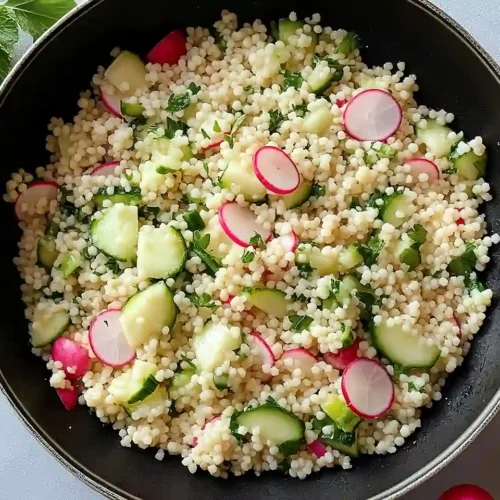
Lemon Herb Couscous Salad with Cucumber and Radishes
Equipment
- Medium pot
- Fine-mesh colander
- Baking sheet
- Small bowl
- Whisk
- Large mixing bowl
- Kitchen knife
Ingredients
Vinaigrette
- 0.25 cup Olive oil
- 0.25 cup Fresh squeezed lemon juice
- 1 tsp Dijon mustard
- 1 tsp Honey
- 2 tbsp Diced shallot
- 0.25 cup Fresh basil, roughly chopped
- 0.25 cup Fresh parsley, roughly chopped
- to taste Salt & pepper
Salad
- 1.5 cups Pearl (Israeli) couscous, uncooked
- 3 whole Baby cucumbers (or 1 large English cucumber), diced
- 0.5 cup Diced radishes
- 4-5 oz Crumbled feta cheese
Instructions
- Bring salted water to a boil in a medium pot and add your couscous, stirring occasionally to prevent sticking. Cook according to package directions—usually 8–10 minutes—until the grains are tender yet still hold their pearlescent shape and slight firmness. Drain thoroughly in a fine-mesh colander and spread onto a baking sheet to cool slightly, which helps each grain stay distinct rather than clumping together.
- In a small bowl, whisk together the olive oil, fresh lemon juice, Dijon mustard, and honey until the mixture emulsifies into a silky, golden dressing that clings beautifully to a spoon. Fold in your minced shallot, torn basil, and chopped parsley—these fresh herbs transform your dressing from simply tangy into something herbaceous and alive. Taste and adjust seasoning with salt and pepper, remembering that the feta will add saltiness, so go easy at first.
- In a large mixing bowl, gently toss your cooled couscous with the diced cucumbers, radishes, and creamy feta crumbles until everything glistens with that bright lemon vinaigrette. The couscous pearls should shine like tiny jewels as they soak up the dressing, while the crisp vegetables maintain their refreshing snap—as delicate as fresh spring blossoms in texture. Serve immediately while the vegetables are at peak crispness, or refrigerate for up to 4 days and enjoy chilled or at room temperature.