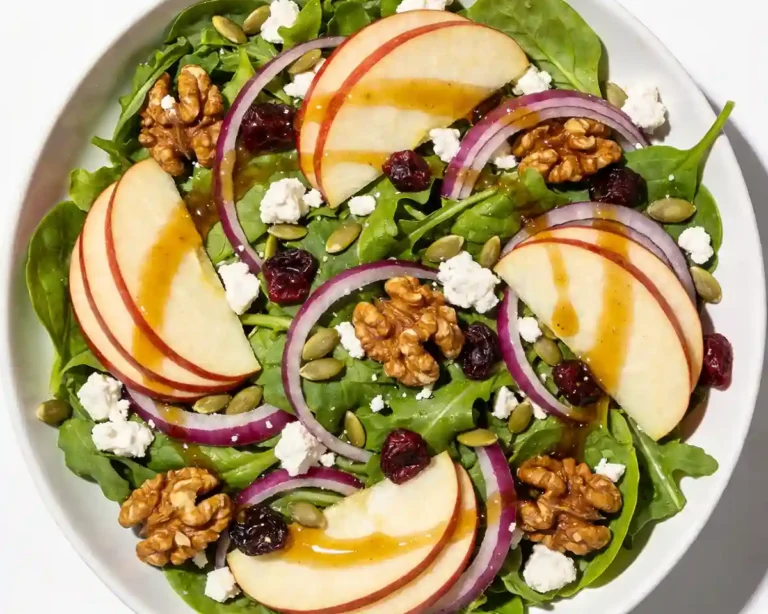
Spring Salad
Celebrate spring with this vibrant Spring Salad featuring crisp asparagus, sweet peas, and creamy goat cheese. Fresh, easy, and perfect for any gathering!
You know that moment in early spring when you walk through the farmers market and spot the first bundles of asparagus? That’s when I know it’s time to make this Spring Salad. There’s something magical about those bright green spears that just screams “new beginnings” and warmer days ahead.
I remember making this Salad With Peas And Lettuce for Easter brunch last year, and my niece—who usually picks around anything green—devoured two helpings.
The combination of tender asparagus, sweet peas, and that zippy lemon dressing creates a symphony of flavors that even skeptical kids can’t resist. It’s become my go-to whenever I need something that looks impressive but comes together in under 20 minutes.
What’s not to love about a salad that tastes like spring itself? This recipe celebrates fresh, seasonal produce at its peak, with textures ranging from crisp snow peas to creamy goat cheese, all brought together with a simple lemon vinaigrette that lets each ingredient shine.
Table of Contents
Ingredients
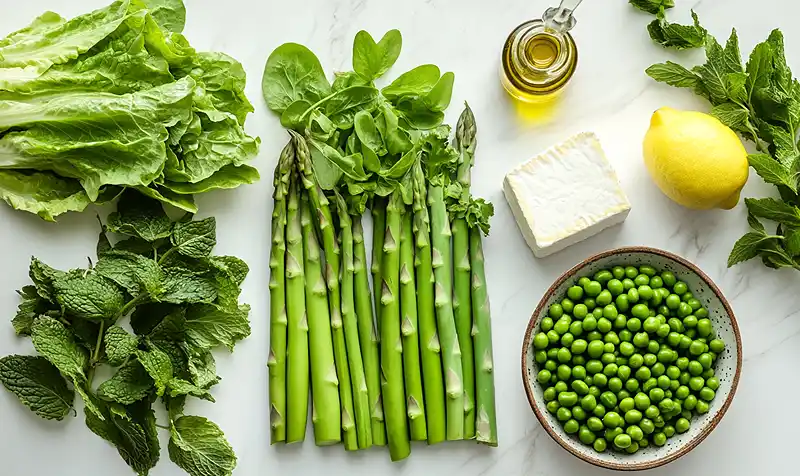
| Salad | Quantity |
|---|---|
| Asparagus bunches (woody ends removed) | 3 bunches (24 spears) |
| Snow peas (trimmed, strings removed) | 120g / 4oz |
| Baby gem or romaine lettuce (washed) | 1 head (16 leaves) |
| Fresh or frozen peas | 2 cups |
| Goat cheese | 90g / 3oz |
| Fresh mint leaves (torn) | 1 cup (loosely packed) |
| Lemon Dressing | Quantity |
|---|---|
| Lemon zest | 1 tsp |
| Fresh lemon juice | 2 tbsp (30ml) |
| Extra virgin olive oil | 6 tbsp (90ml) |
| Salt and pepper | 1/4 tsp each |
Instructions
Step 1: Bring a large pot of water to a rolling boil over high heat. This is your blanching station for all those gorgeous green vegetables. The water should be bubbling enthusiastically, ready to transform your raw produce into tender-crisp perfection.
Step 2: Add the snow peas to the boiling water and let them cook for exactly 1½ minutes. Watch as they turn that brilliant jade color—as vibrant as freshly sprouted leaves. Set your timer because precision matters here for that perfect crunch.
Step 3: Without draining the water, add your asparagus spears directly to the pot with the snow peas. Boil everything together for another 1½ minutes. The asparagus should be tender enough to pierce with a fork but still have a slight resistance, not mushy or limp.
Step 4: Toss in the frozen or fresh peas and boil for just 30 seconds, or until the water returns to a simmer and the peas brighten to that gorgeous emerald green. This quick blanch is all they need to become tender while maintaining their natural sweetness.
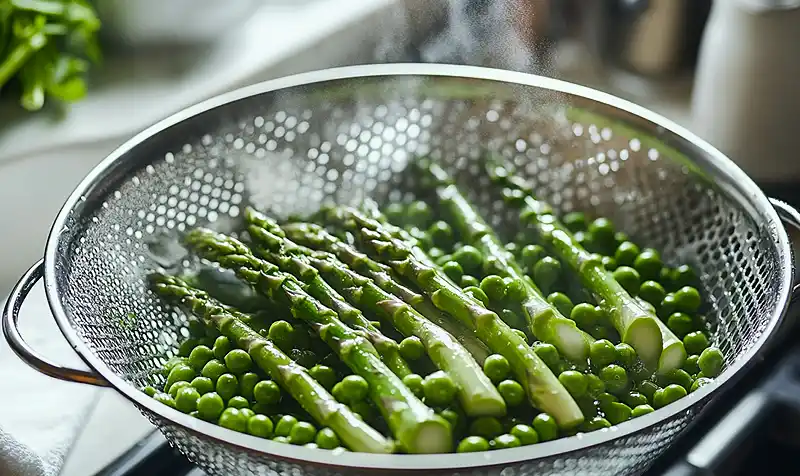
Step 5: Immediately drain all the vegetables in a colander and run cold water over them until they’re completely cooled. This stops the cooking process instantly and locks in that beautiful color. It’s like hitting pause on perfection.
Step 6: Remove the asparagus and snow peas from the colander and gently blot them dry with paper towels. Leave the peas in the colander, giving them an occasional toss to help them air-dry naturally. Wet vegetables are the enemy of a good dressing—it’ll slide right off instead of clinging to every surface.
Step 7: Take your larger lettuce leaves and split them down the middle lengthwise, creating manageable pieces. Leave the smaller, tender inner leaves whole for variety in texture. Cut the asparagus spears in half on a slight diagonal angle—it’s prettier and creates more surface area for the dressing to coat.
Step 8: Grab a jar with a tight-fitting lid and add your lemon zest, fresh lemon juice, extra virgin olive oil, salt, and pepper. Shake vigorously for about 15 seconds until the dressing emulsifies into a glossy, golden mixture that’ll make your vegetables sing with flavor.
Step 9: Combine all your prepped vegetables—the asparagus, snow peas, regular peas, and lettuce—in a large mixing bowl. Drizzle the lemon dressing over everything and toss gently but thoroughly with your hands or salad tongs. Every piece should glisten with that bright, citrusy coating.
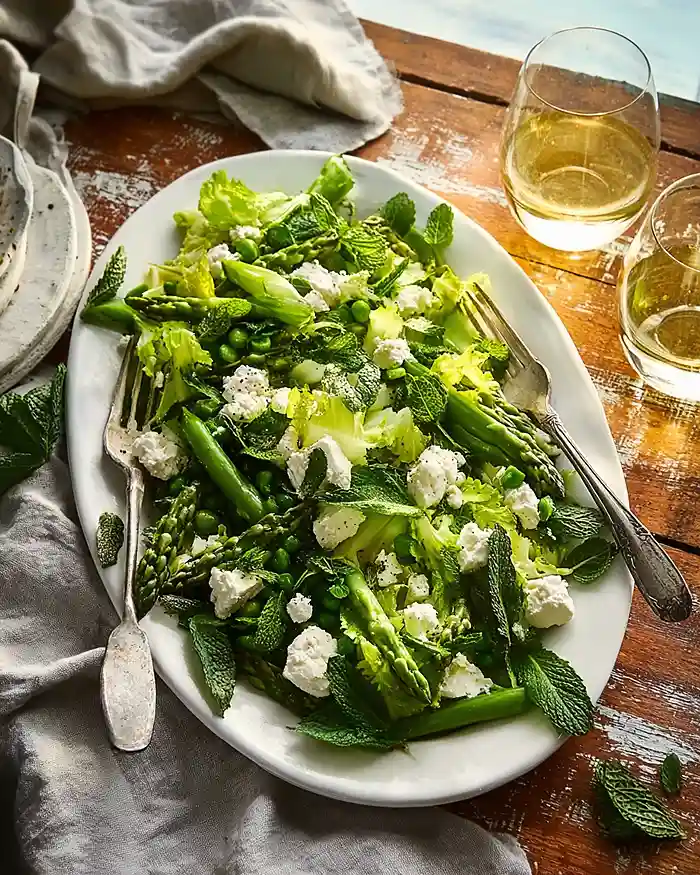
Step 10: Arrange your dressed salad on a beautiful serving platter for maximum visual impact. Scatter small chunks of creamy goat cheese across the top and tuck fresh mint leaves throughout. Serve immediately while everything is crisp, fresh, and at its absolute best!
Substitutions
Asparagus alternatives: If asparagus isn’t in season or you’re looking for variety, try this Asparagus And Pea Salad with tender green beans or sugar snap peas instead. Blanch them using the same timing, and you’ll get that satisfying crunch with a slightly different flavor profile. Broccolini also works beautifully, offering tiny florets that catch the dressing wonderfully.
Cheese swaps: Not a fan of goat cheese’s tangy bite? This Pea Salad With Ricotta Cheese variation is equally delightful—just dollop fresh ricotta across your platter for a milder, creamier finish. Feta cheese works too, especially if you love that salty Mediterranean flavor, or try fresh mozzarella torn into pieces for a kid-friendly option.
Lettuce options: Baby gem lettuce can be swapped with butter lettuce for an even more delicate texture, or use peppery arugula if you want a bolder flavor foundation. Romaine is always reliable and holds up well to the dressing without wilting too quickly. Even baby spinach works in a pinch, though it’s a bit more assertive.
Herb variations: Fresh mint brings a cool, refreshing element, but basil offers a sweeter, more aromatic profile that pairs beautifully with lemon. Dill is another lovely choice for this Spring Salad, adding an herbal brightness that complements the peas especially well. Parsley works too, though it’s more subtle and lets the vegetables take center stage.
Dressing adjustments: For a creamier dressing, whisk in a tablespoon of Dijon mustard or Greek yogurt to your lemon mixture. If you prefer sweeter notes, add half a teaspoon of honey to balance the acidity. For those who love garlic, a small minced clove transforms this into a more robust vinaigrette.
Troubleshooting
Soggy salad syndrome: If your salad looks limp and watery, you likely didn’t dry the blanched vegetables thoroughly enough. The moisture dilutes the dressing and prevents it from adhering properly. Always take that extra minute to pat everything dry with paper towels, or let vegetables air-dry in a single layer for 10 minutes before assembling.
Bland flavor: Sometimes this Salad With Peas And Lettuce can taste flat if you’ve under-seasoned the dressing. Don’t be shy with the salt and pepper—vegetables need more seasoning than you think. Taste your dressing before adding it to the salad, and adjust until it’s punchy and vibrant on its own.
Overcooked vegetables: Mushy asparagus or peas happen when you skip the ice bath or let them sit in hot water too long. Timing is everything with blanching—set a timer and have that cold water ready to shock the vegetables the instant they’re done. Think of it as preserving that perfect tender-crisp texture.
Goat cheese too crumbly: If your goat cheese is turning into dust instead of staying in nice chunks, it might be too cold or too dry. Let it sit at room temperature for 15 minutes before breaking it up, and choose a softer, creamier variety rather than aged goat cheese.
Storage and Meal Prep
Store leftover Spring Salad in an airtight container in the refrigerator for up to 2 days, though it’s truly best enjoyed fresh. The lettuce will wilt and the dressing will pool at the bottom, so if you know you’ll have leftovers, consider storing the dressed vegetables separately from the lettuce and goat cheese. Give everything a quick toss before serving to redistribute the dressing.
For meal prep success with this Asparagus And Pea Salad, blanch your vegetables up to 2 days ahead and store them dry in the fridge. Keep the dressing in a separate jar and only assemble the salad right before serving. This way, everything stays crisp and fresh, and you’ll look like a kitchen genius when you throw together this gorgeous dish in five minutes flat.
Serving Suggestions
Well, this Spring Salad shines as a light lunch on its own, especially when paired with crusty artisan bread and a glass of chilled white wine. For heartier appetites, serve it alongside grilled chicken, salmon, or even a simple frittata for a complete spring brunch spread. The bright, fresh flavors complement richer proteins beautifully without competing for attention.
This salad also makes a stunning side dish for Easter dinner, Mother’s Day lunch, or any spring celebration where you want something that looks as good as it tastes. Place it next to roasted lamb, baked ham, or even a simple roast chicken, and watch it disappear. The colors alone—all those gorgeous greens with pops of white cheese—make your table feel like a garden party.
Variations
Kid-friendly version: Transform this into a milder salad by swapping the goat cheese for small mozzarella pearls and reducing the mint to just a tablespoon of chopped basil. Kids often prefer sweeter, less assertive flavors, so you might add a tiny drizzle of honey to the dressing. You can even cut the vegetables into smaller pieces so they’re easier for little hands to manage with a fork.
Vegan adaptation: Skip the goat cheese entirely or replace it with crumbled firm tofu that’s been marinated in lemon juice and nutritional yeast for a cheesy flavor. Alternatively, use cashew cheese for that creamy element without any dairy. The salad still delivers incredible freshness and texture even without the traditional cheese component.
Protein-packed version: Turn this Pea Salad With Ricotta Cheese into a complete meal by adding chickpeas, white beans, or grilled shrimp on top. Quinoa mixed in with the vegetables adds substance and makes it more filling for lunch prep. Hard-boiled eggs, sliced thin, are another traditional spring addition that pairs wonderfully with the lemon dressing.
Mediterranean twist: Swap the goat cheese for feta and add kalamata olives, sun-dried tomatoes, and a sprinkle of za’atar seasoning to the dressing. This transforms your Spring Salad into something with deeper, more complex flavors. For more inspiration on Mediterranean flavors, check out this expert guide to Mediterranean salad techniques.
Winter variation: When spring vegetables aren’t available, make this with roasted Brussels sprouts, blanched broccoli, and frozen peas. The concept stays the same—bright vegetables, tangy dressing, creamy cheese—but adapted to what’s fresh and seasonal. It won’t have quite the same delicate spring vibe, but it’s delicious in its own right.
Spring Salad FAQs
What is in a spring salad?
A spring salad typically features seasonal vegetables like asparagus, peas, fresh herbs, and tender lettuces that emerge during early spring months. This Spring Salad specifically celebrates green vegetables at their peak, combined with bright citrus dressing and creamy cheese. The focus is always on fresh, light ingredients that feel like a celebration of the season after a long winter.
How do you keep asparagus crisp in salads?
The secret to crisp asparagus lies in proper blanching and immediate cooling with an ice bath or cold running water. Never overcook your spears—they should be tender-crisp, not soft or mushy. Pat them completely dry before adding to your Asparagus And Pea Salad, and dress the salad just before serving to prevent the acid in the dressing from breaking down the texture over time.
Can I make this salad ahead of time?
You can prep all the components ahead, but I recommend assembling this Salad With Peas And Lettuce right before serving for the best texture. Blanch your vegetables and make your dressing up to 2 days in advance, storing them separately in the fridge. When you’re ready to serve, simply toss everything together and it’ll taste freshly made.
What’s the best way to remove strings from snow peas?
Snap off the stem end of each snow pea and pull it downward along the straight edge—the string will come right off with it. If the string breaks, you can usually grab it from the other end and pull it back. Some younger, tender snow peas have barely-there strings that don’t need removing, but it’s worth checking each one for the best eating experience.
Is spring salad healthy for you?
Absolutely! This Spring Salad is packed with fiber, vitamins A, C, and K from the vegetables, plus healthy fats from olive oil. Peas provide plant-based protein, while asparagus is known for its anti-inflammatory properties and folate content. According to Harvard’s nutrition research on vegetable benefits, eating a variety of colorful vegetables like those in this salad supports overall health and disease prevention.
Final Thoughts
This Spring Salad truly captures the essence of the season in one gorgeous, easy-to-make dish. Whether you’re preparing it for a special Easter brunch, a casual weeknight dinner, or meal prepping for the week ahead, it delivers fresh flavors and beautiful colors that make eating your vegetables feel like a celebration. The combination of tender-crisp asparagus, sweet peas, and tangy goat cheese never fails to impress.
For more fresh inspiration, explore our collection of vibrant citrus-based salad recipes or discover how to transform simple ingredients with our creative vegetable preparation techniques. Spring is the perfect time to embrace fresh eating, and this salad is your delicious starting point!
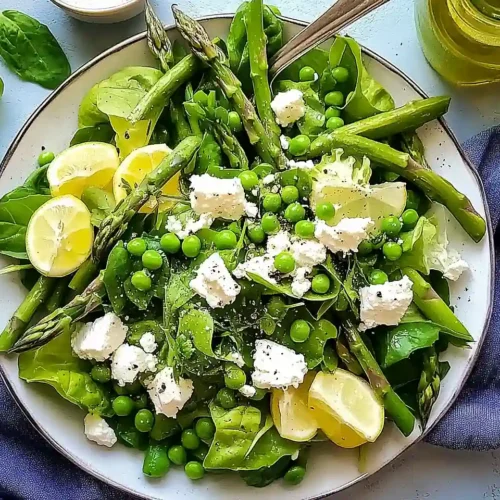
Spring Salad with Asparagus, Peas, and Goat Cheese
Equipment
- Large pot
- Colander
- Paper towels
- Jar with lid
- Large mixing bowl
- Serving platter
Ingredients
Salad
- 3 bunches asparagus 24 spears, woody ends snapped off
- 120 g snow peas 4oz, about 16 large or 20 smaller, trimmed and string removed
- 1 head baby gem or romaine lettuce 16 leaves, washed
- 2 cups fresh or frozen peas
- 90 g goat cheese 3oz
- 1 cup fresh mint leaves loosely packed, roughly torn
Lemon Dressing
- 1 tsp lemon zest from 1 lemon
- 2 tbsp lemon juice 30ml, fresh
- 6 tbsp extra virgin olive oil 90ml
- ¼ tsp salt
- ¼ tsp black pepper
Instructions
- Bring a large pot of water to a rolling boil over high heat. This is your blanching station for all those gorgeous green vegetables. The water should be bubbling enthusiastically, ready to transform your raw produce into tender-crisp perfection.
- Add the snow peas to the boiling water and let them cook for exactly 1½ minutes. Watch as they turn that brilliant jade color—as vibrant as freshly sprouted leaves. Set your timer because precision matters here for that perfect crunch.
- Without draining the water, add your asparagus spears directly to the pot with the snow peas. Boil everything together for another 1½ minutes. The asparagus should be tender enough to pierce with a fork but still have a slight resistance, not mushy or limp.
- Toss in the frozen or fresh peas and boil for just 30 seconds, or until the water returns to a simmer and the peas brighten to that gorgeous emerald green. This quick blanch is all they need to become tender while maintaining their natural sweetness.
- Immediately drain all the vegetables in a colander and run cold water over them until they’re completely cooled. This stops the cooking process instantly and locks in that beautiful color. It’s like hitting pause on perfection.
- Remove the asparagus and snow peas from the colander and gently blot them dry with paper towels. Leave the peas in the colander, giving them an occasional toss to help them air-dry naturally. Wet vegetables are the enemy of a good dressing—it’ll slide right off instead of clinging to every surface.
- Take your larger lettuce leaves and split them down the middle lengthwise, creating manageable pieces. Leave the smaller, tender inner leaves whole for variety in texture. Cut the asparagus spears in half on a slight diagonal angle—it’s prettier and creates more surface area for the dressing to coat.
- Grab a jar with a tight-fitting lid and add your lemon zest, fresh lemon juice, extra virgin olive oil, salt, and pepper. Shake vigorously for about 15 seconds until the dressing emulsifies into a glossy, golden mixture that’ll make your vegetables sing with flavor.
- Combine all your prepped vegetables—the asparagus, snow peas, regular peas, and lettuce—in a large mixing bowl. Drizzle the lemon dressing over everything and toss gently but thoroughly with your hands or salad tongs. Every piece should glisten with that bright, citrusy coating.
- Arrange your dressed salad on a beautiful serving platter for maximum visual impact. Scatter small chunks of creamy goat cheese across the top and tuck fresh mint leaves throughout. Serve immediately while everything is crisp, fresh, and at its absolute best!