Mediterranean Greek salad
Craving the best Greek salad? This Mediterranean Greek salad recipe is crisp, bold & ready in 20 min. Perfect healthy dinner or easy lunch.
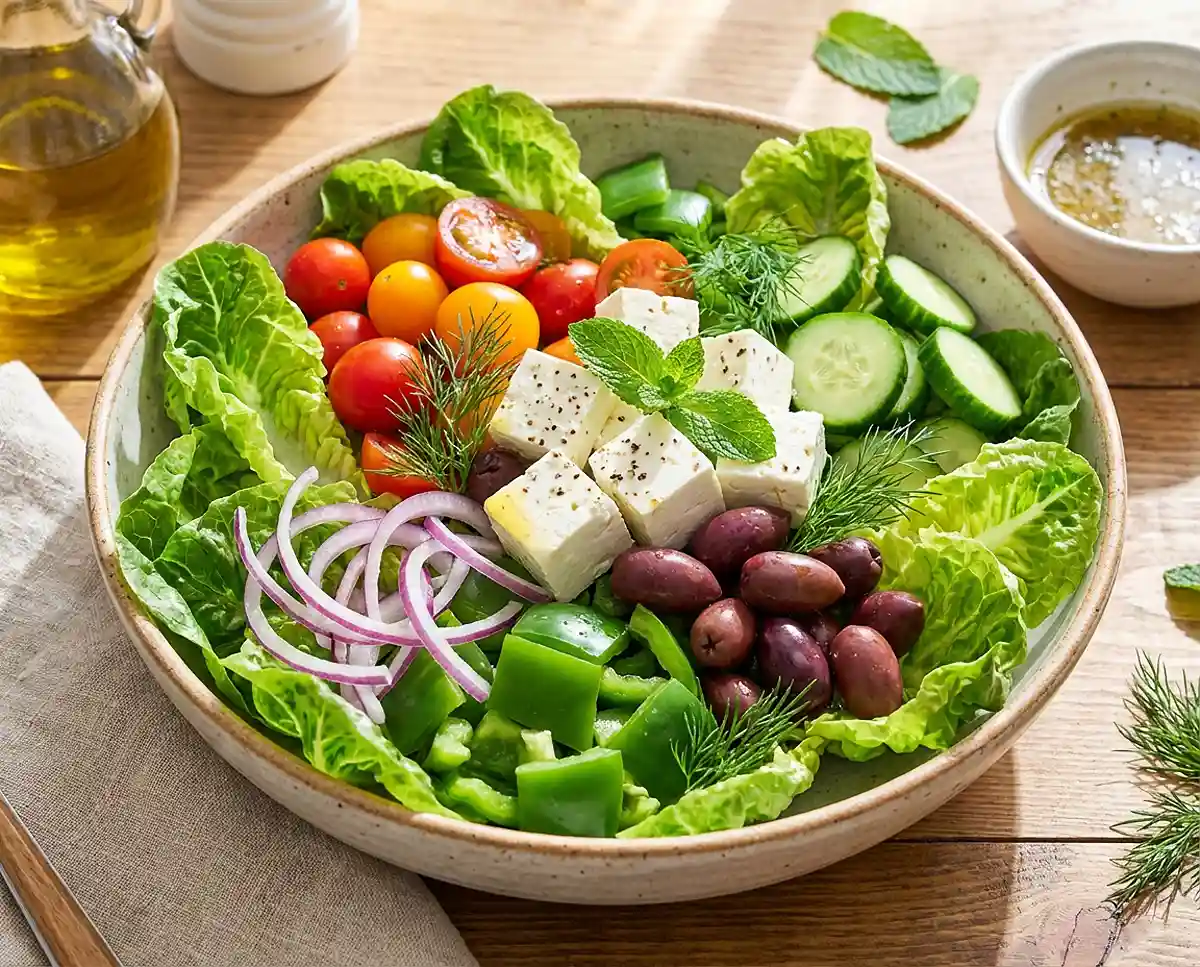
Have you ever bitten into a salad so fresh it almost crunches at you? That’s exactly what this best salad recipe delivers every single time. The romaine shatters gently against ripe tomatoes bursting with juice, while the cucumbers bring a cool, almost watery snap — as crisp as freshly laundered linen on a summer morning. It’s the kind of good-looking salad that makes people pause and say, “Wait, did you make that?”
Well, the best part? It comes together in about 20 minutes with nothing more than a sharp knife, a big bowl, and ingredients you can find at any grocery store. Whether you’re brand-new to making salads from scratch or just craving a healthy diet salad that doesn’t taste like a punishment, this recipe is for you.
According to Harvard’s research on Mediterranean eating patterns and long-term wellness, this style of cooking is one of the most broadly praised approaches to everyday health. Let’s dive in.
Table of Contents
Ingredients
For the Salad
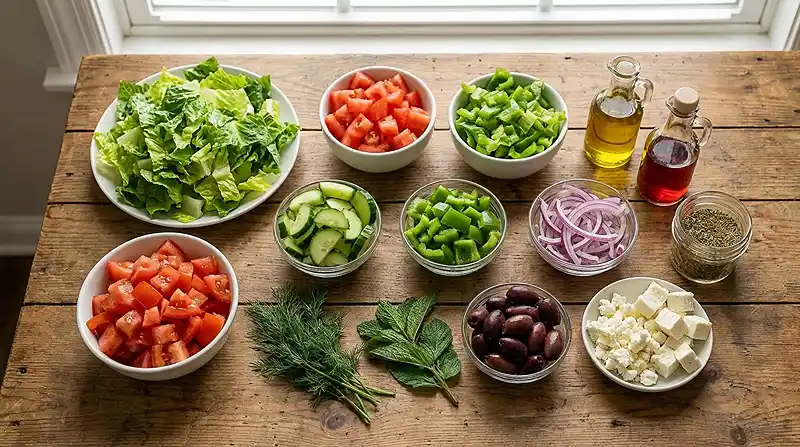
| Ingredient | Amount | Prep Notes |
|---|---|---|
| Romaine lettuce | 1 large head | Roughly torn into bite-sized pieces |
| Ripe tomatoes | 4 medium | Cut into generous bite-sized chunks |
| English cucumber | 1 large | Chopped into ¾-inch chunks or half-moons |
| Green bell pepper | 1 medium | Cored and cut into ¾-inch chunks |
| Red onion | 1 small | Thinly sliced, soaked in cold water first |
| Kalamata olives | ½ cup | Pitted; keep whole or halve them |
| Authentic Greek feta cheese | 8 oz | Diced into neat ¾-inch cubes |
| Fresh dill or mint | 3 tablespoons | Roughly chopped; added at the very end |
For the Greek Salad Dressing
| Ingredient | Amount | Notes |
|---|---|---|
| High-quality extra virgin olive oil | ½ cup | Use the best you can find — it truly matters |
| Red wine vinegar | ½ cup | Balances and brightens every bite |
| Dried Greek oregano | 1 teaspoon | Crush between fingers before adding |
| Garlic clove, minced | 1 small | Fresh is always best for bold flavor |
| Dijon mustard | ½ teaspoon | Helps emulsify the dressing |
| Sea salt | ½ teaspoon | Adjust to your taste |
| Freshly ground black pepper | ¼ teaspoon | Add more if you love a little heat |
Instructions
Before you begin, check out our guide to prepping and washing salad greens for maximum crunch. And for food safety basics, the FDA’s produce-cleaning guidance is a handy reference to bookmark.
Step 1: Prep the Veggies
Rinse all your fresh produce under cold running water, giving each piece a gentle rub. This simple step lifts away any dust or residue and keeps everything tasting bright and clean. For leafy greens, a quick spin in a salad spinner after washing makes a really noticeable difference in texture.
Step 2: Soak the Onion
Thinly slice the red onion and nestle the slices into a small bowl of cold water. If you’d like extra flavor, add a small splash of red wine vinegar to the soaking water — it gently mellows things out. Let the onion soak for 10 to 15 minutes while you prep everything else, then drain just before assembling.
This soaking trick is the secret weapon of this Mediterranean Greek salad recipe — it turns that sharp, sometimes overwhelming raw onion into something soft and sweetly savory while keeping the slices beautifully crisp. Don’t skip it!
Step 3: Chop the Veggies
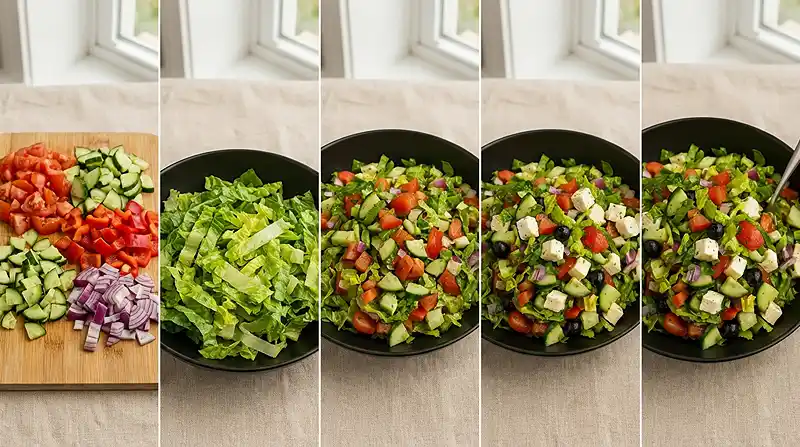
Slice your ripe tomatoes into generous, rustic chunks — not too precious, just hearty and juicy. Roughly chop the cucumber into ¾-inch pieces, core and cut the bell pepper into similar-sized chunks, and tear or chop the romaine into bite-sized pieces. Each vegetable brings its own color and crunch to this good-looking salad, so generous cuts let every ingredient shine.
Carefully dice your block of authentic Greek feta into neat ¾-inch cubes — take your time here, because whole cubes of feta are what make this salad look genuinely gorgeous rather than just tossed together. Drain the olives and decide whether you’d like them whole or halved. Roughly chop the fresh dill or mint and set it aside for the final flourish.
Step 4: Make the Greek Salad Dressing
In a medium bowl, combine the red wine vinegar, minced garlic, dried oregano (crush it between your fingers as you add it — this releases more of those fragrant, herby oils), sea salt, and black pepper. Stir in the Dijon mustard, which acts as a natural emulsifier and helps the dressing hold together beautifully. Now, while whisking steadily, drizzle in the olive oil in a slow, thin stream until the dressing looks smooth and lightly thickened.
Taste it. Adjust the seasoning. A little more salt? A touch more vinegar? Trust your palate — the dressing for this best salad recipe should smell bold and herby, with that signature Mediterranean tang. For more inspiration, explore our complete vegan Greek salad with house-made vinaigrette technique.
Step 5: Dress & Toss
Add the chopped romaine, tomatoes, cucumbers, bell pepper, and drained red onion to a large serving bowl. Scatter the Kalamata olives over the top, then pour in about two-thirds of the dressing to start — you can always add more, but you can’t take it away. Gently lay the feta cubes on top and try not to break them up.
Using salad tongs or even clean hands, gently toss everything until each piece is lightly coated with dressing. Be soft and deliberate — you want every vegetable kissed with that gorgeous olive oil mixture without bruising the lettuce or mashing the feta into crumbles. The goal is for this healthy diet salad to look as vibrant in the bowl as it tastes on the fork.
Step 6: Season & Serve
Give the salad one final taste and adjust salt and pepper as needed, adding that last drizzle of dressing if it calls for it. Fold in the freshly chopped dill or mint — their grassy brightness is the perfect finishing note. Serve immediately for the most satisfying crunch, or pop it in the fridge for up to 30 minutes to let all those bold flavors meld together beautifully.
Substitutions
No Romaine? No Problem. Swap in butter lettuce for a softer, more delicate bite, or use baby arugula if you love a peppery kick. Iceberg works in a pinch for serious crunch lovers — this best salad recipe is flexible enough to handle whatever leafy green you have on hand.
Feta Alternatives. If authentic block feta is unavailable, crumbled feta works fine — just fold it in very gently at the end. For a dairy-free version, firm tofu marinated in lemon juice and salt is a surprisingly satisfying stand-in. Our plant-based Greek salad with dairy-free feta alternatives walks you through the whole swap step by step.
Kalamata Olive Swaps. Green olives, standard black olives, or even capers bring similar salty, briny notes if you can’t find Kalamatas. The key flavor element is that savory depth, so feel free to mix and match. Any good olive contributes to the Mediterranean Greek salad recipe flavor profile beautifully.
Vinegar Options. No red wine vinegar at home? White wine vinegar or fresh lemon juice create a slightly different but equally lovely dressing. Lemon juice brightens the healthy diet salad with a fresher citrus edge — wonderful in summer.
Fresh Herb Swaps. If dill or mint aren’t available, flat-leaf Italian parsley adds a lovely fresh, green finish. Fresh basil is another beautiful option. Just avoid dried herbs here — they won’t bring the same vibrant lift to a good-looking salad that deserves lively, fresh ingredients.
Troubleshooting
Problem: Soggy Greens. If your lettuce is wilting and droopy, it almost always means it was still wet when dressed. Always dry your romaine thoroughly after washing — a salad spinner is genuinely one of the best investments for any home cook who loves a crisp good-looking salad. Also, avoid dressing the salad more than 30 minutes before serving.
Problem: Bland Dressing. If your dressing tastes flat, it usually needs more salt or more acidity. Add a tiny pinch of sea salt and a small splash of red wine vinegar, then taste again. Crushing the dried oregano between your fingers rather than measuring it straight into the bowl also unlocks significantly more flavor in this Mediterranean Greek salad recipe dressing.
Problem: Watery Cucumbers. English cucumbers are generally lower in water content than regular cucumbers, which is why this recipe calls for them. If you’re using a standard cucumber, slice it, salt the pieces lightly, and let them drain in a colander for 10 minutes before patting dry. This prevents that dreaded watery puddle at the bottom of your best salad recipe bowl.
Problem: Dressing Won’t Emulsify. If your dressing looks separated and oily, you likely poured the olive oil in too fast. The Dijon mustard is there to help, but it needs time — whisk continuously and add the oil slowly, almost drop by drop at first. A quick blitz with an immersion blender also works wonders for a perfectly smooth, creamy healthy diet salad dressing.
Storage
This Mediterranean Greek salad recipe is best enjoyed fresh, but leftovers can be stored in an airtight container in the refrigerator for up to 2 days. Keep in mind that the greens will soften as they sit in the dressing. For the crispest results, store the dressing separately and toss just before serving — the undressed vegetables actually keep beautifully in the fridge for up to 3 days on their own.
Meal Prep
This salad is a meal prepper’s dream when handled smartly. Chop all the vegetables and store them together in a sealed container for up to 3 days, then make the dressing and keep it in a small jar in the fridge — just give it a shake before using. When you’re ready to eat, combine, add the feta, dress, and toss. You’ll have a gorgeous healthy diet salad on the table in under 5 minutes on your busiest weeknights.
Serving Suggestions & Pairings
This Mediterranean Greek salad recipe is wonderful alongside grilled chicken, lamb kebabs, or flaky pan-seared salmon. It also pairs beautifully with warm pita bread and a bowl of hummus for a completely plant-based spread. Serve it as a side at summer gatherings or let it be the main event for a light lunch — it genuinely works both ways.
For a heartier weeknight meal, try adding grilled shrimp or chickpeas directly to the bowl. Our salmon and avocado salad with protein-pairing ideas offers more inspiration for combinations that work brilliantly alongside Mediterranean flavors. The bright, herby dressing in this best salad recipe complements almost any grilled or roasted protein beautifully.
Variations
Kid-Friendly Version. Oh, the beauty of making this work for little ones! Swap the Kalamata olives for milder black olives (or skip them entirely), reduce the red onion, and use a lighter hand with the dressing. Cut the vegetables into smaller, more manageable pieces and use mild crumbled feta. Most kids love the bright colors of this good-looking salad once you get past the onion situation.
Protein-Boosted Version. Add a can of rinsed and drained chickpeas for plant-based protein, or slice grilled chicken breast over the top for a more substantial meal. Canned tuna also works surprisingly well in a Mediterranean Greek salad recipe — it’s a classic combination across many coastal Mediterranean regions. Browse our high-protein lunch salad ideas with fresh seafood pairings for even more inspiration.
Grain Bowl Variation. Serve this healthy diet salad over a base of cooked quinoa or farro for a grain bowl spin that’s deeply satisfying and completely meal-worthy. The chewy grains absorb the dressing beautifully and add a welcome heartiness without weighing anything down. This is especially great for meal prep lunches you can genuinely look forward to all morning.
Roasted Veggie Twist. Try adding roasted red peppers, sun-dried tomatoes, or quick-pickled red onion instead of the soaked fresh onion for a different flavor dimension. Each swap creates a slightly different but equally stunning best salad recipe — which is what makes this formula so endlessly adaptable to what’s in your fridge or at the farmers’ market.
Mediterranean Greek salad FAQs
What’s in a Greek Mediterranean salad?
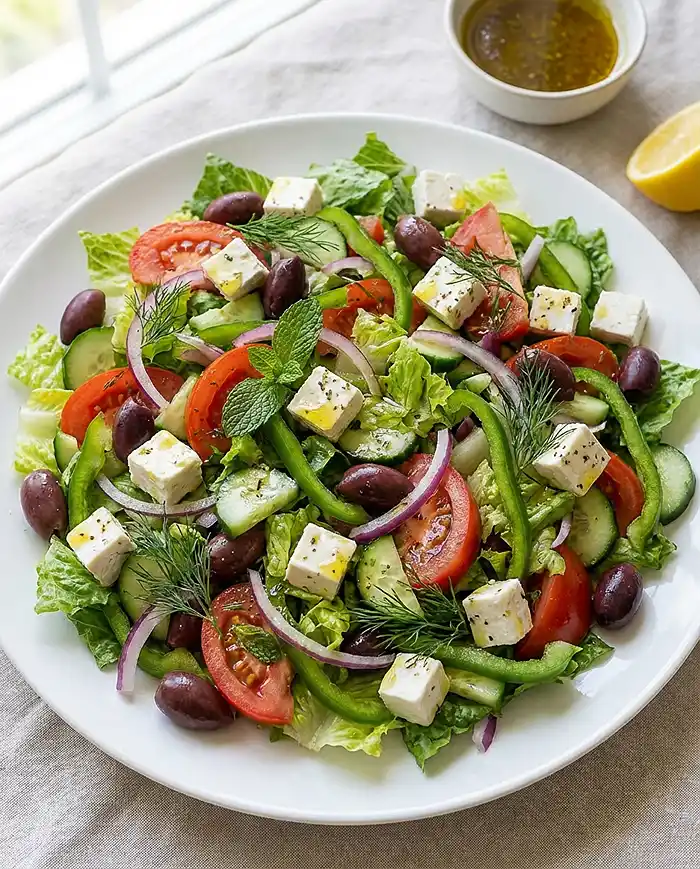
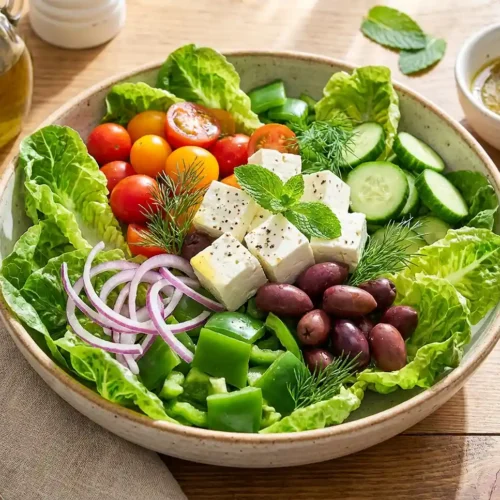
A Mediterranean Greek salad recipe typically includes romaine lettuce, ripe tomatoes, cucumber, green bell pepper, red onion, Kalamata olives, and authentic Greek feta cheese. The dressing is a bold, simple mixture of extra virgin olive oil, red wine vinegar, garlic, and dried oregano. Fresh herbs like dill or mint are the finishing touch that sets a truly good-looking salad apart from a basic one.
What are the main ingredients of a traditional Greek salad?
Traditionally, a classic Greek salad (known as “Horiatiki” in Greece) is made with tomatoes, cucumbers, green peppers, red onion, Kalamata olives, and a large slab of feta — no lettuce at all. The version in this best salad recipe adds romaine for extra volume and crunch, making it more of a crowd-friendly, American-style take on the original. Both versions feature that iconic olive oil and oregano dressing that is simply unforgettable.
What is the difference between Mediterranean and Greek salad?
The term “Mediterranean salad” is broader and can refer to salads inspired by any cuisine around the Mediterranean basin — including Italian, Moroccan, Turkish, or Lebanese dishes. A Mediterranean Greek salad recipe, specifically, draws from the Greek Horiatiki tradition: feta, Kalamata olives, and that oregano-forward dressing are the hallmarks. Think of “Mediterranean” as the neighborhood and “Greek salad” as a specific, beloved address within it.
How can I prevent common mistakes when making Mediterranean salad?
The most frequent pitfall is skipping the red onion soak — raw onion can overpower every other flavor in your healthy diet salad if left untreated. Another common mistake is over-dressing the salad or adding the dressing too far in advance, which leads to soggy greens. Always dress right before serving, taste as you go, and use the freshest produce you can find for the brightest, most vibrant result.
More Salad Recipes You’ll Love
Ready to expand your salad game? For warm-weather entertaining, our smoky grilled corn salad with fresh summer herbs is a crowd-pleaser every single time. If you’re eating plant-based, our vibrant vegan Greek salad with dairy-free feta is beautiful, bold, and completely nourishing. And for a protein-rich option that feels a little more elevated, our creamy salmon and avocado salad bowl is truly something special.
Mediterranean Greek Salad Recipe
Equipment
- Large serving bowl
- Medium Mixing Bowl
- Sharp chef’s knife
- Cutting board
- Whisk
- Salad tongs
- Salad spinner
- Small bowl (for soaking onion)
- Measuring cups and spoons
Ingredients
For the Salad
- 1 large head Romaine lettuce roughly torn into bite-sized pieces
- 4 medium Ripe tomatoes cut into bite-sized chunks
- 1 large English cucumber chopped into ¾-inch chunks or half-moons
- 1 medium Green bell pepper cored and cut into ¾-inch chunks
- 1 small Red onion thinly sliced, soaked in cold water before using
- ½ cup Kalamata olives pitted; whole or halved
- 8 oz Authentic Greek feta cheese diced into neat ¾-inch cubes
- 3 tablespoons Fresh dill or mint roughly chopped, added at the very end
For the Greek Salad Dressing
- ½ cup Extra virgin olive oil high-quality
- ½ cup Red wine vinegar
- 1 teaspoon Dried Greek oregano crush between fingers before adding
- 1 small clove Garlic minced
- ½ teaspoon Dijon mustard helps emulsify the dressing
- ½ teaspoon Sea salt adjust to taste
- ¼ teaspoon Freshly ground black pepper
Instructions
- Rinse all fresh produce under cold running water, giving each piece a gentle rub to remove any dust or residue. For the romaine, a quick spin in a salad spinner after washing will make a noticeable difference in texture and crispness.
- Thinly slice the red onion and place the slices in a small bowl of cold water. For extra flavor, add a small splash of red wine vinegar to the soaking water. Let the onion soak for 10 to 15 minutes while you prep the rest of the salad, then drain just before assembling.
- Slice the tomatoes into generous bite-sized chunks and chop the cucumber into ¾-inch pieces. Core the bell pepper and cut it into similar-sized chunks. Tear or chop the romaine into bite-sized pieces. Carefully dice the feta block into neat ¾-inch cubes. Drain the olives and keep them whole or halve them. Roughly chop the fresh dill or mint and set aside.
- In a medium bowl, combine the red wine vinegar, minced garlic, dried oregano (crush it between your fingers as you add it), sea salt, and black pepper. Stir in the Dijon mustard. While whisking steadily, drizzle in the olive oil in a slow, thin stream until the dressing looks smooth and lightly thickened. Taste and adjust seasoning as needed.
- Add the chopped romaine, tomatoes, cucumbers, bell pepper, and drained red onion to a large serving bowl. Scatter the Kalamata olives over the top and pour in about two-thirds of the dressing to start. Gently lay the feta cubes on top, then using salad tongs or clean hands, gently toss everything until lightly coated. Be careful not to mash the feta or bruise the lettuce.
- Taste and adjust salt and pepper as needed, adding more dressing if desired. Fold in the freshly chopped dill or mint. Serve immediately for maximum crunch, or chill for up to 30 minutes to let the flavors meld together.