Ginger Lime Salmon Daikon Edamame Salad
Ginger lime salmon daikon edamame salad is a crunchy, protein-packed winter lunch with flaky baked salmon and a zesty dressing, ready in 40 minutes.
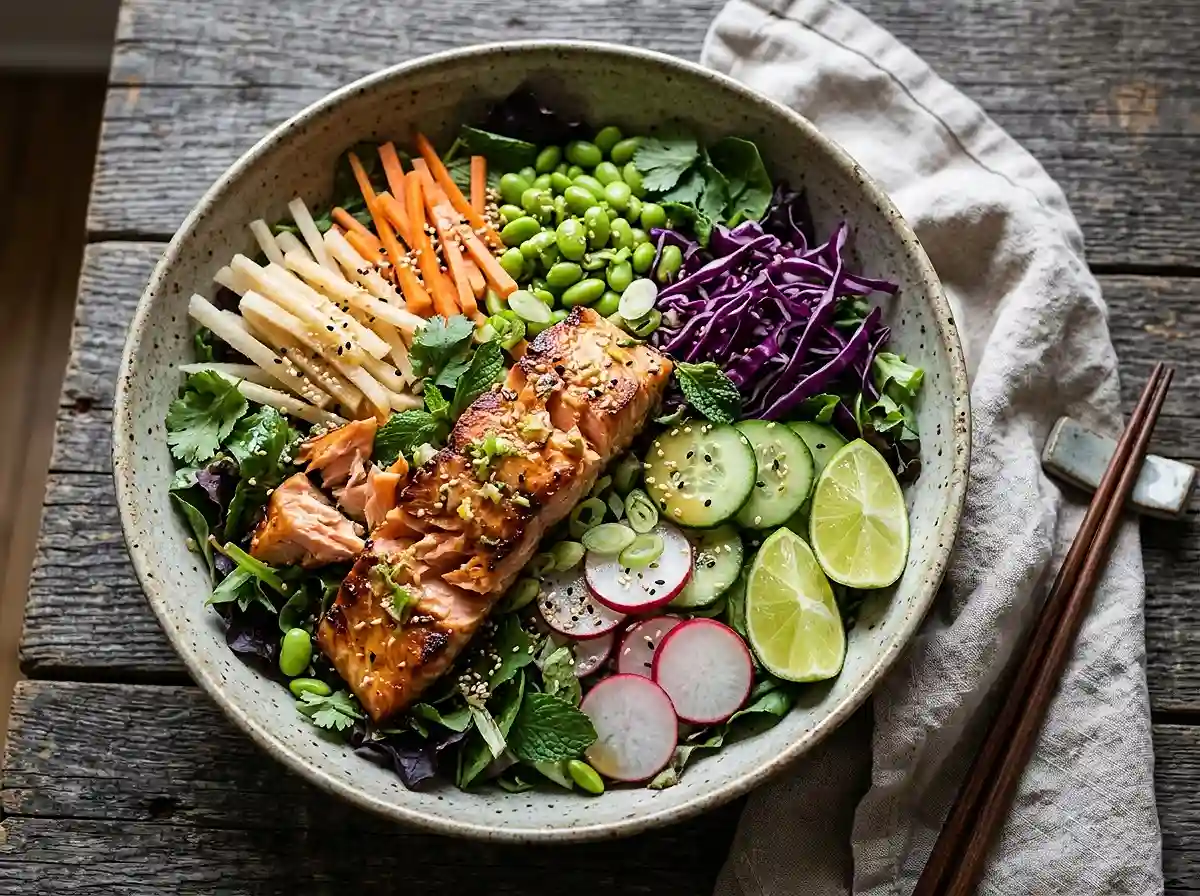
This ginger lime salmon daikon edamame salad started as my answer to a winter lunch rut, the week after the Thanksgiving leftovers finally ran out. It’s a bowl of pale green edamame, snowy daikon, and rosy salmon flakes, tossed in a dressing that smells of fresh ginger and zesty lime.
Honestly, who wants another heavy lunch in January? Every bite here is crunchy, juicy, and bright, with warm salmon resting on cool vegetables. It comes together in about 40 minutes, and most of that is hands-off marinating and baking time.
Table of Contents
Ginger Lime Salmon Daikon Edamame Salad Ingredients
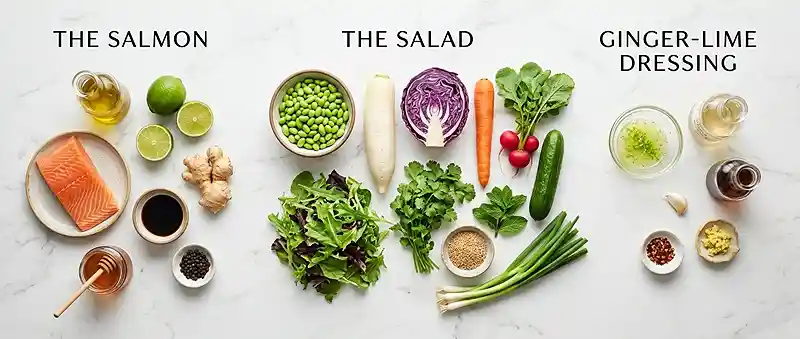
| Category | Ingredient | Amount | Notes |
|---|---|---|---|
| Salmon | Skinless salmon fillets | 1 lb (450 g) | Pat dry before marinating so the glaze clings. |
| Salmon | Olive oil | 1 tablespoon | Keeps the fish moist and helps the marinade stick. |
| Salmon | Fresh lime juice | 1 tablespoon | Fresh tastes far brighter than bottled. |
| Salmon | Freshly grated ginger | 1 teaspoon | A fine grater gives a smooth, fragrant paste. |
| Salmon | Low-sodium soy sauce | 1 tablespoon | Use tamari to keep it gluten-free. |
| Salmon | Honey | ½ teaspoon | Encourages light browning. Maple syrup works too. |
| Salmon | Black pepper | ¼ teaspoon | Freshly ground gives the most aroma. |
| Edamame and vegetables | Shelled edamame, cooked and cooled | 2 cups | Frozen is ideal, and it makes edamame lunch bowls with ginger a pantry-friendly habit. |
| Edamame and vegetables | Daikon radish, peeled and julienned | 2 cups | Peel it thoroughly. Jicama can stand in. |
| Edamame and vegetables | Red cabbage, shredded | 1 cup | Skip it for a winter seafood salad without cabbage and add extra cucumber. |
| Edamame and vegetables | Medium carrot, julienned | 1 | Adds sweetness and a bright orange stripe. |
| Edamame and vegetables | Cucumber, thinly sliced | 1 | Pat the slices dry so the salad stays crisp. |
| Edamame and vegetables | Red radishes, thinly sliced | 4 | Keep them cold for the sharpest snap. |
| Edamame and vegetables | Mixed greens or baby spinach | 3 cups | Baby spinach is the milder choice. |
| Dressing | Fresh lime juice | 3 tablespoons | Zest the limes first, then roll and juice them. |
| Dressing | Extra-virgin olive oil | 2 tablespoons | A fruity bottle rounds out the lime. |
| Dressing | Rice vinegar | 1 tablespoon | Mild and slightly sweet. White wine vinegar is a fallback. |
| Dressing | Low-sodium soy sauce | 1 tablespoon | Adds savory depth without overpowering. |
| Dressing | Honey | 1 tablespoon | Balances the lime. Maple syrup keeps it vegan. |
| Dressing | Freshly grated ginger | 1 tablespoon | This lime dressing for salmon bowls gets its zing from fresh ginger, not powder. |
| Dressing | Toasted sesame oil | 1 teaspoon | A little goes a long way. |
| Dressing | Small garlic clove, minced | 1 | Grate it for a milder bite. |
| Dressing | Lime zest | ½ teaspoon | Skip the bitter white pith. |
| Dressing | Red pepper flakes | ¼ teaspoon, optional | Leave them out for a gentler dressing. |
| Finishing | Fresh cilantro, chopped | ¼ cup | Use parsley if cilantro tastes soapy to you. |
| Finishing | Fresh mint, chopped | 2 tablespoons | Chop it right before tossing to keep it fragrant. |
| Finishing | Scallions, thinly sliced | 2 | Use both the white and green parts. |
| Finishing | Toasted sesame seeds | 2 tablespoons | Toast raw seeds in a dry skillet until golden. |
Instructions for Ginger Lime Salmon Daikon Edamame Salad
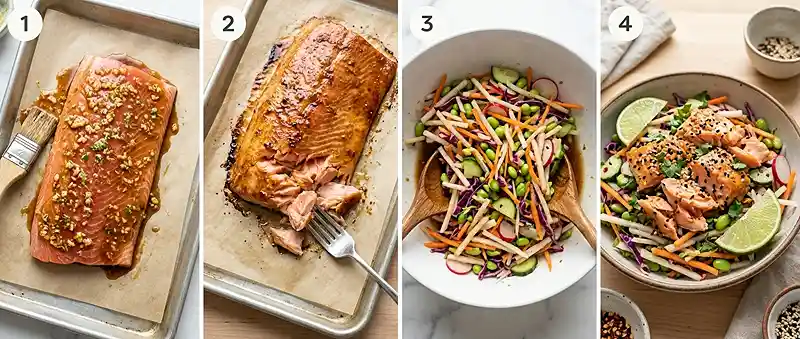
- Whisk the olive oil, lime juice, ginger, soy sauce, honey, and black pepper until the marinade smells sharp and citrusy. Brush it over the salmon and let it sit for 15 minutes. Don’t go past 30 minutes, because the lime’s acid will firm the surface and turn the texture chalky.
- Heat the oven to 400°F (200°C) and set the salmon on a lined baking sheet. Bake for 12 to 15 minutes, depending on thickness, until the flesh turns opaque and pale coral and flakes easily at 145°F (63°C). Let it rest a few minutes while you prep.
- Cook the edamame according to the package directions, usually 3 to 5 minutes from frozen. Drain, then rinse under cold water until the beans look glossy and bright, like polished jade beads. Shake off the water so the dressing clings later.
- Combine the daikon, red cabbage, carrot, cucumber, red radishes, and mixed greens in a large salad bowl. In my testing, I found that thin, even strips of daikon give the loudest crunch. Everything should look crisp and cold, with no limp edges.
- Whisk the lime juice, olive oil, rice vinegar, soy sauce, honey, ginger, sesame oil, garlic, lime zest, and red pepper flakes until glossy and fully combined. It should smell toasty, spicy, and bright. Taste it on a cucumber slice and add a pinch more honey if it feels sharp.
- Add the cooled edamame, cilantro, mint, and scallions to the vegetables. Pour the dressing over the top and toss gently until the leaves look lightly glossy, not drenched. Gentle tossing keeps everything crunchy.
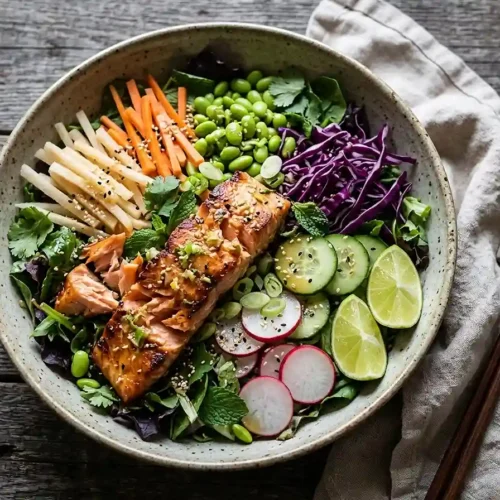
- Divide the salad among four bowls. Break the salmon into large flakes and arrange them on top, then sprinkle with toasted sesame seeds. Serve immediately with extra lime wedges for squeezing.
Substitutions & Variations
This ginger lime salmon daikon edamame salad bends easily to different diets, and each change below keeps the crisp, bright balance intact.
Vegan
Swap the salmon for baked tofu slabs brushed with the same marinade, and use maple syrup instead of honey. Bake the tofu for about 25 minutes, until the edges look golden. The dressing and vegetables stay exactly the same.
Gluten-Free
Replace the soy sauce with tamari in both the marinade and the dressing. Check the label, since a few brands still contain wheat. Everything else in this ginger lime salmon daikon edamame salad is naturally gluten-free.
Cabbage-Free
For a winter seafood salad without cabbage, skip the red cabbage and add a second cucumber or a handful of snap peas. Add a little extra dressing, since cabbage usually soaks some of it up.
High-Protein
Add another cup of edamame or a soft-boiled egg on each bowl. For a bolder winter swap, tear in some radicchio, like in my radicchio roasted chestnut blueberry salad.
Daikon Ribbons
My family’s favorite variation is shaving the daikon with a vegetable peeler. Salmon flakes with daikon ribbons look elegant, and the ribbons soak up the dressing quickly. Dress it right before serving.
Expert Tips & Troubleshooting
Why is my salmon dry?
Salmon dries out when it cooks well past 145°F (63°C), the minimum on the USDA safe temperature chart. Check it at 12 minutes with a thermometer.
After making this dozens of times, I pull the fish the moment it flakes easily, because it keeps cooking as it rests.
Why is my salad watery?
Cucumber and daikon release water once they meet the dressing, so toss at the last minute. Pat the cucumber slices dry with a paper towel first. Well, crunch is the whole point of a crunchy radish meal prep salad, so protect it.
How do I fix a flat dressing?
A bland lime dressing for salmon bowls usually needs more acid or salt. Add a teaspoon of rice vinegar or soy sauce, taste it on a cucumber slice, and repeat. If it turns harsh, a drop of honey softens the edges.
Storage & Meal Prep
This crunchy radish meal prep salad keeps best when you store the parts separately and combine them at lunchtime. Fresh daikon and cucumber turn soft once dressed, so hold the dressing back.
| Component | Storage Method | Duration |
|---|---|---|
| Cooked salmon | Airtight container in the refrigerator | 3 days |
| Chopped vegetables | Airtight container lined with a paper towel | 3 days |
| Cooked edamame | Sealed container in the refrigerator | 3 days |
| Ginger-lime dressing | Sealed jar in the refrigerator; shake before using | Up to 5 days |
| Chopped herbs | Wrapped in a damp paper towel in a container | 2 to 3 days |
| Assembled ginger lime salmon daikon edamame salad | Not recommended; assemble just before eating | Best fresh |
No-waste tip: cover leftover daikon slices with rice vinegar and a pinch of sugar for quick pickles, or fold extra salmon and dressing into warm rice the next day.
Serving Suggestions

For a bigger spread, set this ginger lime salmon daikon edamame salad beside my lemongrass beef pomelo herb salad for a fragrant, herb-forward table.
When you want something cozier, pair it with my crispy gnocchi brussels sprout cranberry salad on the side.
Ginger Lime Salmon Daikon Edamame Salad FAQs
Can I use frozen salmon for this ginger lime salmon daikon edamame salad?
Yes, as long as you thaw it fully first. Leave it in the refrigerator overnight, then pat it very dry before marinating. Dry fillets brown lightly and flake into clean, tender pieces.
How do I make daikon taste milder?
Peel it thoroughly and soak the cut daikon in cold water for 5 minutes. Drain and pat it dry before adding it to the bowl. The soak softens the peppery bite while keeping the crunch.
What can I use instead of daikon?
Jicama is the closest substitute, with a similar juicy crunch and a slightly sweeter flavor. Kohlrabi or extra red radishes also work. Cut them into the same thin strips so the texture stays consistent.
Best way to reheat leftover salmon from this salad?
The best way to enjoy leftover salmon is cold, flaked over fresh vegetables. If you prefer it warm, heat it gently in a low oven until steaming hot, then let it cool slightly. Never reheat it while it sits on dressed greens.
Final Thoughts
Save this ginger lime salmon daikon edamame salad to your Pinterest board, then leave a comment telling me which swap you tried. Seriously, I love hearing how you make it your own.
Zesty Ginger Lime Salmon Daikon Edamame Salad
Equipment
- Baking sheet
- Parchment paper
- Mixing bowls
- Whisk
- Chef’s knife
- Vegetable peeler or julienne peeler
- Instant-read thermometer
Ingredients
Salmon
- 1 lb (450 g) skinless salmon fillets Pat dry before marinating
- 1 tablespoon olive oil
- 1 tablespoon fresh lime juice
- 1 teaspoon freshly grated ginger
- 1 tablespoon low-sodium soy sauce Use tamari for a gluten-free option
- ½ teaspoon honey Maple syrup also works
- ¼ teaspoon black pepper Freshly ground
Edamame and Vegetables
- 2 cups shelled edamame, cooked and cooled Frozen edamame works well
- 2 cups daikon radish, peeled and julienned Jicama can be substituted
- 1 cup red cabbage, shredded Omit and add extra cucumber for a cabbage-free salad
- 1 medium carrot, julienned
- 1 medium cucumber, thinly sliced Pat dry before adding
- 4 red radishes, thinly sliced
- 3 cups mixed greens or baby spinach Baby spinach has a milder flavor
Ginger-Lime Dressing
- 3 tablespoons fresh lime juice
- 2 tablespoons extra-virgin olive oil
- 1 tablespoon rice vinegar White wine vinegar is a substitute
- 1 tablespoon low-sodium soy sauce
- 1 tablespoon honey Use maple syrup for a vegan option
- 1 tablespoon freshly grated ginger
- 1 teaspoon toasted sesame oil
- 1 small clove garlic, minced Grate for a milder flavor
- ½ teaspoon lime zest Avoid the bitter white pith
- ¼ teaspoon red pepper flakes Optional; omit for a milder dressing
Finishing
- ¼ cup fresh cilantro, chopped Parsley can be substituted
- 2 tablespoons fresh mint, chopped Chop just before tossing
- 2 scallions, thinly sliced Use both white and green parts
- 2 tablespoons toasted sesame seeds
Instructions
- Whisk together the olive oil, lime juice, grated ginger, soy sauce, honey, and black pepper. Brush the marinade over the salmon and let it sit for 15 minutes. Do not marinate longer than 30 minutes, as the lime juice can firm the surface of the fish.
- Preheat the oven to 400°F (200°C). Place the salmon on a lined baking sheet and bake for 12–15 minutes, depending on thickness, until opaque and flaky and it reaches 145°F (63°C) internally. Let it rest for a few minutes.
- Cook the edamame according to package directions, usually 3–5 minutes from frozen. Drain and rinse under cold water until cool. Shake off excess water.
- Combine the daikon, red cabbage, carrot, cucumber, radishes, and mixed greens in a large salad bowl. Keep the vegetables cold and crisp, and aim for thin, even strips of daikon.
- Whisk together the lime juice, olive oil, rice vinegar, soy sauce, honey, ginger, sesame oil, garlic, lime zest, and red pepper flakes until glossy and combined. Taste with a cucumber slice and add a little more honey if needed.
- Add the cooled edamame, cilantro, mint, and scallions to the vegetables. Pour the dressing over the salad and toss gently until lightly coated.
- Divide the salad among four bowls. Break the salmon into large flakes and arrange over the vegetables. Sprinkle with toasted sesame seeds and serve immediately with extra lime wedges if desired.