Korean Bulgogi Salad Bowl
Build restaurant-quality Korean BBQ at home with this easy bulgogi salad bowl featuring caramelized beef, fresh vegetables, and an irresistible sesame drizzle.
The first time I made a Korean Bulgogi Salad Bowl for my family, my teenage son looked at the colorful spread and asked if we were secretly eating at a restaurant. That moment—watching everyone dig in and mix everything together with huge grins—convinced me this dish deserved a permanent spot in our dinner rotation. Honestly, it’s become our go-to for busy weeknights when we want something that feels special without hours of effort.
Have you ever craved those bold Korean BBQ flavors but didn’t want to fire up the grill or spend an evening at a restaurant? This bulgogi salad delivers exactly that experience in about thirty minutes. The secret lies in grated apple and onion in the sauce—they tenderize the beef and create that authentic sweet-savory depth that makes Korean cuisine so craveable.
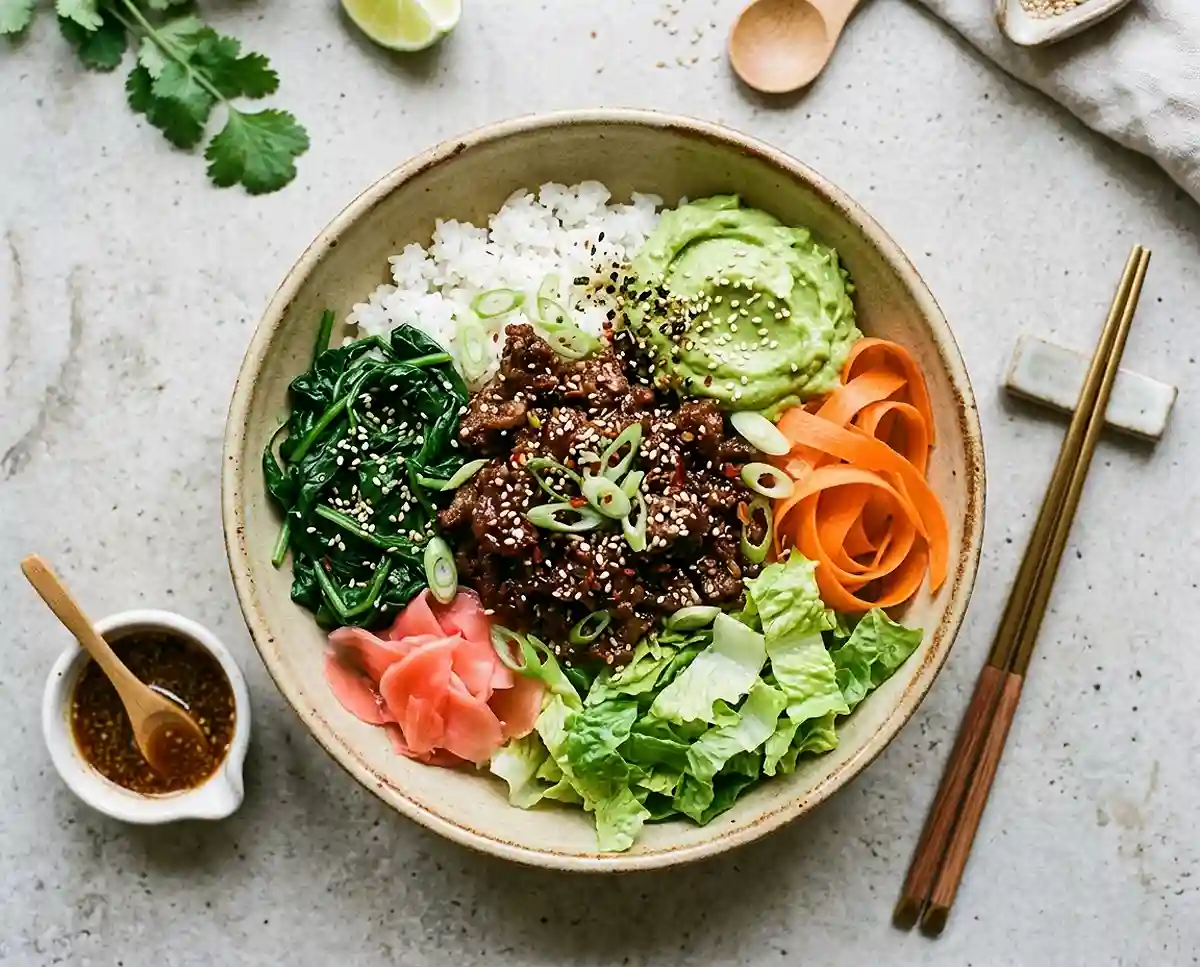
Picture a warm bowl filled with glistening caramelized meat, vibrant orange carrots, deep green wilted spinach, and creamy avocado. It’s the kind of dinner that looks Instagram-worthy but tastes even better than it photographs. We’ve served this at Super Bowl parties and casual Sunday dinners with equal success.
Table of Contents
Ingredients for Korean Bulgogi Salad Bowl
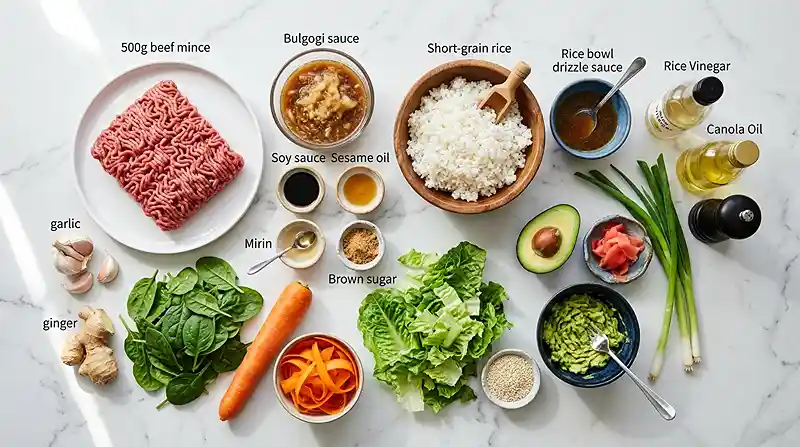
| Category | Ingredient | Amount | Notes |
|---|---|---|---|
| Beef | Ground beef | 500g / 1 lb | Any fat percentage works |
| Beef | Canola oil | 1 tbsp + 2 tsp | Or other neutral oil; extra for spinach |
| Bulgogi Sauce | Onion, finely grated | 1 tbsp (~¼ onion) | Essential for authentic flavor |
| Bulgogi Sauce | Red apple, finely grated | 3 tbsp (~½ apple) | Skin on is fine; tenderizes meat |
| Bulgogi Sauce | Garlic cloves, finely grated | 3 cloves | Fresh only |
| Bulgogi Sauce | Ginger, finely grated | 1 tsp | Fresh preferred |
| Bulgogi Sauce | Soy sauce | 2½ tbsp | All-purpose or light |
| Bulgogi Sauce | Sesame oil | 1 tbsp | Toasted for deeper flavor |
| Bulgogi Sauce | Mirin | 1 tbsp | Omit for alcohol-free version |
| Bulgogi Sauce | Brown sugar | 1 tbsp | Creates caramelization |
| Bulgogi Sauce | Black pepper | ⅛ tsp | Freshly ground preferred |
| Drizzle Sauce | Soy sauce | 2 tbsp | All-purpose or light |
| Drizzle Sauce | Sesame oil | 1 tbsp | Toasted variety |
| Drizzle Sauce | Brown sugar | 2 tsp | Balances saltiness |
| Drizzle Sauce | Rice vinegar | 2 tsp | Apple cider vinegar works too |
| Bowl Components | White rice | 3-4 cups cooked | Medium or short grain preferred |
| Bowl Components | Baby spinach | 4 large handfuls | Or chopped kale or cabbage |
| Bowl Components | Large carrot | 1, julienned | Or grated with box grater |
| Bowl Components | Avocado | 1, mashed | Adds creaminess |
| Bowl Components | Pickled ginger | ¼ cup | Pink adds lovely color |
| Bowl Components | Baby cos/romaine lettuce | 1½ cups | Torn into bite-size pieces |
| Bowl Components | White sesame seeds | 1 tsp | For garnish |
| Bowl Components | Green onion | 1, finely sliced | For garnish |
Instructions for Korean Bulgogi Salad Bowl
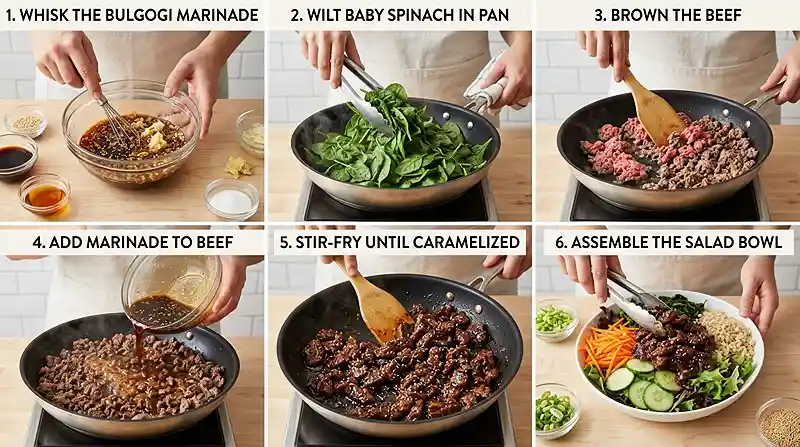
- Start by preparing both sauces. Whisk together all the bulgogi sauce ingredients in a medium bowl—the grated apple and onion should create a slightly chunky, fragrant mixture. In a separate small bowl, combine the drizzle sauce ingredients and set aside. Having these ready makes the cooking process seamless.
- Grate your apple and onion using the fine holes of a box grater. Don’t skip this step—in my testing, I found these two ingredients transform ordinary ground beef into something that tastes remarkably close to authentic Korean restaurant bulgogi. The natural enzymes tenderize the meat while adding subtle sweetness.
- Heat 2 teaspoons of oil in a large non-stick pan over high heat until it shimmers like the surface of a still pond catching sunlight. Add half of your baby spinach and toss rapidly with tongs until it begins to wilt, about 30 seconds. Add the remaining spinach and continue tossing until everything turns deep green and tender, roughly one more minute.
- Transfer the wilted spinach to a bowl and set aside. Don’t worry if some liquid accumulates—this is natural and will add moisture to your final bowl. The spinach will stay warm while you cook the beef.
- Return the pan to high heat and add 1 tablespoon of oil. Once hot, add the ground beef in an even layer. Let it sear undisturbed for about 30 seconds to develop a golden crust, then begin breaking it into smaller pieces with your spatula.
- Continue cooking and breaking up the beef until no pink remains, about 3-4 minutes. The meat should be in small crumbles—this creates more surface area for the sauce to coat and caramelize. Keep the heat high throughout this process.
- Pour the bulgogi sauce over the cooked beef and let it simmer rapidly. Stir occasionally while the liquid reduces and the sauce thickens, about 2-3 minutes. The kitchen will fill with an intoxicating aroma of garlic, sesame, and caramelizing sugars.
- Once most of the sauce has evaporated, stir more frequently to encourage caramelization. After making this dozens of times, I’ve learned the beef is ready when it glistens with a sticky glaze and has slightly crispy edges while still looking moist. This takes about 2 more minutes.
- While the beef finishes, prepare your bowl components. Julienne the carrot into thin matchsticks, mash the avocado with a fork, and tear the lettuce into bite-size pieces. Arrange everything within easy reach for quick assembly.
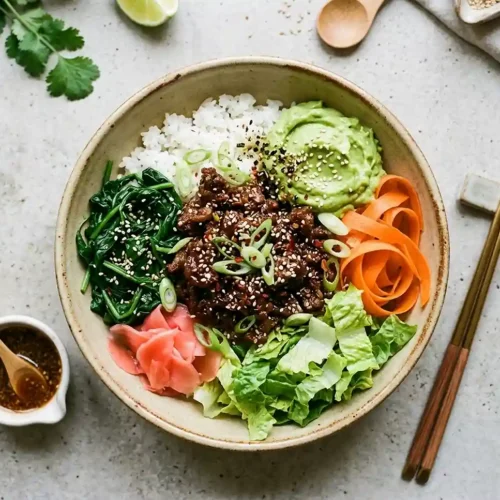
- Build your bowls by spooning warm rice into the bottom of each serving dish. Arrange the caramelized bulgogi beef over one section, then place the wilted spinach and julienned carrots alongside. The colors should create a beautiful mosaic effect.
- Add a generous dollop of mashed avocado and a small pile of pink pickled ginger to each bowl. Tuck fresh lettuce leaves down one side for crisp contrast. Sprinkle sesame seeds and sliced green onions over everything.
- Serve immediately with the drizzle sauce on the side. Encourage everyone to pour the sauce generously over their bowl, then mix everything together enthusiastically before digging in. That’s the authentic Korean way—jumble it all up and enjoy every flavorful bite.
Substitutions and Variations
This Korean salad adapts wonderfully to different proteins and dietary needs. Ground turkey or chicken works beautifully with the bulgogi sauce, though you may want to add an extra teaspoon of oil since they’re leaner. For a vegetarian version, try crumbled extra-firm tofu or plant-based ground meat—both absorb the sauce magnificently.
My family’s favorite variation swaps half the rice for cauliflower rice, cutting carbs while keeping all that satisfying Korean BBQ flavor. You can also build this as a lettuce wrap situation using large butter lettuce cups instead of a bowl base for an even lighter option.
Add a brown rice edamame buddha bowl approach by incorporating brown rice and extra vegetables. Shredded purple cabbage, bean sprouts, or quick-pickled cucumbers all make excellent additions to your bulgogi salad.
Expert Tips and Troubleshooting
The most common mistake with this Korean BBQ bowl is not getting the pan hot enough. High heat is essential for proper caramelization—if your beef steams instead of sizzles, the sauce won’t develop those irresistible sticky-sweet edges. In my testing, I found that waiting until the oil shimmers before adding ingredients makes all the difference.
Don’t substitute the fresh grated apple and onion with dried versions or skip them entirely. According to the Smithsonian’s Korean food experts, these ingredients are fundamental to authentic bulgogi, providing both flavor and natural meat tenderizers that no other ingredient can replicate.
If your sauce seems too thin after cooking, don’t panic. Simply continue cooking over high heat, stirring constantly, until the liquid evaporates and the beef gets that characteristic glazed appearance. Patience at this final stage rewards you with restaurant-quality results.
For meal prep, cook the beef and wilt the spinach ahead, but keep the fresh components separate. Cold caramelized bulgogi actually reheats beautifully—the sauce protects the meat from drying out in the microwave.
Storage and Meal Prep
| Component | Storage Method | Duration |
|---|---|---|
| Cooked bulgogi beef | Airtight container, refrigerated | 4 days |
| Wilted spinach | Separate container, refrigerated | 3 days |
| Drizzle sauce | Small jar, refrigerated | 1 week |
| Julienned carrots | Sealed bag with damp paper towel | 5 days |
| Cooked rice | Airtight container, refrigerated | 5 days |
| Mashed avocado | Not recommended | Same day only |
This bulgogi salad makes excellent meal prep for busy weeks. Cook a double batch of the beef on Sunday and portion it into containers with pre-cooked rice. Pack the fresh vegetables separately and assemble fresh bowls each day. The flavors actually improve as the beef sits in its caramelized sauce overnight.
To reheat, microwave the beef and rice together for 90 seconds, then top with cold vegetables for temperature contrast. Add fresh avocado right before eating—it browns too quickly to prep ahead. The drizzle sauce keeps beautifully, so make extra for easy weekday lunches.
Serving Suggestions
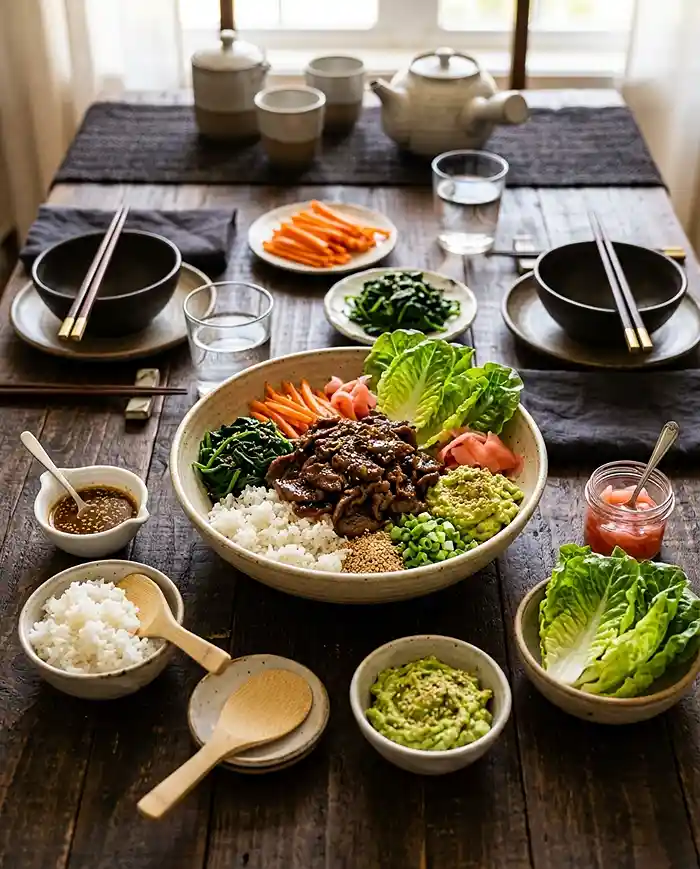
This Korean salad bowl stands beautifully on its own but pairs wonderfully with other dishes for a larger spread. Add some quick-pickled vegetables, steamed dumplings, or a simple cucumber salad for a more elaborate Korean-inspired dinner party. For protein lovers, try serving it alongside honey mustard pretzel chicken salad for a surf-and-turf style feast.
The bowls also work fantastically as a build-your-own dinner situation. Set out all the components buffet-style and let everyone customize their creation. Kids especially love this approach—they feel empowered choosing their own toppings, and you’ll be surprised how many vegetables they’ll willingly pile on.
FAQs About Korean Bulgogi Salad Bowl
Can I make Korean Bulgogi Salad Bowl with sliced beef instead of ground?
Yes, thinly sliced ribeye or sirloin creates a more traditional bulgogi experience. Slice the beef against the grain as thin as possible (partially freezing it helps), marinate for at least 30 minutes in the bulgogi sauce, then cook quickly over very high heat for best results.
How do I prevent my bulgogi from being too sweet?
Reduce the brown sugar by half and taste the sauce before cooking. The apple already provides natural sweetness, so some palates prefer less added sugar. You can also add an extra splash of rice vinegar to the drizzle sauce for more balance.
What can I substitute for mirin in the bulgogi sauce?
Dry sherry or rice wine works as a direct substitute. For an alcohol-free option, mix 1 tablespoon of rice vinegar with ½ teaspoon of sugar. Some cooks simply omit it entirely—the sauce still tastes delicious with a slightly less complex flavor profile.
Why does my beef release so much liquid while cooking?
Your pan isn’t hot enough, or you’ve added too much meat at once. Work in batches if needed, and make sure the oil shimmers before adding beef. High heat sears the meat quickly, keeping juices inside rather than releasing them into the pan.
Best way to get that caramelized sticky texture on the beef?
Patience and high heat are your friends. After adding the sauce, let it simmer without stirring constantly until most liquid evaporates. Then stir frequently in the final minutes, allowing the sugars in the sauce to caramelize and coat each piece with a glossy, sticky glaze.
Seriously, this Korean Bulgogi Salad Bowl might just become your new favorite weeknight dinner—it’s that good. Save this recipe to Pinterest so you can find it whenever those Korean BBQ cravings hit! Drop a comment below and let me know your favorite bowl toppings.
Korean Bulgogi Salad Bowl
Equipment
- Large non-stick pan
- Box grater
- Tongs
- Medium bowl
- Small bowl
- Whisk
- Spatula
Ingredients
Beef
- 500g ground beef 1 lb; any fat percentage works
- 1 tbsp canola oil plus 2 tsp for spinach; or other neutral oil
Bulgogi Sauce
- 1 tbsp onion, finely grated about 1/4 onion; essential for authentic flavor
- 3 tbsp red apple, finely grated about 1/2 apple; skin on is fine; tenderizes meat
- 3 cloves garlic, finely grated fresh only
- 1 tsp ginger, finely grated fresh preferred
- 2 ½ tbsp soy sauce all-purpose or light
- 1 tbsp sesame oil toasted for deeper flavor
- 1 tbsp mirin omit for alcohol-free version
- 1 tbsp brown sugar creates caramelization
- ⅛ tsp black pepper freshly ground preferred
Drizzle Sauce
- 2 tbsp soy sauce all-purpose or light
- 1 tbsp sesame oil toasted variety
- 2 tsp brown sugar balances saltiness
- 2 tsp rice vinegar apple cider vinegar works too
Bowl Components
- 3-4 cups white rice, cooked medium or short grain preferred
- 4 large handfuls baby spinach or chopped kale or cabbage
- 1 large carrot, julienned or grated with box grater
- 1 avocado, mashed adds creaminess
- ¼ cup pickled ginger pink adds lovely color
- 1 ½ cups baby cos/romaine lettuce torn into bite-size pieces
- 1 tsp white sesame seeds for garnish
- 1 green onion, finely sliced for garnish
Instructions
- Start by preparing both sauces. Whisk together all the bulgogi sauce ingredients in a medium bowl—the grated apple and onion should create a slightly chunky, fragrant mixture. In a separate small bowl, combine the drizzle sauce ingredients and set aside.
- Grate your apple and onion using the fine holes of a box grater. These two ingredients transform ordinary ground beef into something that tastes remarkably close to authentic Korean restaurant bulgogi. The natural enzymes tenderize the meat while adding subtle sweetness.
- Heat 2 teaspoons of oil in a large non-stick pan over high heat until it shimmers. Add half of your baby spinach and toss rapidly with tongs until it begins to wilt, about 30 seconds. Add the remaining spinach and continue tossing until everything turns deep green and tender, roughly one more minute.
- Transfer the wilted spinach to a bowl and set aside. The spinach will stay warm while you cook the beef.
- Return the pan to high heat and add 1 tablespoon of oil. Once hot, add the ground beef in an even layer. Let it sear undisturbed for about 30 seconds to develop a golden crust, then begin breaking it into smaller pieces with your spatula.
- Continue cooking and breaking up the beef until no pink remains, about 3-4 minutes. The meat should be in small crumbles—this creates more surface area for the sauce to coat and caramelize.
- Pour the bulgogi sauce over the cooked beef and let it simmer rapidly. Stir occasionally while the liquid reduces and the sauce thickens, about 2-3 minutes. The kitchen will fill with an intoxicating aroma of garlic, sesame, and caramelizing sugars.
- Once most of the sauce has evaporated, stir more frequently to encourage caramelization. The beef is ready when it glistens with a sticky glaze and has slightly crispy edges while still looking moist, about 2 more minutes.
- While the beef finishes, prepare your bowl components. Julienne the carrot into thin matchsticks, mash the avocado with a fork, and tear the lettuce into bite-size pieces.
- Build your bowls by spooning warm rice into the bottom of each serving dish. Arrange the caramelized bulgogi beef over one section, then place the wilted spinach and julienned carrots alongside.
- Add a generous dollop of mashed avocado and a small pile of pink pickled ginger to each bowl. Tuck fresh lettuce leaves down one side for crisp contrast. Sprinkle sesame seeds and sliced green onions over everything.
- Serve immediately with the drizzle sauce on the side. Encourage everyone to pour the sauce generously over their bowl, then mix everything together enthusiastically before digging in.