Salmon Avocado Poke Bowl Salad
Make this vibrant salmon avocado poke bowl salad at home with sashimi-grade fish, creamy avocado, and a savory soy-sesame dressing.
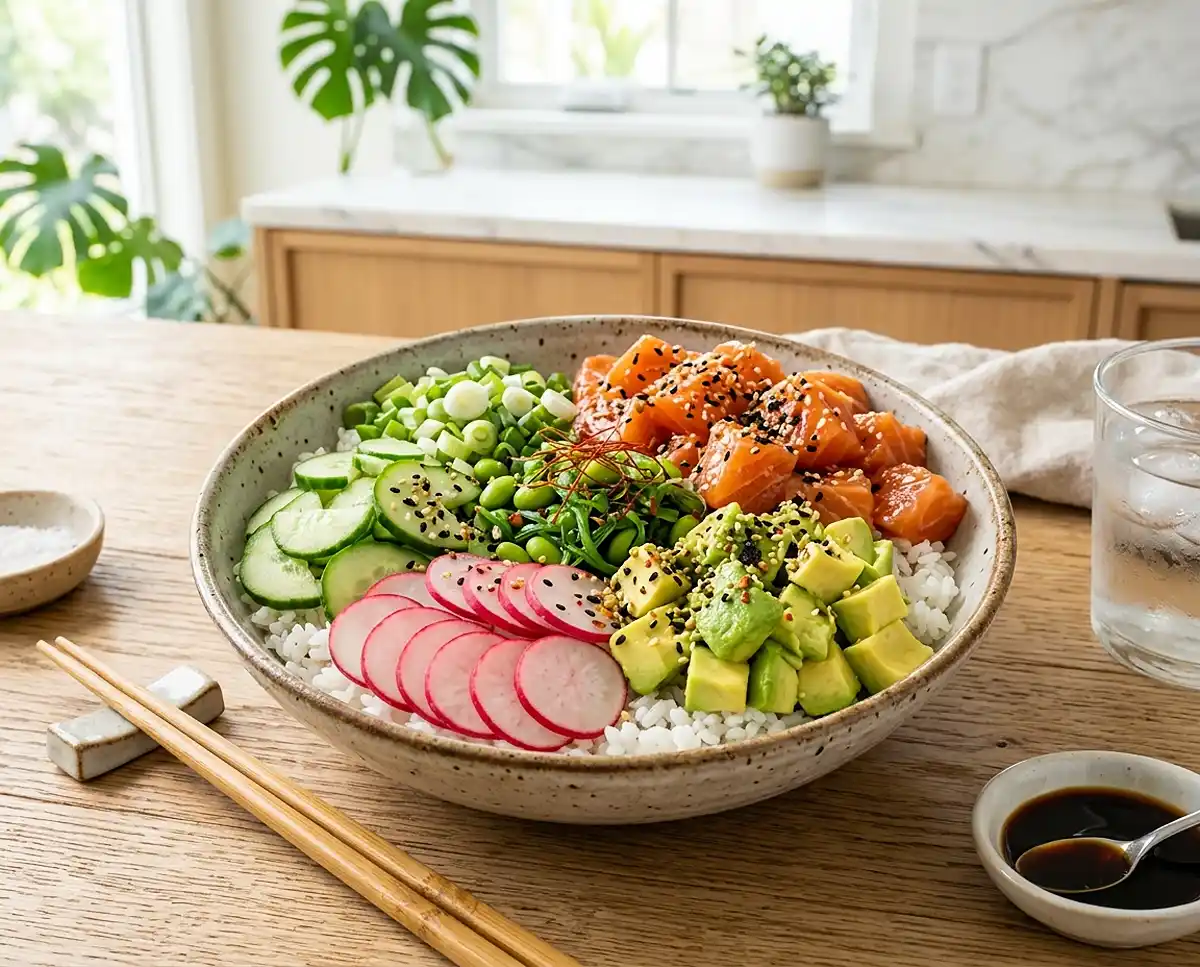
The first time I made a salmon poke bowl at home, I couldn’t believe how simple it was to recreate that bright, fresh seafood flavor from my favorite Hawaiian restaurant. This salmon avocado poke bowl salad brings together ruby-red cubes of sashimi-grade salmon, creamy avocado, and crisp vegetables over fluffy rice—all dressed in a savory-sweet soy-sesame sauce. Honestly, once you realize how easy this is, you’ll wonder why you ever paid restaurant prices.
Have you ever craved something that feels indulgent yet leaves you energized instead of sluggish? That’s exactly what this poke bowl salad delivers. The combination of fresh seafood, healthy fats from avocado, and fiber-rich vegetables creates a meal that satisfies without weighing you down. It’s become our go-to Fourth of July dinner when we want something lighter that still feels special and celebratory.
The colors alone make this dish stunning—coral pink salmon against pale green avocado, bright white rice, and pops of red radish. Every component brings different textures and flavors that keep each bite interesting from start to finish.
Table of Contents
Ingredients for Salmon Avocado Poke Bowl
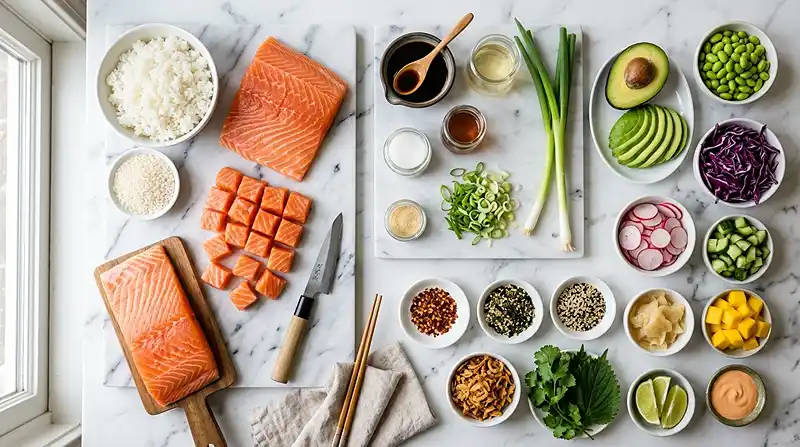
| Category | Ingredient | Amount | Notes |
|---|---|---|---|
| Rice Base | Short-grain white rice | 1 cup dry | Sushi rice works perfectly |
| Protein | Sashimi-grade salmon | 1 pound | Must be sushi-grade for raw consumption |
| Dressing | Soy sauce | ¼ cup | Low-sodium if preferred |
| Dressing | Rice vinegar | 1½ tbsp | Adds essential brightness |
| Dressing | Sugar | ½ tbsp | Balances the soy |
| Dressing | Toasted sesame oil | 1 tsp | A little goes a long way |
| Dressing | Garlic powder | ¼ tsp | Fresh minced works too |
| Aromatics | Scallions | 2 whole | Thinly sliced, divided |
| Toppings | Cucumber | ½ medium | Sliced into half-moons |
| Toppings | Radishes | 3-4 small | Thinly sliced |
| Toppings | Ripe avocado | 1 large | Cubed just before serving |
| Toppings | Furikake seasoning | 2 tbsp | Japanese rice seasoning |
| Toppings | Red pepper flakes | To taste | Optional for heat |
How to Make This Salmon Poke Bowl Salad
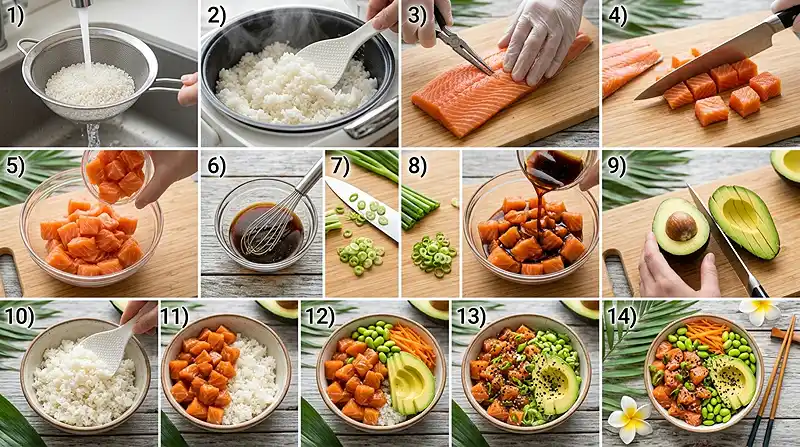
1. Start by rinsing your short-grain rice under cool running water. Use your hands to gently agitate the grains, draining and refilling until the water runs mostly clear—usually 3-4 rinses. This removes excess starch for fluffy, separate grains rather than sticky clumps.
2. Cook the rice according to package instructions or in a rice cooker. In my testing, I found that letting the rice rest covered for 10 minutes after cooking yields the fluffiest texture. Keep it covered while you prep everything else.
3. Unwrap your sashimi-grade salmon and pat it completely dry with paper towels. Run your fingers gently along the flesh to check for pin bones—they feel like tiny bumps. Remove any you find using needle-nose pliers or fish tweezers, pulling in the direction the bone naturally points.
4. Using a sharp knife, cut the salmon into ½-inch cubes. Work with decisive cuts rather than sawing, which preserves the fish’s clean texture. The cubes should look like glistening jewels, each one catching the light like little garnets. Transfer to a medium bowl and set aside.
5. Whisk together the soy sauce, rice vinegar, sugar, sesame oil, and garlic powder in a small bowl. Don’t worry if the sugar and garlic powder don’t fully dissolve—they’ll incorporate when mixed with the salmon. The dressing should smell intoxicatingly savory with a hint of nuttiness.
6. Add most of the sliced scallions to the bowl with the salmon, reserving 1-2 tablespoons for garnish. Pour the dressing over the salmon and scallions. Using a rubber spatula, fold everything together gently—you want every cube coated without breaking them apart.
7. While the salmon marinates briefly, slice your cucumber and radishes thinly. Cut the avocado in half, remove the pit, and cube the flesh. After making this dozens of times, I’ve learned that cubing the avocado last prevents browning.
8. Divide the warm rice between 2-3 bowls, fluffing it as you go. Arrange the dressed salmon over one section of rice. Top with cucumber slices, radish rounds, and avocado cubes in separate sections for that beautiful poke bowl presentation.
9. Sprinkle generously with furikake and the reserved scallions. Add red pepper flakes if you enjoy heat. Serve immediately while the contrast between warm rice and cool, silky salmon is at its peak.
Substitutions and Variations
Finding sashimi-grade salmon can be challenging depending on your location. Sashimi-grade ahi tuna makes an excellent substitute with a slightly firmer texture and milder flavor. For those avoiding raw fish entirely, try this poke bowl salad with cooked shrimp or baked salmon—the dressing works beautifully with both.
My family’s favorite variation adds mango cubes alongside the avocado for tropical sweetness. The fruit plays wonderfully against the soy-forward dressing. For extra crunch, scatter crispy wonton strips or macadamia nuts over the top.
To make this bowl lower-carb, replace the rice with spiralized cucumber noodles or mixed greens. The fresh seafood and dressing shine equally well over vegetables. If you enjoy grain bowls, you might also love our warm mushroom and barley salad for a different but equally satisfying meal.
Expert Tips for Fresh Seafood Success
Sourcing truly sashimi-grade salmon is the most crucial step. Look for fish specifically labeled “sashimi-grade” or “sushi-grade” at your fishmonger or grocery seafood counter. According to the FDA’s guidelines on raw fish safety, fish intended for raw consumption should be frozen at specific temperatures to eliminate parasites.
Ask your fishmonger when the fish arrived and whether it was previously frozen for sushi purposes. Quality sashimi-grade salmon should smell clean and oceanic—never fishy. The flesh should appear moist and vibrant, not dull or dried at the edges.
Keep your salmon refrigerated until the moment you cut it. Cold fish is easier to cube cleanly and stays safer during the brief time it sits out. If your kitchen is warm, set the cutting board over a bowl of ice while you work.
Storage and Meal Prep
| Component | Storage Method | Duration |
|---|---|---|
| Cooked rice | Airtight container, refrigerated | 4-5 days |
| Dressed salmon | Not recommended | Eat immediately |
| Undressed salmon cubes | Airtight container, refrigerated | 1 day maximum |
| Dressing | Sealed jar, refrigerated | 1 week |
| Sliced vegetables | Separate containers, refrigerated | 3 days |
This poke bowl salad tastes best assembled fresh, but you can prep components ahead. Cook rice and make the dressing up to several days in advance. Slice vegetables the morning you plan to serve. Cut and dress the salmon only when you’re ready to eat—marinated raw fish becomes mushy if it sits too long.
For meal prep purposes, store everything separately and assemble individual bowls just before eating. This approach works brilliantly for quick weeknight dinners. Pair leftover rice and vegetables with our spring pasta primavera salad for variety throughout the week.
Serving Suggestions
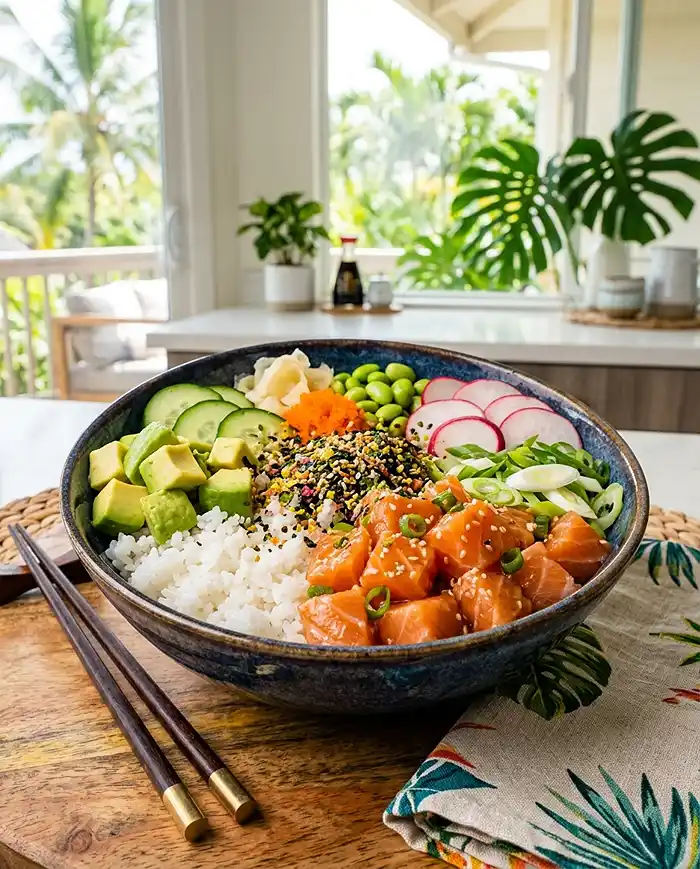
This salmon avocado poke bowl salad works beautifully as a complete meal on its own, but small additions can elevate it further. Pickled ginger, a drizzle of spicy mayo, or a sprinkle of sesame seeds all complement the existing flavors without overwhelming them.
For a full Hawaiian-inspired spread, serve alongside edamame, seaweed salad, or our zucchini ribbon feta mint salad for a Mediterranean-meets-Pacific fusion. The light, fresh flavors pair wonderfully with crisp white wine or a cold Japanese beer.
Salmon Avocado Poke Bowl Salad FAQs
Can I use regular salmon instead of sashimi-grade?
No, regular salmon is not safe to eat raw. Sashimi-grade fish has been frozen at temperatures that kill parasites, making it safe for raw consumption. If you can’t find sashimi-grade, use cooked salmon or shrimp instead.
How do I know if salmon is truly sashimi-grade?
Ask your fishmonger directly about the fish’s handling and freezing history. Reputable sellers will know whether their fish meets raw consumption standards. Look for clear labeling that says “sashimi-grade,” “sushi-grade,” or “safe for raw consumption.”
What’s the best way to cut salmon for poke bowls?
Use a very sharp knife and cut in single, decisive strokes rather than sawing. Aim for ½-inch cubes for the ideal texture. Cold salmon cuts more cleanly, so keep it refrigerated until you’re ready to slice.
Why does my poke taste too salty?
The most common cause is using regular soy sauce in full measure. Try low-sodium soy sauce, or reduce the amount by a tablespoon. You can also add a splash more rice vinegar to balance excessive saltiness.
Best way to tell if raw salmon has gone bad?
Fresh sashimi-grade salmon smells clean and briny, never fishy or ammonia-like. The flesh should be firm, moist, and vibrantly colored. Any sliminess, dull coloring, or off odors mean the fish should not be eaten raw.
Well, this salmon avocado poke bowl salad brings restaurant-quality Hawaiian flavors right to your kitchen in under 30 minutes. Save this recipe to your Pinterest for your next fresh seafood craving, and tell me in the comments what toppings you add to make it your own!
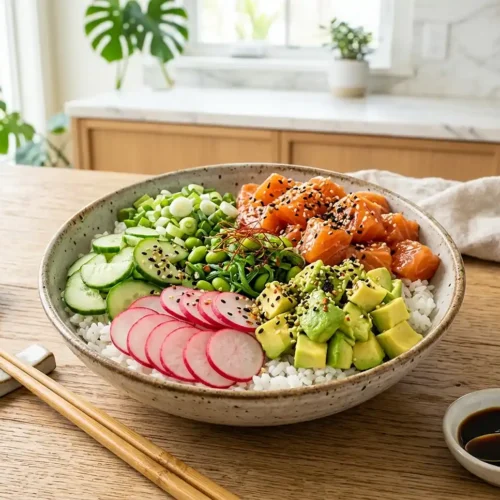
Salmon Avocado Poke Bowl Salad
Equipment
- Rice cooker or pot with lid
- Fine-mesh strainer
- Sharp knife
- Cutting board
- Medium Mixing Bowl
- Small bowl
- Whisk
- Rubber spatula
- Needle-nose pliers or fish tweezers
- Serving bowls
Ingredients
Rice Base
- 1 cup short-grain white rice Sushi rice works perfectly
Protein
- 1 pound sashimi-grade salmon Must be sushi-grade for raw consumption
Dressing
- ¼ cup soy sauce Low-sodium if preferred
- 1 ½ tablespoons rice vinegar Adds essential brightness
- ½ tablespoon sugar Balances the soy
- 1 teaspoon toasted sesame oil A little goes a long way
- ¼ teaspoon garlic powder Fresh minced works too
Aromatics
- 2 whole scallions Thinly sliced, divided
Toppings
- ½ medium cucumber Sliced into half-moons
- 3-4 small radishes Thinly sliced
- 1 large avocado Cubed just before serving
- 2 tablespoons furikake seasoning Japanese rice seasoning
- to taste red pepper flakes Optional for heat
Instructions
- Rinse the short-grain rice under cool running water, gently agitating with your hands. Drain and repeat 3-4 times until the water runs mostly clear to remove excess starch.
- Cook the rice according to package instructions or in a rice cooker. Let it rest covered for 10 minutes after cooking for the fluffiest texture. Keep covered while you prep everything else.
- Pat the sashimi-grade salmon completely dry with paper towels. Run your fingers along the flesh to check for pin bones and remove any using needle-nose pliers, pulling in the direction the bone points.
- Using a sharp knife, cut the salmon into ½-inch cubes with decisive cuts rather than sawing. Transfer the glistening cubes to a medium bowl and set aside.
- Whisk together the soy sauce, rice vinegar, sugar, sesame oil, and garlic powder in a small bowl. The sugar and garlic powder may not fully dissolve, which is fine.
- Add most of the sliced scallions to the salmon, reserving 1-2 tablespoons for garnish. Pour the dressing over and fold gently with a rubber spatula until every cube is coated.
- Slice the cucumber and radishes thinly. Cut the avocado in half, remove the pit, and cube the flesh just before assembling to prevent browning.
- Divide the warm rice between 2-3 bowls. Arrange the dressed salmon over one section. Top with cucumber, radishes, and avocado in separate sections.
- Sprinkle generously with furikake and reserved scallions. Add red pepper flakes if desired. Serve immediately while the contrast between warm rice and cool salmon is at its peak.