Spring Pasta Primavera Salad
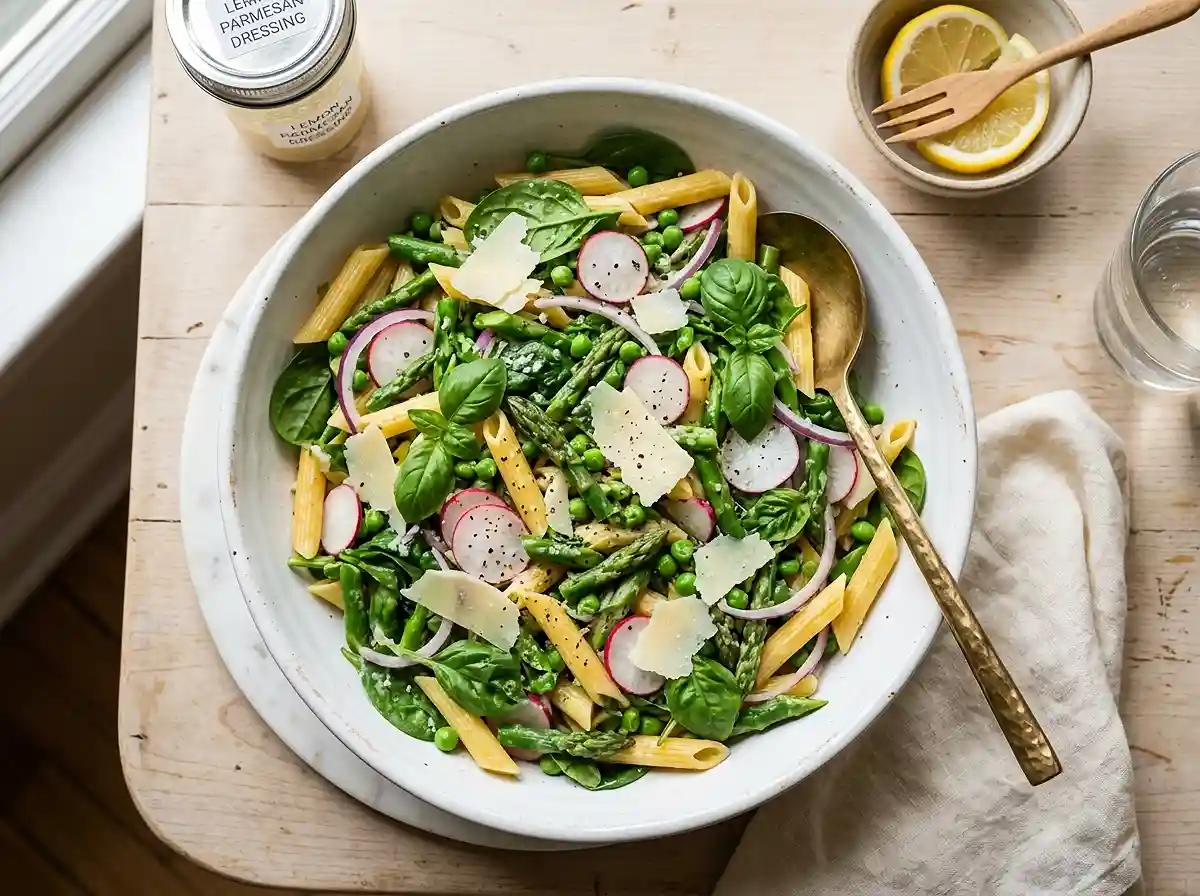
This vibrant spring pasta primavera salad celebrates the season’s best vegetables with crisp-tender asparagus, sweet peas, and peppery radishes tossed with penne in a creamy lemon-Parmesan dressing.
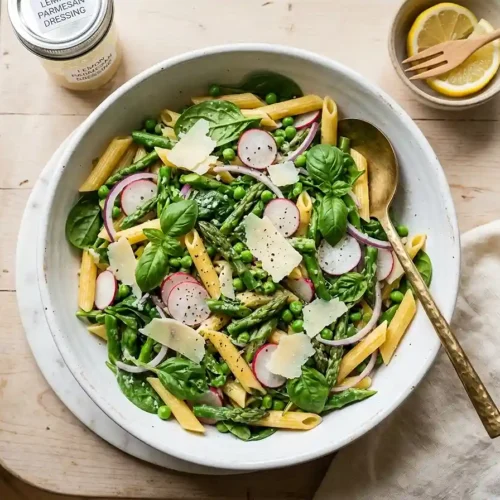
The first time I made Spring Pasta Primavera Salad for our Easter gathering, my aunt asked if I’d ordered it from a gourmet deli. Those bright green asparagus tips, ruby radish slices, and fresh basil scattered over the creamy pasta looked like something from a food magazine cover. Honestly, watching the whole bowl disappear within minutes told me this recipe was a keeper.
Have you ever craved a pasta salad that actually tastes fresh and exciting instead of heavy and bland? This pasta primavera delivers exactly that lightness. The combination of spring vegetables with that tangy lemon dressing creates something that celebrates the season rather than weighing you down.
Every forkful brings together different textures and flavors—tender pasta, crisp-tender asparagus, sweet peas, peppery radishes, and that creamy Parmesan-laced dressing. It’s become our Memorial Day potluck staple and the pasta salad I make whenever spring vegetables start appearing at the farmers market.
Table of Contents
Ingredients
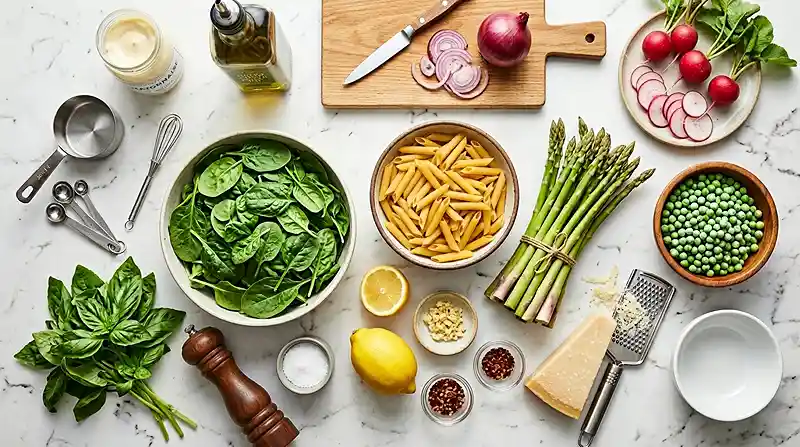
| Category | Ingredient | Amount | Notes |
|---|---|---|---|
| Pasta | Penne pasta | 12 ounces | Other short pasta works too |
| Vegetables | Frozen peas | 1 cup | Thawed |
| Vegetables | Asparagus | 1 bunch | Cut into 1-inch pieces |
| Vegetables | Red onion | 1 small | Thinly sliced |
| Vegetables | Radishes | 1 cup, sliced | Adds peppery crunch |
| Vegetables | Baby spinach leaves | 2 cups | Wilts slightly with warm pasta |
| Dressing | Mayonnaise | 1/2 cup | Full-fat for best flavor |
| Dressing | Olive oil | 2 tbsp + 2 tsp | Divided; some for pasta, some for dressing |
| Dressing | Fresh lemon juice | 3 tablespoons | About 1 large lemon |
| Dressing | Garlic | 1 clove, minced | Fresh only |
| Dressing | Red pepper flakes | 1/4 teaspoon | Subtle heat |
| Dressing | Grated Parmesan cheese | 2/3 cup | Plus more for garnish |
| Dressing | Kosher salt | 1 1/2 teaspoons | Adjust to taste |
| Dressing | Freshly ground black pepper | 1 teaspoon | |
| Garnish | Fresh basil leaves | 1/2 cup | Torn or whole |
Instructions
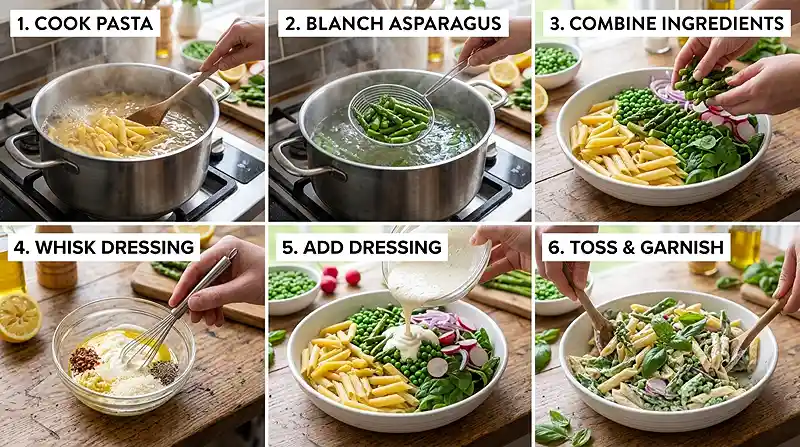
- Bring a large pot of generously salted water to a rolling boil. Add the penne pasta and cook according to package instructions for al dente—you want it tender but still with a slight bite since it will soften further as it chills.
- When the pasta is perfectly cooked, use a slotted spoon or spider strainer to transfer it to a large mixing bowl, reserving the pasta water in the pot. This cooking water is liquid gold—perfectly seasoned and starchy for blanching your spring vegetables.
- Immediately toss the hot pasta with 2 teaspoons of olive oil to prevent sticking. In my testing, I found that oiling the pasta while it’s still warm creates a light coating that keeps strands separate without making the salad greasy.
- Return the reserved pasta water to a boil. Add the asparagus pieces and blanch until crisp-tender, just 1-2 minutes depending on thickness. The asparagus should turn bright green and still have a satisfying snap when bitten. After making this dozens of times, I’ve learned that overcooked asparagus turns army-green and mushy—watch the clock carefully.
- Drain the asparagus and add it directly to the pasta bowl while still warm. The residual heat will help everything come together. Add the thawed peas, sliced red onion, radishes, and baby spinach leaves to the bowl.
- Stir everything together gently. The warmth from the pasta and asparagus will slightly soften the spinach leaves, wilting them just enough to become tender while maintaining some fresh texture. This creates the perfect balance between cooked and raw vegetables.
- Prepare the creamy lemon dressing by combining the mayonnaise, remaining 2 tablespoons olive oil, lemon juice, minced garlic, red pepper flakes, grated Parmesan, kosher salt, and black pepper in a small bowl. Whisk vigorously until smooth and creamy.
- Taste the dressing and adjust seasonings—you may want more lemon for brightness or additional salt to bring out the Parmesan flavor. The dressing should taste slightly more assertive than you think, as flavors mellow when chilled.
- Pour the dressing over the pasta and vegetables and toss thoroughly until everything is evenly coated. Make sure the dressing reaches every piece of pasta and vegetable—no dry spots allowed in this pasta salad.
- Cover the bowl tightly and refrigerate until completely chilled, at least 2-3 hours or overnight. This chilling time allows the flavors to meld together and the pasta to absorb some of that delicious dressing.
- Before serving, give the salad a good stir and taste for seasoning—chilled foods often need a bit more salt. Transfer to a beautiful serving bowl, garnish with shreds of additional Parmesan and fresh basil leaves, and watch it disappear.
Substitutions and Variations
This pasta primavera adapts beautifully to different preferences and seasonal availability. Swap penne for rotini, farfalle, or any short pasta shape that catches the creamy dressing. Whole wheat or gluten-free pasta works well for dietary needs.
For the spring vegetables, sugar snap peas, green beans, or zucchini ribbons make excellent additions or substitutions. My family’s favorite variation includes blanched broccoli florets and cherry tomatoes for extra color and nutrition.
Make this pasta salad dairy-free by using vegan mayonnaise and nutritional yeast instead of Parmesan—it won’t taste identical but still delicious. For extra protein, add grilled chicken, shrimp, or white beans.
Expert Tips and Troubleshooting
The key to exceptional spring pasta primavera salad lies in properly cooking both the pasta and asparagus. In my testing, I found that slightly undercooking the pasta (1 minute less than package directions) prevents mushy texture after the salad chills and absorbs dressing.
Don’t skip reserving the pasta water for blanching asparagus. The salty, starchy water seasons the vegetables perfectly and saves time by not requiring a separate pot. According to America’s Test Kitchen, this technique is a professional kitchen trick for efficient cooking.
Let the salad chill fully before serving. Pasta salads taste dramatically better after the flavors have time to meld—overnight refrigeration produces the most harmonious results. The dressing penetrates the pasta and vegetables, creating deeper, more unified flavor.
The salad may appear dry after chilling as pasta absorbs liquid. Keep extra dressing on the side or add a splash of olive oil and lemon juice to refresh before serving.
Storage and Meal Prep
| Component | Storage Method | Duration |
|---|---|---|
| Assembled pasta salad | Airtight container, refrigerated | 4 days |
| Lemon-Parmesan dressing | Sealed jar, refrigerated | 1 week |
| Blanched asparagus alone | Paper towel-lined container, refrigerated | 3 days |
| Cooked pasta alone | Airtight container with oil, refrigerated | 5 days |
This pasta salad is ideal for meal prep because it improves with time. Make it the night before your event for the best flavor—the pasta absorbs the dressing and all the flavors meld together beautifully.
For weekly meal prep, portion into individual containers for grab-and-go lunches. The salad holds up well throughout the week, though you may want to add fresh basil just before eating for the brightest herb flavor. Keep extra dressing ready to refresh portions as needed.
Serving Suggestions
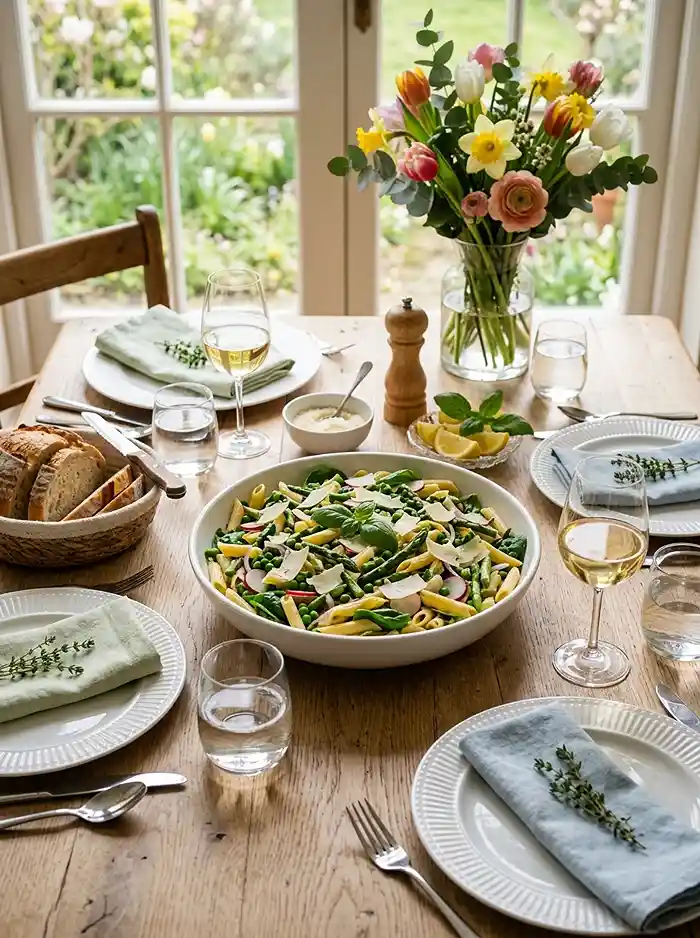
This spring vegetables pasta salad makes a stunning addition to potlucks, picnics, and holiday gatherings. Present it in a white or clear serving bowl to showcase the beautiful spring colors—green asparagus and peas, pink radishes, and fresh basil.
Pair it with grilled proteins like lemon herb chicken or salmon for a complete meal. For an impressive spring spread, serve alongside strawberry goat cheese spring roll salad for contrasting textures. The fresh flavors also complement heartier dishes like warm mushroom and barley salad or the exotic mango forbidden black rice tropical bowl.
FAQs About Spring Pasta Primavera Salad
What does pasta primavera have in it?
Pasta primavera traditionally features spring vegetables like asparagus, peas, and tender greens combined with pasta in a light sauce. “Primavera” means “spring” in Italian, so the dish celebrates the season’s fresh produce. This salad version includes asparagus, peas, spinach, radishes, and red onion in a creamy lemon-Parmesan dressing.
Why is pasta primavera considered a spring dish?
Pasta primavera is named for spring (“primavera” in Italian) because it showcases vegetables that are at their peak during the season—asparagus, peas, young spinach, and fresh herbs. The light preparation style also suits warmer weather better than heavy winter pasta dishes.
Can I make this spring pasta primavera salad ahead of time?
Yes, this pasta salad actually improves when made ahead. Prepare it 2-3 hours before serving at minimum, or make it the night before for best results. The chilling time allows flavors to meld and the pasta to absorb the delicious dressing.
How do I prevent the pasta salad from getting dry?
Pasta absorbs dressing as it sits, which can make the salad seem dry. Reserve extra dressing on the side to refresh before serving, or add a splash of olive oil and lemon juice. Tossing the hot pasta with oil before adding dressing also helps maintain moisture.
What other vegetables can I add to this pasta salad?
Sugar snap peas, green beans, zucchini ribbons, broccoli florets, cherry tomatoes, or artichoke hearts all work beautifully. The key is choosing vegetables that complement the light, fresh spring theme and won’t overpower the creamy lemon dressing.
This Spring Pasta Primavera Salad captures everything wonderful about the season in one beautiful bowl—fresh vegetables, bright flavors, and colors that make your table come alive. Seriously, pin this recipe now for your next spring gathering! Share in the comments what spring vegetables you’d add to make it your own.
Spring Pasta Primavera Salad
Equipment
- Large pot
- Large mixing bowl
- Slotted spoon or spider strainer
- Small bowl
- Whisk
- Colander
Ingredients
Pasta
- 12 oz penne pasta other short pasta works too
Vegetables
- 1 cup frozen peas thawed
- 1 bunch asparagus cut into 1-inch pieces
- 1 small red onion thinly sliced
- 1 cup radishes, sliced adds peppery crunch
- 2 cups baby spinach leaves wilts slightly with warm pasta
Dressing
- ½ cup mayonnaise full-fat for best flavor
- 2 tbsp + 2 tsp olive oil divided; some for pasta, some for dressing
- 3 tbsp fresh lemon juice about 1 large lemon
- 1 clove garlic, minced fresh only
- ¼ tsp red pepper flakes subtle heat
- ⅔ cup grated Parmesan cheese plus more for garnish
- 1 ½ tsp kosher salt adjust to taste
- 1 tsp freshly ground black pepper
Garnish
- ½ cup fresh basil leaves torn or whole
Instructions
- Cook the pasta: In a large pot of boiling salted water, cook the penne according to package instructions for al dente. Remove the pasta to a large bowl using a slotted spoon, reserving the pasta water in the pot.
- Toss the hot pasta with 2 teaspoons olive oil to prevent sticking. Set aside.
- Prepare the vegetables: Return the reserved pasta water to a boil. Add the asparagus pieces and cook until crisp-tender, 1-2 minutes.
- Drain the asparagus and add it to the pasta, followed by the thawed peas, sliced red onion, radishes, and baby spinach. Stir to combine—the residual heat will soften the spinach leaves slightly.
- Prepare the dressing: In a small bowl, combine the mayonnaise, 2 tablespoons olive oil, lemon juice, minced garlic, red pepper flakes, grated Parmesan, kosher salt, and black pepper. Whisk until smooth.
- Assemble the salad: Pour the dressing over the pasta and vegetables. Toss thoroughly until everything is evenly coated.
- Cover and refrigerate until chilled, 2-3 hours or overnight. Before serving, stir well and adjust seasoning if needed.
- Garnish with shreds of additional Parmesan and fresh basil leaves. Serve chilled.