Thai Peanut Tempeh Power Bowl
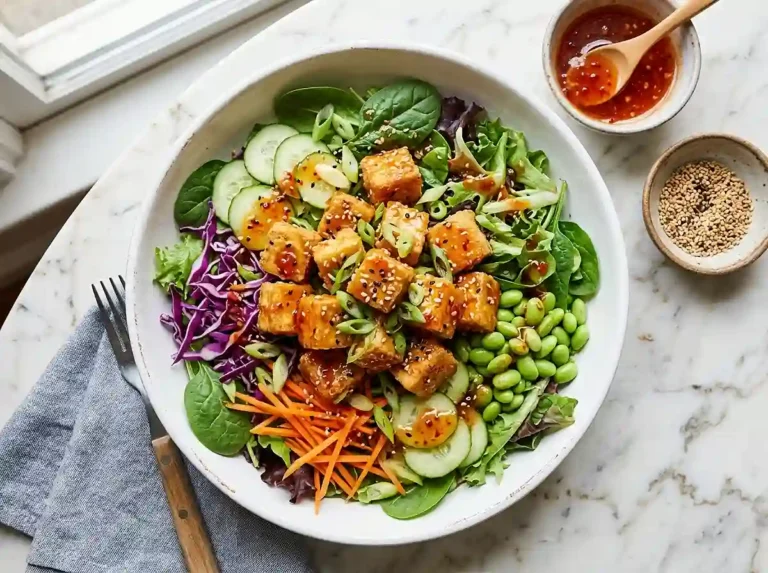
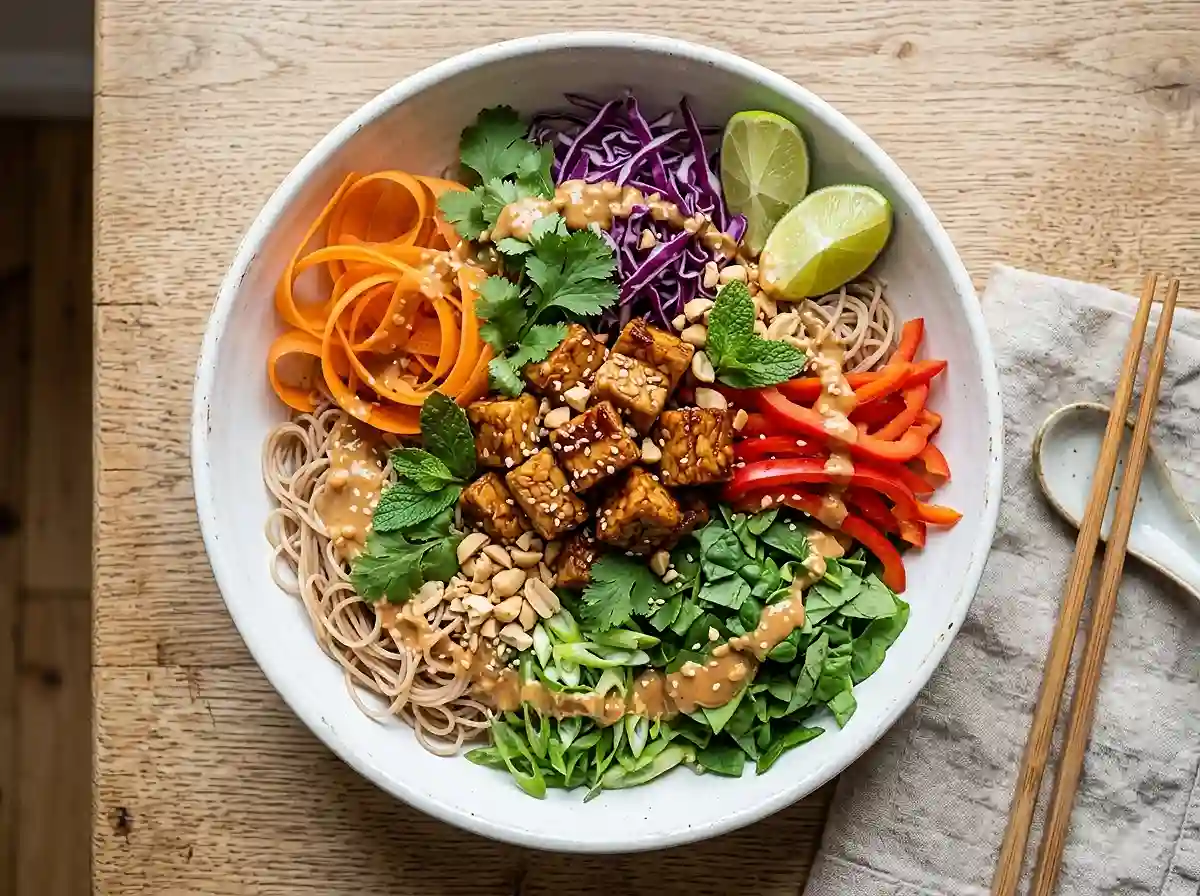
A vibrant vegan Thai Peanut Tempeh Power Bowl, rice noodles, rainbow vegetables, and fresh herbs, all tossed in a creamy Thai peanut dressing.
The first time I drizzled homemade peanut sauce over a bowl of colorful vegetables and chewy noodles, I understood why Thai flavors have captured hearts worldwide. This Thai Peanut Tempeh Power Bowl brings together everything I love about plant-based eating—bold flavors, satisfying textures, and ingredients that make you feel genuinely nourished from the inside out.
Have you ever craved takeout but wanted something healthier that you could make at home? This vegan bowl delivers those restaurant-worthy Thai peanut flavors with wholesome ingredients you can feel good about. After making this dozens of times for meal prep and weeknight dinners, I’ve discovered that the secret is in that dressing—creamy, tangy, slightly spicy, with the perfect balance of sweet and savory.
Table of Contents
Ingredients For Thai Peanut Tempeh Power Bowl
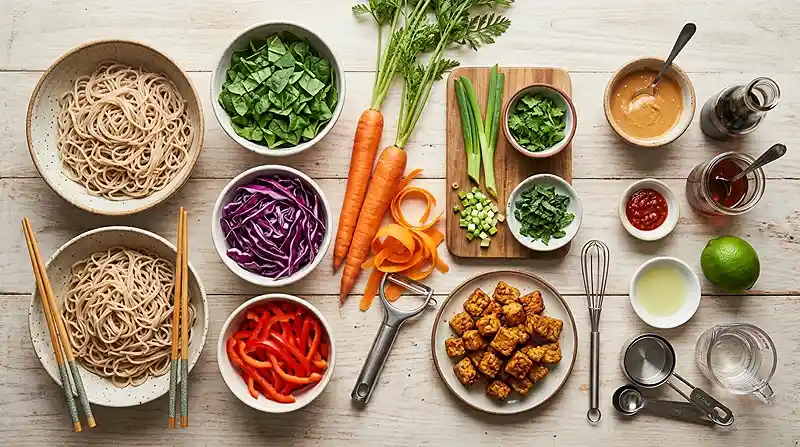
| Component | Amount | Notes |
|---|---|---|
| Salad | ||
| Vermicelli noodles | 6 oz | Brown rice noodles preferred |
| Carrots | 2 medium | Ribboned with peeler or spiralizer |
| Green onions | 2 stalks | Finely chopped |
| Fresh cilantro | ¼ cup | Chopped |
| Fresh mint | 2-3 tbsp | Chopped |
| Spinach | 1 cup | Loosely packed, chopped |
| Red cabbage | 1 cup | Thinly sliced |
| Red bell pepper | 1 medium | Thinly sliced |
| Marinated peanut tempeh | 1 batch | Optional, see notes |
| Thai Peanut Dressing | ||
| Salted creamy peanut butter | ⅓ cup + 1 tbsp | Or almond butter or sunbutter |
| Gluten-free tamari | 3 tbsp | Or soy sauce |
| Maple syrup | 3 tbsp | |
| Chili garlic sauce | 1 tsp | See notes for substitutes |
| Lime juice | 3 tbsp | About 1 medium lime |
| Water | ~¼ cup | To thin |
Instructions For Thai Peanut Tempeh Power Bowl
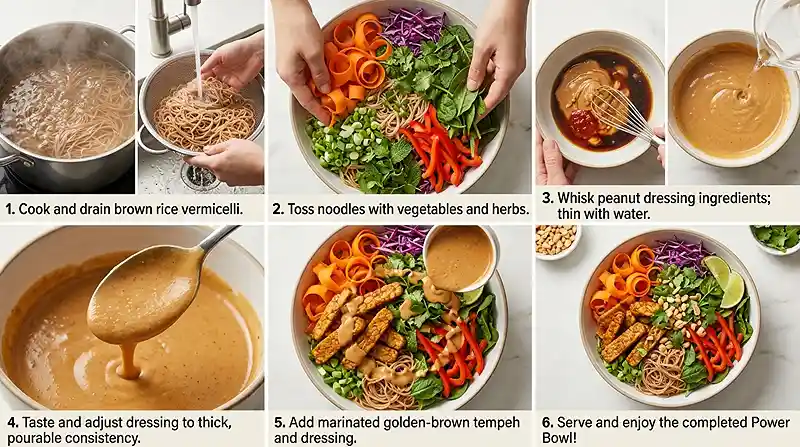
- Cook the noodles. Bring a pot of water to a boil and cook the vermicelli noodles according to package instructions—usually just 3 to 4 minutes for rice noodles. In my testing, slightly undercooking them prevents mushiness when dressed.
- Rinse and cool. Drain the noodles immediately and rinse under cold running water, tossing with your hands to cool completely and stop the cooking. This also removes excess starch that can make noodles gummy. Drain thoroughly and set aside.
- Ribbon the carrots. Using a vegetable peeler, shave long ribbons from each carrot, rotating as you go. Or use a spiralizer for curly strands. The ribbons should be thin and delicate, almost translucent at the edges.
- Prep remaining vegetables. Finely chop the green onions, cilantro, and mint. Chop the spinach into bite-sized pieces. Thinly slice the red cabbage into shreds and the bell pepper into thin strips.
- Assemble the base. In a large serving bowl, combine the cooled noodles, carrot ribbons, green onions, cilantro, mint, spinach, cabbage, and red bell pepper. Toss loosely to distribute the colors evenly—it should look like a rainbow.
- Make the peanut dressing. In a small mixing bowl, combine the peanut butter, tamari, maple syrup, chili garlic sauce, and lime juice. Whisk vigorously until smooth—the mixture will be very thick at first.
- Thin to pouring consistency. Add warm water a tablespoon at a time, whisking between additions, until the dressing is thick but pourable—it should ribbon off the whisk and pool slightly before disappearing into the bowl.
- Taste and adjust. This step matters! The dressing should balance sweet, salty, tangy, and spicy. Add more maple syrup for sweetness, chili sauce for heat, lime juice for brightness, or tamari for depth. Get it perfect before dressing the salad.
- Add tempeh if using. If you’ve prepared marinated peanut tempeh, add half of it to the salad bowl along with half of the peanut dressing. Toss everything together until the noodles and vegetables are evenly coated.
- Finish and serve. Top with the remaining tempeh and drizzle the remaining dressing over everything. Serve immediately while the noodles are perfectly chewy and the vegetables are crisp. Garnish with extra cilantro, mint, or chopped peanuts if desired.
Substitutions & Variations
This thai peanut tempeh bowl adapts beautifully to dietary needs and preferences. The Korean beef bibimbap salad offers another satisfying Asian-inspired bowl if you’re craving different flavors.
Nut-free option: Replace peanut butter with sunflower seed butter (sunbutter) or tahini. The flavor profile shifts slightly but remains delicious.
Protein alternatives: Skip tempeh and add crispy baked tofu, edamame, grilled chicken, or shrimp. Even a handful of roasted cashews adds protein and crunch.
Noodle swaps: Use soba noodles, glass noodles, or zucchini noodles for variety. Serve over rice or quinoa instead of noodles for a different texture.
Heat adjustment: For mild, omit chili garlic sauce entirely. For spicier, add 1 to 2 minced Thai chilies or increase sambal oelek to 2 teaspoons.
Add more vegetables: Snap peas, cucumber, mango, or shredded lettuce all work beautifully. Bean sprouts add authentic Thai crunch.
Expert Tips & Troubleshooting
Use warm water for the dressing. Cold water doesn’t incorporate as smoothly into peanut butter. Warm water creates a silkier, more emulsified sauce that coats everything evenly.
Don’t overdress. Start with half the dressing as directed. Noodles absorb sauce as they sit—you can always add more, but you can’t take it back. According to Serious Eats, dressed noodle salads are best within the first few hours.
Rinse noodles thoroughly. Rice noodles release significant starch during cooking. Rinsing under cold water removes it and prevents a gummy, sticky mess.
Fresh herbs make the difference. The cilantro and mint aren’t optional garnishes—they’re essential components that provide the bright, fresh quality that defines Thai cuisine. Don’t skip them.
Toss gently but thoroughly. You want every strand of noodle and vegetable coated in dressing, but aggressive tossing breaks the delicate carrot ribbons. Use two large spoons and lift rather than stir.
Natural peanut butter works but separates. If using natural peanut butter, stir it very well before measuring. The oil separation can make the dressing oily if not properly incorporated.
Storage & Meal Prep
| Component | Storage | Duration |
|---|---|---|
| Thai peanut dressing | Sealed jar, refrigerated | 1 week |
| Cooked rice noodles (undressed) | Airtight container with splash of oil | 3 days |
| Prepped vegetables | Separate containers, refrigerated | 4 days |
| Marinated tempeh | Airtight container, refrigerated | 5 days |
| Dressed salad | Airtight container, refrigerated | 4-5 days |
| Assembled bowl | Best served fresh | Same day |
For meal prep, store components separately—noodles tossed with a splash of oil, vegetables prepped but separate, dressing in a jar, tempeh in its own container. Assemble fresh bowls as needed throughout the week.
Serving Suggestions
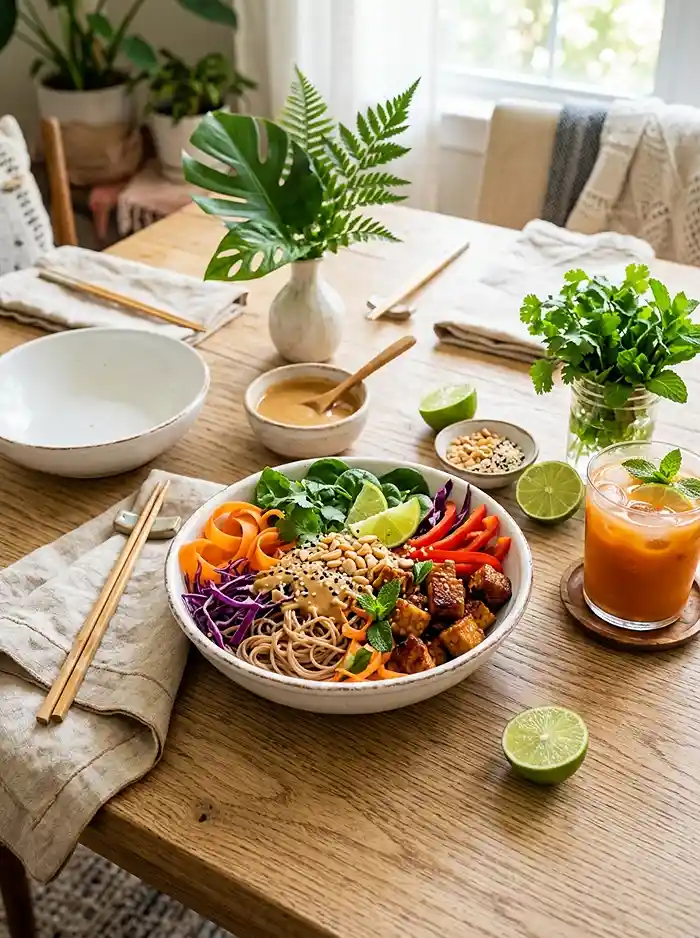
This Thai Peanut Tempeh Power Bowl is a complete meal on its own—protein, carbs, fiber, and healthy fats all in one beautiful bowl. Pair it with the beetroot towers with goat cheese for an impressive plant-forward dinner party, or serve alongside the BBQ ranch chicken cobb salad for variety.
For entertaining, set up a DIY bowl bar with all components in separate dishes—guests can customize their own combinations and dressing amounts. It’s interactive and accommodates different preferences.
Top with extra garnishes like chopped roasted peanuts, sesame seeds, crispy shallots, or a wedge of lime. A cold Thai iced tea or light beer complements the bold flavors perfectly.
FAQs About Thai Peanut Tempeh Power Bowl
How do I make marinated peanut tempeh?
Slice tempeh into thin strips or cubes. Marinate in a mixture of soy sauce, maple syrup, rice vinegar, and a bit of peanut butter for 30 minutes to overnight. Pan-fry in oil until golden and crispy on the edges, or bake at 400°F for 20 to 25 minutes, flipping halfway.
Can I make this salad ahead of time?
Yes, but store the dressing and tempeh separately from the noodles and vegetables. Dressed noodles absorb sauce and become soft over time. Assemble fresh bowls as needed for the best texture.
What if my peanut dressing is too thick?
Add warm water one tablespoon at a time, whisking between additions, until you reach the desired consistency. The dressing should be pourable but still coat a spoon. It will thicken as it sits, so err slightly thinner.
Is this salad gluten-free?
It can be! Use brown rice noodles or glass noodles, gluten-free tamari instead of soy sauce, and verify your peanut butter and chili sauce are gluten-free. Most tempeh is naturally gluten-free, but check the label.
What can I substitute for chili garlic sauce?
Use 1 minced fresh Thai chili, ¼ teaspoon red pepper flakes, or a teaspoon of sriracha. Each option provides different heat levels and flavor notes—adjust to your spice preference.
This Thai Peanut Tempeh Power Bowl proves that vegan eating can be bold, satisfying, and absolutely delicious. The creamy peanut dressing, chewy noodles, crunchy vegetables, and protein-rich tempeh create a meal that fuels your body and delights your taste buds. Now whisk up that dressing and build your rainbow bowl!
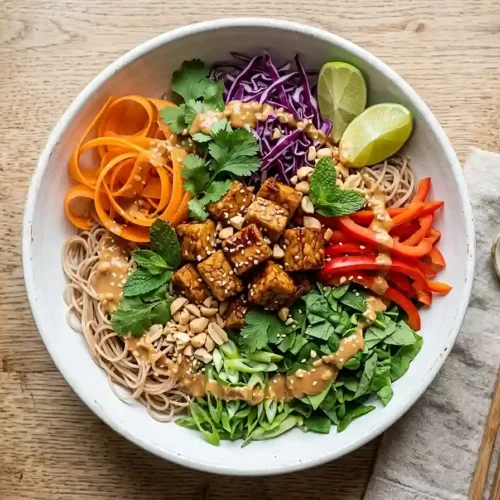
Thai Peanut Tempeh Power Bowl
Equipment
- Large pot
- Colander
- Large serving bowl
- Small mixing bowl
- Whisk
- Vegetable peeler or spiralizer
- Sharp knife
- Cutting board
Ingredients
Salad
- 6 oz vermicelli noodles brown rice noodles preferred
- 2 medium carrots ribboned with peeler or spiralizer
- 2 stalks green onions finely chopped
- ¼ cup fresh cilantro chopped
- 2-3 tbsp fresh mint chopped
- 1 cup spinach loosely packed, chopped
- 1 cup red cabbage thinly sliced
- 1 medium red bell pepper thinly sliced
- 1 batch marinated peanut tempeh optional, see notes
Thai Peanut Dressing
- ⅓ cup salted creamy peanut butter plus 1 tbsp, or almond butter or sunbutter
- 3 tbsp gluten-free tamari or soy sauce
- 3 tbsp maple syrup
- 1 tsp chili garlic sauce or 1 Thai chili minced, or ¼ tsp red pepper flakes
- 3 tbsp lime juice about 1 medium lime
- ¼ cup water warm, to thin
Instructions
- Bring a pot of water to a boil and cook vermicelli noodles according to package instructions—usually 3-4 minutes for rice noodles. Slightly undercook to prevent mushiness when dressed.
- Drain noodles immediately and rinse under cold running water, tossing to cool completely. This removes excess starch that makes noodles gummy. Drain thoroughly and set aside.
- Using a vegetable peeler, shave long ribbons from each carrot, rotating as you go. The ribbons should be thin and delicate, almost translucent at the edges.
- Finely chop the green onions, cilantro, and mint. Chop spinach into bite-sized pieces. Thinly slice red cabbage into shreds and bell pepper into thin strips.
- In a large serving bowl, combine cooled noodles, carrot ribbons, green onions, cilantro, mint, spinach, cabbage, and red bell pepper. Toss loosely to distribute colors evenly.
- Make the dressing: In a small bowl, combine peanut butter, tamari, maple syrup, chili garlic sauce, and lime juice. Whisk vigorously until smooth—mixture will be very thick.
- Add warm water a tablespoon at a time, whisking between additions, until dressing is thick but pourable—it should ribbon off the whisk and pool slightly.
- Taste and adjust: add more maple syrup for sweetness, chili sauce for heat, lime juice for brightness, or tamari for depth. Perfect the balance before dressing the salad.
- Add half the tempeh (if using) and half the peanut dressing to the salad. Toss until noodles and vegetables are evenly coated.
- Top with remaining tempeh and drizzle remaining dressing over everything. Serve immediately while noodles are chewy and vegetables are crisp. Garnish with extra herbs or chopped peanuts.