Korean Beef Bibimbap Salad
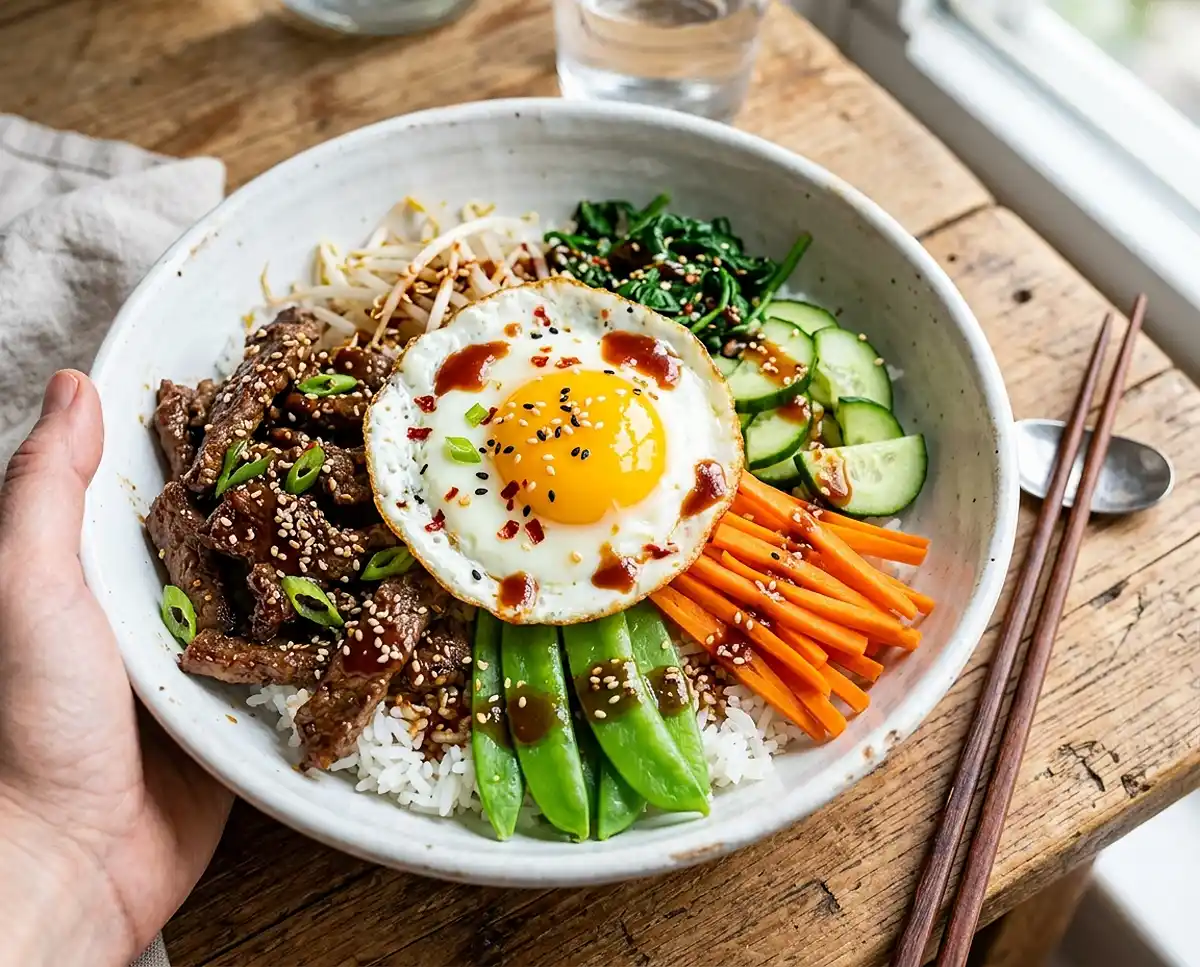
This Korean beef bibimbap salad features savory marinated beef, crisp vegetables, and a runny fried egg over rice with gochujang aioli.
The sizzle of marinated beef hitting a hot pan while sesame seeds toast in the background—that’s the moment I fell in love with making Korean beef bibimbap salad at home. This beautiful bowl layers tender, caramelized beef strips over fluffy jasmine rice with crisp vegetables, all crowned with a perfectly fried egg. Honestly, watching that golden yolk break and cascade over everything feels like unwrapping a gift.
Have you ever wanted restaurant-quality Korean food without the restaurant price tag? This bibimbap salad with beef delivers authentic flavors in under 30 minutes. The combination of savory-sweet marinated meat, crunchy vegetables, and creamy aioli creates harmony in every bite. It’s become our go-to Super Bowl Sunday dinner when we want something more exciting than typical game-day fare.
The colors alone make this dish stunning—orange carrots, green snow peas, and that vibrant golden egg yolk against white rice.
Table of Contents
Ingredients for This Korean Bibimbap Beef Salad
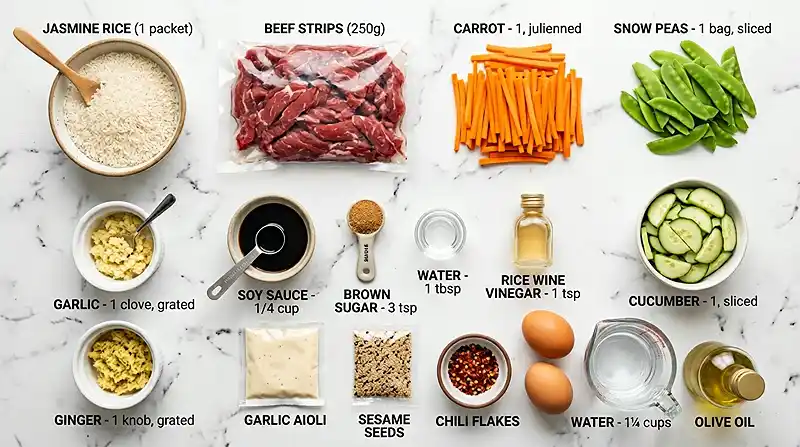
| Category | Ingredient | Amount | Notes |
|---|---|---|---|
| Base | Jasmine rice | 1 packet | About ¾ cup dry |
| Base | Water | 1¼ cups | For cooking rice |
| Protein | Beef strips | 1 packet | About 8 oz, thinly sliced |
| Aromatics | Garlic | 1 clove | Finely grated |
| Aromatics | Fresh ginger | 1 knob | Finely grated |
| Vegetables | Carrot | 1 medium | Cut into matchsticks |
| Vegetables | Snow peas | 1 bag | Trimmed and sliced |
| Vegetables | Cucumber | 1 | Sliced into half-moons |
| Sauce | Soy sauce | ¼ cup | Low-sodium works too |
| Sauce | Brown sugar | 3 tsp | Adds caramelization |
| Sauce | Water | 1 tbsp | For thinning sauce |
| Sauce | Rice wine vinegar | 1 tsp | White vinegar works |
| Sauce | Garlic aioli | 1 packet | About 2 tbsp |
| Toppings | Sesame seeds | 1 sachet | About 1 tbsp |
| Toppings | Chili flakes | To taste | Optional for heat |
| Toppings | Eggs | 2 | One per serving |
| Cooking | Olive oil | As needed | Vegetable oil works |
How to Make This Korean Beef Bibimbap Bowl
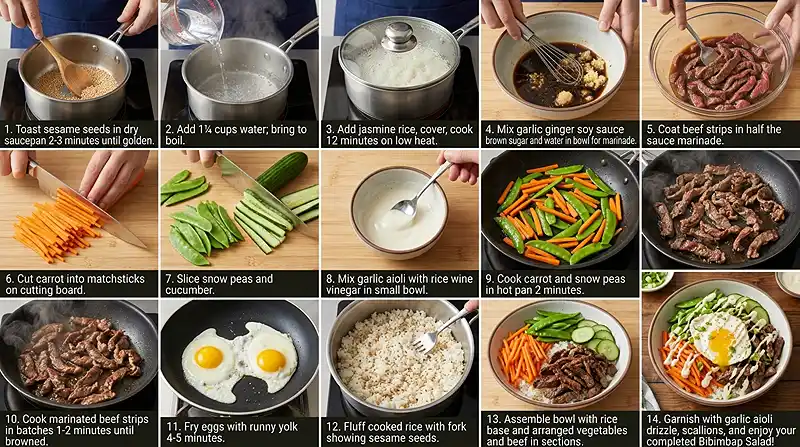
1. Heat a dry saucepan over medium heat and add the sesame seeds. Toast for 2-3 minutes, shaking the pan frequently, until they turn golden and smell nutty—like toasted popcorn with an Asian twist. Remove and set aside for garnish.
2. In the same saucepan, add 1¼ cups water and bring to a boil. Add the jasmine rice, stir once, then cover and reduce heat to low. Cook for 12 minutes without lifting the lid—the steam is doing important work.
3. Remove rice from heat and let sit covered for 10-15 minutes. In my testing, I found this resting period makes the difference between sticky and perfectly fluffy grains. Resist the urge to peek.
4. While rice cooks, prepare the marinade. Combine the grated garlic, ginger, soy sauce, brown sugar, and 1 tablespoon water in a bowl. The mixture should smell deeply aromatic and slightly sweet.
5. Add the beef strips to the marinade and toss to coat thoroughly with half the sauce mixture. Let sit for 10-15 minutes if time allows—even 5 minutes helps. Reserve the remaining sauce for drizzling.
6. Cut your vegetables while the beef marinates. Slice the carrot into thin matchsticks, trim and slice the snow peas, and cut the cucumber into half-moons. Keep the cucumber separate since it stays raw.
7. Mix the garlic aioli with rice wine vinegar in a small bowl to create your creamy drizzling sauce. After making this dozens of times, I’ve learned this simple addition transforms plain aioli into something special.
8. Heat olive oil in a large pan over medium-high heat. Add the carrot matchsticks and snow peas, cooking for about 2 minutes until slightly tender but still crisp. They should still have a satisfying snap when bitten. Remove and set aside.
9. In the same hot pan, cook the marinated beef in batches to avoid crowding. Let each batch sit undisturbed for 30 seconds to develop caramelization before stirring. Cook 1-2 minutes total until browned and cooked through.
10. Heat a little more olive oil in the pan and crack in the eggs. Fry for 4-5 minutes for a runny yolk that will become your sauce, or longer if you prefer the yolk set. The whites should be fully cooked with crispy edges.
11. Divide the fluffy rice between two bowls. Arrange the beef, cooked vegetables, and fresh cucumber in sections on top. Drizzle with the reserved marinade sauce. Crown each bowl with a fried egg, sprinkle with toasted sesame seeds and chili flakes, and serve with garlic aioli on the side.
Substitutions and Variations
Ground beef works beautifully in this Korean beef bibimbap bowl if you can’t find pre-sliced strips—just break it into crumbles while cooking. Thinly sliced chicken thighs or pork also absorb the marinade wonderfully for different protein options.
My family’s favorite variation adds kimchi and spinach for extra vegetables and authentic Korean flavor. The fermented tang of kimchi cuts through the richness of the beef and egg perfectly.
Make this bibimbap salad with beef lower-carb by serving over cauliflower rice instead of jasmine rice. The sauce and toppings work equally well with the lighter base, and you won’t miss the grains.
Expert Tips for Restaurant-Quality Bibimbap
The secret to exceptional Korean bibimbap beef salad lies in achieving proper caramelization. According to Serious Eats’ guide to Korean cooking, high heat and not overcrowding the pan allows the sugars in the marinade to brown rather than steam. Work in batches for the best results.
In my testing, I found that grating rather than mincing the garlic and ginger creates a smoother marinade that coats the beef more evenly. A microplane or the fine holes of a box grater works perfectly for this technique.
Don’t skip the sesame seeds—toasting them fresh makes a remarkable difference compared to using them straight from the jar. The oils release during toasting, intensifying their nutty flavor tenfold. If you enjoy protein-packed bowls, try our teriyaki salmon broccoli bowl for another satisfying option.
Storage and Meal Prep
| Component | Storage Method | Duration |
|---|---|---|
| Cooked rice | Airtight container, refrigerated | 4 days |
| Marinated raw beef | Airtight container, refrigerated | 1 day |
| Cooked beef | Airtight container, refrigerated | 3 days |
| Prepped vegetables | Separate containers, refrigerated | 3 days |
| Assembled bowl | Not recommended | Best fresh |
This Korean beef bibimbap bowl works well for partial meal prep. Cook the rice and prep all vegetables ahead, storing separately. Marinate the beef the night before for deeper flavor penetration.
Reheat rice with a splash of water in the microwave, cook the beef fresh, and fry the eggs just before serving. The contrast of hot and cold components makes this dish special, so assembly should happen at mealtime.
Serving Suggestions
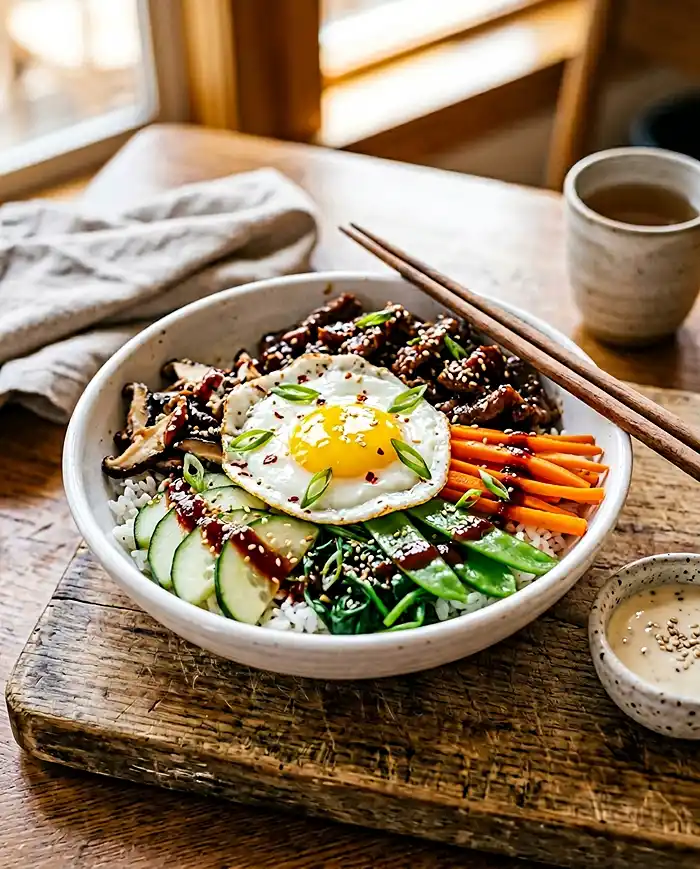
This bibimbap salad with beef makes a complete, satisfying meal on its own, but pickled vegetables on the side enhance the experience. Quick-pickled radishes or store-bought kimchi add traditional Korean flair and refreshing acidity.
For a full Korean-inspired spread, serve alongside our quinoa tabbouleh for a grain-based contrast, or start with our avocado ranch wedge salad as an unexpected fusion appetizer. Well, a cold Korean beer or crisp white wine complements the savory-sweet flavors beautifully.
Korean Beef Bibimbap Salad FAQs
Can I make Korean beef bibimbap salad ahead of time?
You can prep all components ahead but should assemble just before eating. Cook rice and prep vegetables up to 3 days ahead. Marinate beef overnight for deeper flavor. Fry eggs fresh for the best runny yolk experience.
What cut of beef works best for bibimbap?
Thinly sliced sirloin, ribeye, or flank steak work best for quick cooking and tender results. Ask your butcher to slice it thin, or partially freeze the meat for 30 minutes to make home slicing easier.
How do I get a crispy fried egg with runny yolk?
Use medium heat with enough oil to cover the pan bottom. Cook for 4-5 minutes without flipping, occasionally spooning hot oil over the whites. The edges should crisp while the yolk stays liquid.
Why is my beef tough instead of tender?
The beef was likely overcooked or cooked at too low heat. Use high heat, cook in batches to avoid steaming, and remove from heat while still slightly pink—carryover cooking finishes it perfectly.
Best way to achieve authentic bibimbap presentation?
Arrange each component in separate sections around the bowl rather than mixing everything together. This creates the classic colorful presentation and lets diners mix as they eat, combining elements in each bite.
Seriously, this Korean beef bibimbap salad brings authentic Korean flavors to your table any night of the week. Pin this recipe for your next craving, and share in the comments if you add any special toppings to your bowl!
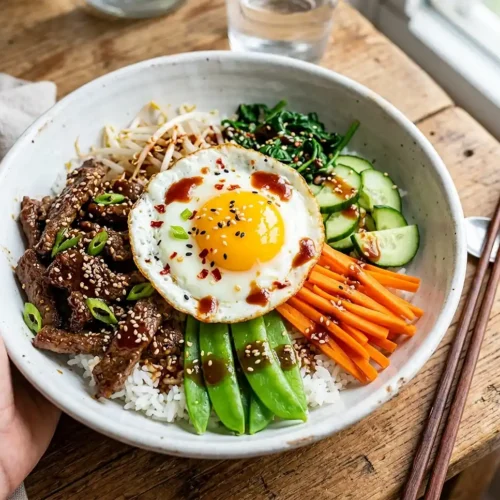
Korean Beef Bibimbap Salad
Equipment
- Saucepan with lid
- Large skillet or frying pan
- Mixing bowls
- Microplane or fine grater
- Sharp knife
- Cutting board
- Serving bowls
Ingredients
Base
- 1 packet jasmine rice About 3/4 cup dry
- 1 ¼ cups water For cooking rice
Protein
- 1 packet beef strips About 8 oz, thinly sliced
Aromatics
- 1 clove garlic Finely grated
- 1 knob fresh ginger Finely grated
Vegetables
- 1 medium carrot Cut into matchsticks
- 1 bag snow peas Trimmed and sliced
- 1 cucumber Sliced into half-moons
Sauce
- ¼ cup soy sauce
- 3 teaspoons brown sugar
- 1 tablespoon water For sauce
- 1 teaspoon rice wine vinegar Or white vinegar
- 1 packet garlic aioli About 2 tablespoons
Toppings
- 1 sachet sesame seeds About 1 tablespoon
- to taste chili flakes Optional for heat
- 2 eggs One per serving
Cooking
- as needed olive oil For cooking
Instructions
- Heat a dry saucepan over medium heat and toast sesame seeds for 2-3 minutes until golden. Remove and set aside for garnish.
- Add 1 1/4 cups water to the saucepan and bring to a boil. Add jasmine rice, stir, cover, and reduce heat to low. Cook for 12 minutes without lifting the lid.
- Remove rice from heat and let sit covered for 10-15 minutes to finish steaming.
- Combine grated garlic, ginger, soy sauce, brown sugar, and 1 tablespoon water in a bowl. Add beef strips and coat with half the sauce. Let marinate for 10-15 minutes.
- While beef marinates, cut carrot into matchsticks, trim and slice snow peas, and slice cucumber into half-moons.
- Mix garlic aioli with rice wine vinegar in a small bowl. Set aside for serving.
- Heat olive oil in a pan over medium-high heat. Cook carrot and snow peas for about 2 minutes until slightly tender but still crisp. Remove and set aside.
- In the same hot pan, cook marinated beef in batches for 1-2 minutes until browned and cooked through. Set aside.
- Heat a little olive oil in the pan. Crack in eggs and fry for 4-5 minutes for soft yolk, or longer for firm yolk.
- Divide rice into bowls. Top with beef, cooked vegetables, and fresh cucumber. Drizzle with remaining sauce. Add fried egg on top. Sprinkle with toasted sesame seeds and chili flakes. Serve with garlic aioli on the side.