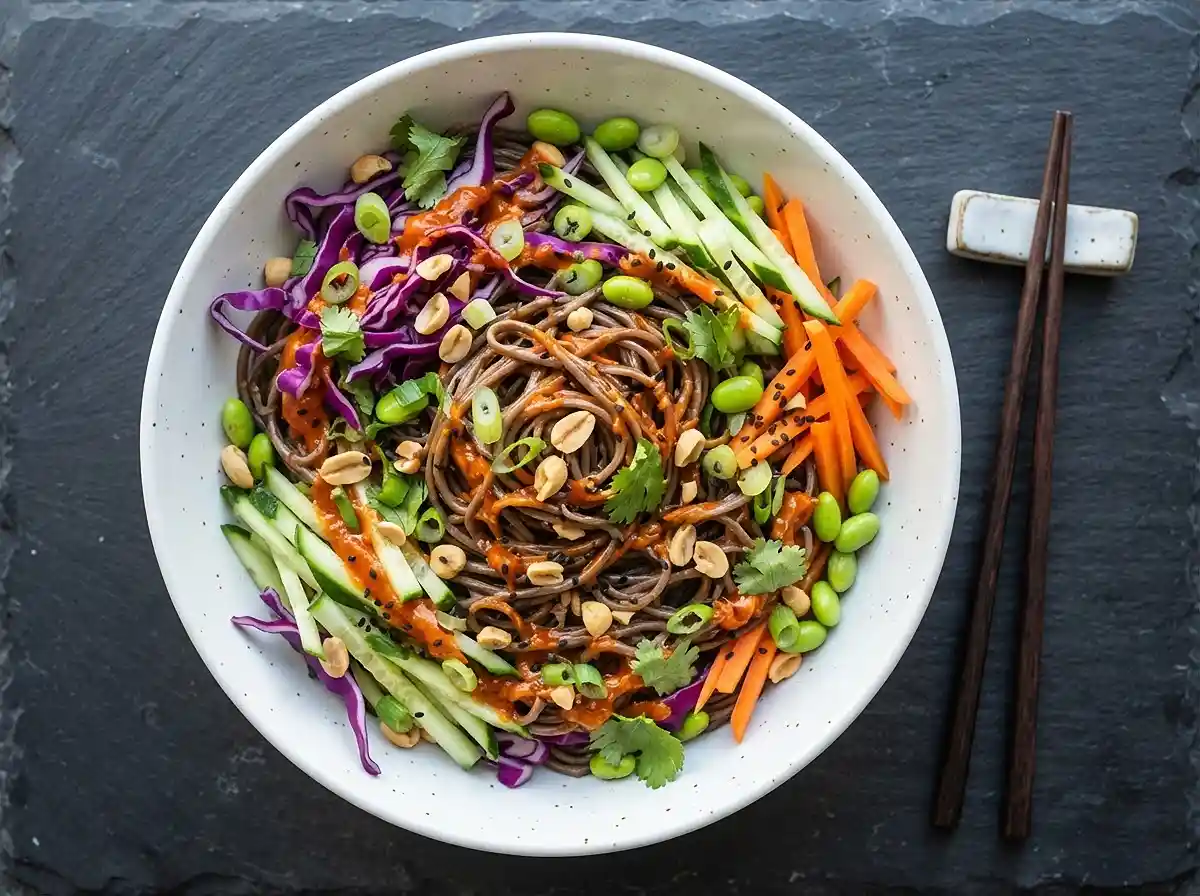
Gochujang Peanut Soba Salad
This Gochujang Peanut Soba Salad came together one August afternoon when I needed something bold, cold, and ready before kickoff. I had soba noodles, a jar of gochujang, and half a bag of edamame — and honestly, it turned out to be one of those happy accidents I keep making on repeat.
The dressing is where the magic lives. Creamy peanut butter, fiery gochujang, and a hit of lime create something so layered and satisfying, you’ll want to spoon it on everything. What makes it work for a crowd? It only gets better as it sits, which makes it an absolute dream for make-ahead gochujang peanut for football tailgate spreads.
Can a noodle salad really travel? Yes — and this one does it beautifully. Pack it in a big container and watch it disappear at Labor Day cookouts, summer potlucks, or any table that could use a little heat.
Table of Contents
Ingredients
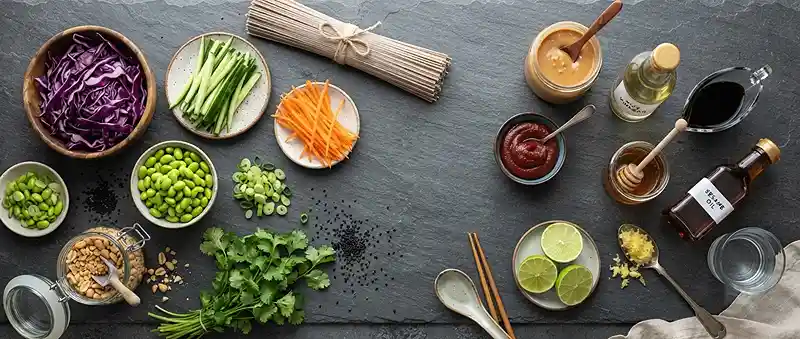
| Category | Ingredient | Amount | Notes |
|---|---|---|---|
| Noodles | Soba noodles | 8 oz | 100% buckwheat for gluten-free |
| Salad Base | Shredded red cabbage | 1 cup | Pre-shredded bag works fine |
| Salad Base | Cucumber, julienned | 1 large | English cucumber preferred |
| Salad Base | Carrot, julienned | 1 medium | A box grater works great here |
| Salad Base | Shelled edamame | 1/2 cup | Thawed from frozen is perfect |
| Garnish | Sliced green onions | 1/4 cup | White and green parts both |
| Garnish | Fresh cilantro, chopped | 1/4 cup | Sub flat-leaf parsley if needed |
| Garnish | Roasted peanuts, chopped | 2 tbsp | Salted adds a nice contrast |
| Garnish | Toasted sesame seeds | 1 tbsp | White or black, both work |
| Dressing | Creamy peanut butter | 1/4 cup | Natural, no sugar added |
| Dressing | Gochujang | 2 tbsp | Reduce to 1 tbsp for less heat |
| Dressing | Rice vinegar | 2 tbsp | Unseasoned preferred |
| Dressing | Soy sauce | 1 tbsp | Tamari for gluten-free |
| Dressing | Honey | 1 tbsp | Maple syrup for vegan version |
| Dressing | Toasted sesame oil | 1 tbsp | Do not skip — essential flavor |
| Dressing | Fresh lime juice | 1 tbsp | About half a lime |
| Dressing | Fresh ginger, grated | 1 tsp | Frozen grated ginger also works |
| Dressing | Warm water | 2–3 tbsp | Add gradually to adjust texture |
Instructions
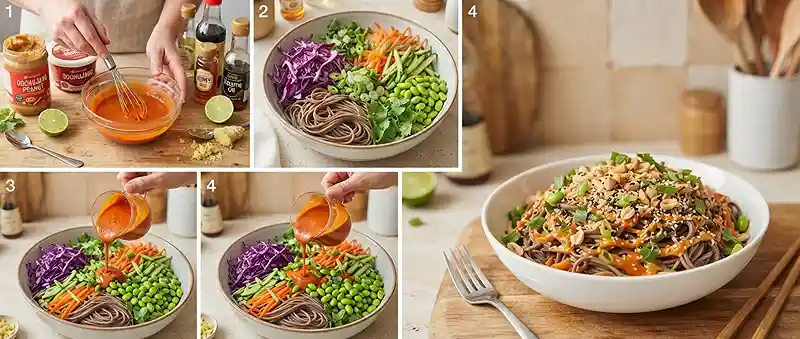
Bring a large pot of water to a boil and cook the soba noodles according to package directions — usually 4 to 5 minutes. Drain immediately and rinse well under cold running water. This stops the cooking and keeps the noodles from clumping together.
In a medium bowl, whisk together the peanut butter, gochujang, rice vinegar, soy sauce, honey, sesame oil, lime juice, and grated ginger. Add warm water one tablespoon at a time, whisking until smooth and pourable. The dressing should flow like a thick ribbon off your spoon.
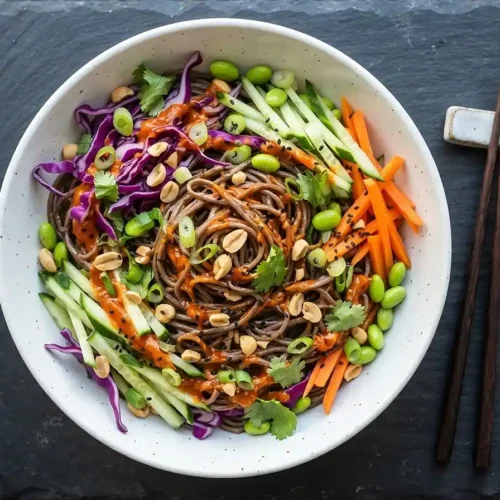
Add the rinsed soba noodles to a large mixing bowl. Layer in the red cabbage, cucumber, carrot, edamame, green onions, and cilantro. The colors at this stage are stunning — deep purple, bright orange, and vivid green.
Pour the gochujang peanut dressing over the salad and toss thoroughly using tongs or two large forks. Keep tossing until every noodle and vegetable strand is coated in that glossy, rust-colored sauce. In my testing, I found that two solid minutes of tossing makes a real difference in flavor distribution.
Sprinkle the chopped roasted peanuts and toasted sesame seeds over the top. The peanuts add a satisfying crunch that contrasts with the silky noodles — like finding little flavor landmines in every bite.
Cover the bowl and chill in the refrigerator for 15 to 20 minutes before serving. This rest time lets the dressing soak into the noodles and meld everything together. Taste once more before serving and adjust lime juice or soy sauce as needed.
Substitutions and Variations
To make this a crowd-pleasing peanut soba for Labor Day leftovers, try swapping in rice noodles or thin spaghetti if soba is hard to find. The texture is slightly different but the dressing pairs beautifully with both.
For a vegan version, replace the honey with maple syrup — it blends seamlessly into the dressing. Use tamari instead of regular soy sauce to keep it gluten-free as well.
Want more protein? This salad is excellent with grilled chicken, crispy baked tofu, or shrimp tossed in right before serving. After making this dozens of times, I find shredded rotisserie chicken is the fastest, most satisfying add-in for a weeknight dinner.
Love heat? Add a drizzle of chili crisp over the top just before serving. If you enjoy bold, spicy noodle dishes, you might also love this chili crisp chicken rice noodle salad for another variation.
Expert Tips
The single biggest mistake with soba noodles is not rinsing them well enough. They carry a starchy coating that turns sticky fast. Run cold water over them for a full 30 to 60 seconds, tossing as you go.
If your peanut butter is very thick or refrigerator-cold, the dressing can seize up and turn pasty. In my testing, I found that using warm (not boiling) water and whisking slowly from the center out gives you a silky, emulsified result every time.
Watery cucumber is a real problem for cold noodle salads. Julienne it, lay the pieces on a paper towel, and press gently to absorb excess moisture before adding to the bowl. According to Serious Eats’ guide to julienning vegetables, removing surface moisture is one of the most effective ways to keep salads crisp longer.
Dress the salad about 20 minutes before serving for the best flavor. Any longer and the noodles absorb a lot of the dressing — still delicious, but you may want to add a splash more lime juice and soy sauce before plating.
Storage and Meal Prep
| Component | Storage Method | Duration |
|---|---|---|
| Assembled salad (dressed) | Airtight container in fridge | Up to 3 days |
| Noodles and vegetables (undressed) | Airtight container in fridge | Up to 4 days |
| Gochujang peanut dressing | Sealed jar in fridge | Up to 1 week |
| Peanut and sesame topping | Small zip bag at room temp | Up to 5 days |
For cold gochujang peanut soba at picnic and potluck tables, prep the noodles and vegetables the night before and store separately from the dressing. Toss everything together the morning of the event and pack into an insulated container with an ice pack.
Leftovers that have been dressed will thicken overnight as the noodles absorb the sauce. Loosen with a splash of warm water or a squeeze of lime and toss again — it comes right back to life.
Serving Suggestions
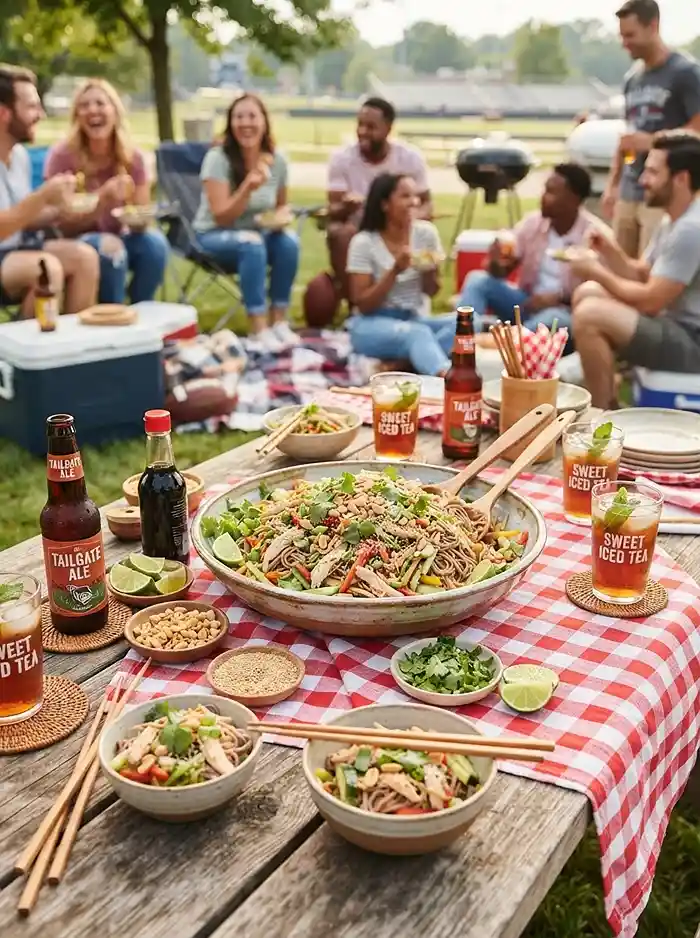
This salad holds its own as a main dish, but it’s also a knockout side alongside grilled miso salmon, teriyaki chicken skewers, or Korean BBQ. For a lighter spread, pair it with a bright green goddess Brussels chop salad for contrasting textures.
Heading into fall? Serve it alongside a roasted pumpkin apple feta salad for a seasonal spread that covers every craving at the table.
Gochujang Peanut Soba Salad FAQs
Can I make this gochujang peanut soba salad ahead of time?
Yes — this salad is ideal for making ahead. Prep the noodles and vegetables up to a day in advance and store them separately from the dressing. Combine everything 15 to 20 minutes before serving for the best flavor and texture.
How do I keep the soba noodles from sticking together?
Rinse the cooked noodles thoroughly under cold running water for at least 30 to 60 seconds, tossing as you go. This removes surface starch and keeps them separate. Toss with a small drizzle of sesame oil if storing before dressing.
What can I substitute for gochujang?
Sriracha mixed with a small amount of miso paste is the closest swap in terms of heat and depth. Start with 1 tablespoon of sriracha and half a teaspoon of miso, then taste and adjust. The flavor will be slightly different but still delicious.
Is this recipe gluten-free?
It can be. Use 100% buckwheat soba noodles and substitute tamari for the soy sauce. Double-check your gochujang label as some brands contain wheat — there are several certified gluten-free versions available in most Asian grocery stores.
How long does the gochujang peanut dressing last in the fridge?
The dressing keeps well in a sealed jar for up to one week. It may thicken as it chills — just add a splash of warm water and whisk before using. It also works as a dipping sauce or grain bowl drizzle throughout the week.
Make It Yours
Well, that’s the beauty of this salad — it’s endlessly adaptable. The dressing alone is worth keeping on hand all week. Drizzle it on grain bowls, use it as a dipping sauce for spring rolls, or toss it with shredded cabbage for a quick slaw.
If you give this Gochujang Peanut Soba Salad a try, drop a comment below and let me know how it went. Save it to your Pinterest boards so it’s ready when tailgate season rolls around.
Gochujang Peanut Soba Salad
Equipment
- Large pot
- Colander
- Medium Mixing Bowl
- Large mixing bowl
- Whisk
- Salad tongs
- Chef’s knife
- Cutting board
- Box grater
- Measuring cups and spoons
- Airtight container
- Refrigerator
Ingredients
Noodles
- 8 oz soba noodles Use 100% buckwheat soba for a gluten-free option
Salad Base
- 1 cup shredded red cabbage Pre-shredded bag works fine
- 1 large cucumber Julienned; English cucumber preferred
- 1 medium carrot Julienned; a box grater works well
- ½ cup shelled edamame Thawed from frozen
Garnish
- ¼ cup green onions Sliced; use both white and green parts
- ¼ cup fresh cilantro Chopped; flat-leaf parsley can be substituted
- 2 tbsp roasted peanuts Chopped; salted peanuts add a nice contrast
- 1 tbsp toasted sesame seeds White or black sesame seeds
Dressing
- ¼ cup creamy peanut butter Natural, no sugar added
- 2 tbsp gochujang Reduce to 1 tablespoon for less heat
- 2 tbsp rice vinegar Unseasoned preferred
- 1 tbsp soy sauce Use tamari for a gluten-free option
- 1 tbsp honey Maple syrup for a vegan version
- 1 tbsp toasted sesame oil Essential for the dressing’s flavor
- 1 tbsp fresh lime juice About half a lime
- 1 tsp fresh ginger Grated; frozen grated ginger also works
- 2-3 tbsp warm water Add gradually to adjust dressing consistency
Instructions
- Bring a large pot of water to a boil and cook the soba noodles according to package directions, usually 4 to 5 minutes. Drain immediately and rinse well under cold running water for 30 to 60 seconds to stop cooking and remove excess starch.
- In a medium bowl, whisk together the peanut butter, gochujang, rice vinegar, soy sauce, honey, sesame oil, lime juice, and grated ginger. Add warm water one tablespoon at a time, whisking until smooth and pourable.
- Add the rinsed soba noodles to a large mixing bowl. Layer in the red cabbage, cucumber, carrot, edamame, green onions, and cilantro.
- Pour the gochujang peanut dressing over the salad and toss thoroughly with tongs or two large forks until every noodle and vegetable strand is coated.
- Sprinkle the chopped roasted peanuts and toasted sesame seeds over the top.
- Cover and chill in the refrigerator for 15 to 20 minutes before serving. Taste and adjust with additional lime juice or soy sauce if needed.