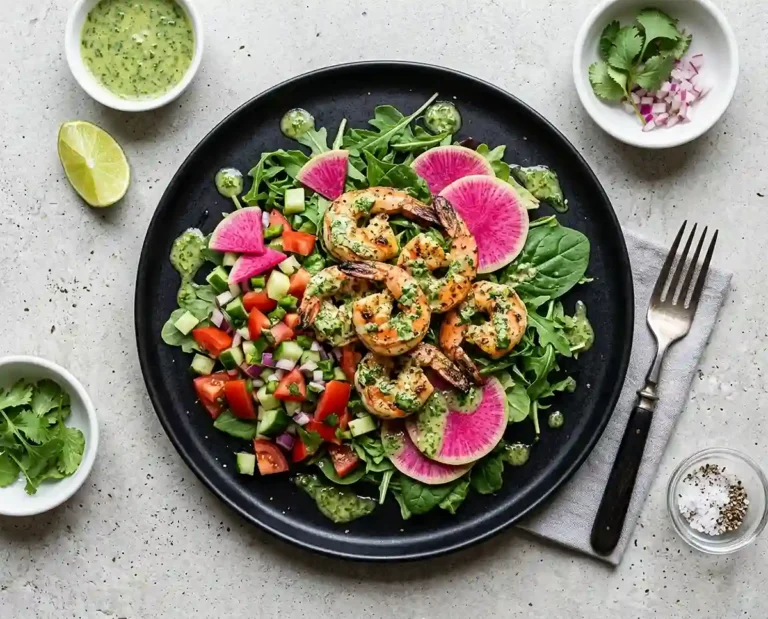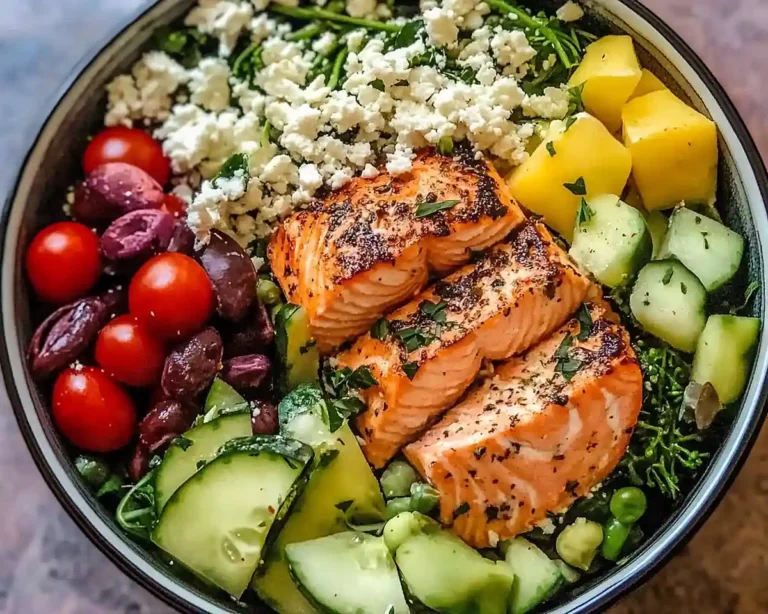
Gochujang Shrimp Cabbage Crunch Salad
This Gochujang Shrimp Cabbage Crunch Salad hit my dinner table on a sweltering July Fourth weekend, and my family hasn’t stopped asking for it since. I needed something fast, festive, and just a little unexpected—and this bowl delivered on every count.
Honestly, the first time I tossed those gochujang-glazed shrimp over a mountain of shredded cabbage, I knew I was onto something. The spicy-sweet heat of the Korean chili paste against the cool, crisp vegetables is the kind of contrast that keeps you going back for just one more forkful.
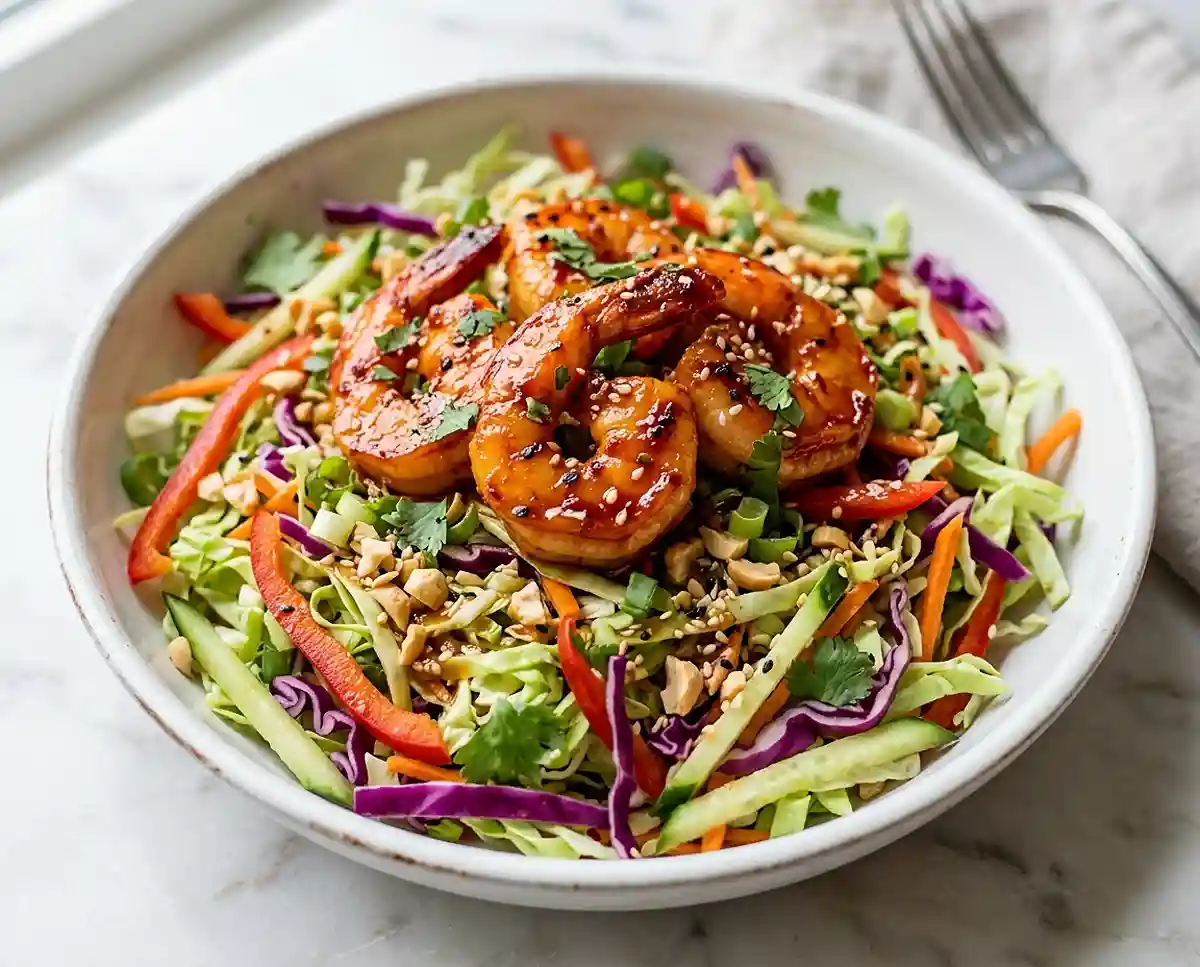
What makes this crunch salad stand out? It’s the layered textures: silky shrimp, ribbons of red and green cabbage, julienned cucumber, and a shower of roasted peanuts that crackle with every bite. A zippy sesame-lime dressing ties it all together in the most satisfying way.
Table of Contents
Ingredients
| Category | Ingredient | Amount | Notes |
|---|---|---|---|
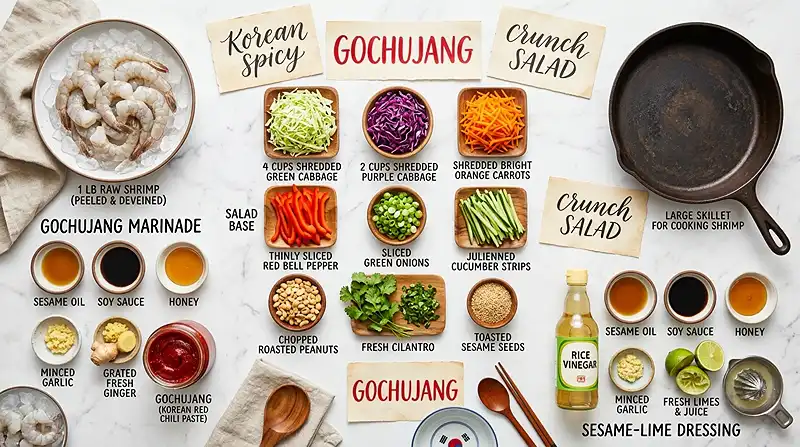
| Shrimp Marinade | Large shrimp, peeled and deveined | 1 lb (450 g) | Fresh or thawed frozen both work |
| Shrimp Marinade | Sesame oil | 1 tbsp | Toasted sesame oil for deeper flavor |
| Shrimp Marinade | Gochujang (Korean chili paste) | 1 tbsp | Adjust up or down for heat level |
| Shrimp Marinade | Soy sauce | 1 tbsp | Low-sodium if preferred |
| Shrimp Marinade | Honey | 1 tbsp | Maple syrup works for vegan swap |
| Shrimp Marinade | Garlic, minced | 2 cloves | Fresh is best here |
| Shrimp Marinade | Fresh ginger, grated | 1 tsp | Frozen ginger grates easily |
| Salad Base | Green cabbage, finely shredded | 4 cups | Napa cabbage is a great swap |
| Salad Base | Red cabbage, finely shredded | 2 cups | Adds gorgeous color |
| Salad Base | Carrots, shredded | 1 cup | Pre-shredded bag saves time |
| Salad Base | Red bell pepper, thinly sliced | 1 | Orange or yellow pepper works too |
| Salad Base | Green onions, sliced | 3 | Both white and green parts |
| Salad Base | Cucumber, julienned | 1/2 cup | English cucumber preferred |
| Toppings | Roasted peanuts or cashews, chopped | 1/3 cup | Skip for nut-free; use sunflower seeds |
| Toppings | Fresh cilantro, chopped | 2 tbsp | Omit if not a fan |
| Toppings | Sesame seeds | 1 tbsp | White or black both look beautiful |
| Dressing | Lime juice | 2 tbsp | Fresh squeezed only |
| Dressing | Rice vinegar | 2 tbsp | Adds bright tang |
| Dressing | Soy sauce | 1 tbsp | Tamari for gluten-free |
| Dressing | Honey | 1 tbsp | Balances the vinegar |
| Dressing | Sesame oil | 1 tbsp | Toasted for best flavor |
| Dressing | Garlic, minced | 1 clove | Just a single clove keeps it mellow |
Instructions
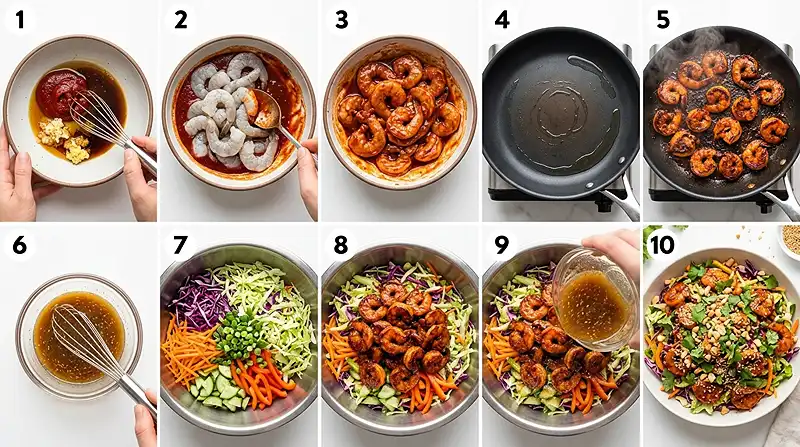
Step 1: Marinate the Shrimp
In a medium bowl, whisk together the sesame oil, gochujang, soy sauce, honey, minced garlic, and grated ginger until smooth and glossy. The paste will turn a deep, brick-red color—that’s your flavor signal.
Add the shrimp and toss well to coat every curve. Let them sit for 10–15 minutes at room temperature while you prep the vegetables. Don’t go longer than 20 minutes or the acid will start to change the texture.
Step 2: Cook the Shrimp
Heat a large skillet over medium-high heat until it’s genuinely hot—a drop of water should sizzle and evaporate immediately. Place the shrimp in a single layer and cook for 2–3 minutes per side.
You’re looking for a deep pink color and slightly caramelized edges that smell like spicy, toasted honey. In my testing, I found that a dry, hot pan (no added oil) gives you that gorgeous char without steaming the shrimp. Set them aside once cooked.
Step 3: Prepare the Sesame-Lime Dressing
Whisk together the lime juice, rice vinegar, soy sauce, honey, sesame oil, and minced garlic in a small bowl or jar. Taste and adjust—more lime if you want brightness, more honey if it’s too sharp.
After making this dozens of times, I’ve learned that letting the dressing sit for five minutes before using it allows the garlic to mellow and the flavors to marry beautifully.
Step 4: Assemble the Salad
In a large bowl, combine the green cabbage, red cabbage, shredded carrots, sliced bell pepper, julienned cucumber, and green onions. The mix looks like a confetti bowl of jewel-bright colors—vibrant purple, pale green, and sunset orange all at once.
Pair this colorful base with a bright and tangy dressing like our smoky peach vinaigrette if you want a fruit-forward twist on the dressing some nights.
Step 5: Finish and Serve
Nestle the warm gochujang shrimp on top of the salad. Drizzle generously with the sesame-lime dressing and toss gently—you want every strand of cabbage lightly coated, not drowning.
Scatter the chopped peanuts or cashews, fresh cilantro, and sesame seeds over the top. Serve immediately while the shrimp are warm and the vegetables are still snappy-crisp. This contrast of warm and cool is what makes this gochujang shrimp salad truly special.
Substitutions and Variations
Make It Vegan
Swap the shrimp for extra-firm tofu, pressed and cubed, then marinate and pan-fry using the same gochujang mixture. Replace honey with maple syrup in both the marinade and dressing.
Make It Gluten-Free
Use tamari instead of soy sauce throughout the recipe. Double-check your gochujang label—most are gluten-free, but brands vary, so it’s worth a quick look.
Boost the Protein
Add a soft-boiled egg per bowl, or toss in edamame for a plant-based protein boost. Thinly sliced grilled chicken also works well if shrimp isn’t your thing.
For more bold, satisfying salad ideas, browse our blackberry peach arugula salad for a sweet-savory option worth bookmarking.
Expert Tips and Troubleshooting
Prevent Soggy Cabbage
Dress the salad right before serving—never ahead of time. Cabbage softens fast once it meets acid. If you’re meal prepping, keep the dressing in a separate jar and toss at the last minute.
Avoid Rubbery Shrimp
The biggest shrimp mistake is overcooking. Pull them off the heat the moment they curl into a loose “C” shape and turn fully pink. A tight “O” shape means they’ve gone too far.
Sharpen the Dressing
If your dressing tastes flat, it likely needs more lime juice. In my testing, I found that freshly squeezed lime makes a noticeable difference over bottled juice every single time.
For a deep dive into building balanced homemade dressings, the team at Serious Eats has excellent guidance on balancing fat, acid, and seasoning in vinaigrette-style dressings.
Storage and Meal Prep
| Component | Storage Method | Duration |
|---|---|---|
| Assembled salad (undressed) | Airtight container in fridge | Up to 2 days |
| Cooked shrimp | Separate airtight container | Up to 2 days |
| Sesame-lime dressing | Sealed jar in fridge | Up to 1 week |
| Toppings (nuts, seeds) | Room temperature, sealed bag | Up to 1 week |
For meal prep, shred all the vegetables in advance and store them together undressed. Keep the shrimp separate and reheat gently in a skillet over low heat before assembling.
If you love make-ahead lunches, our lemon dill pea pasta salad is another sturdy option that holds up beautifully in the fridge all week.
Gochujang Shrimp Cabbage Crunch Salad FAQs
Can I make this gochujang shrimp salad ahead of time?
You can prep all the components up to 2 days in advance, but assemble and dress the salad right before serving. Cabbage softens quickly once dressed, so keep everything separate until you’re ready to eat.
How spicy is gochujang, and can I reduce the heat?
Gochujang has a moderate, slow-building heat—not fiery like hot sauce. Start with half a tablespoon in the marinade if you’re sensitive to spice, then taste and add more. The honey helps balance the heat nicely.
What can I substitute for shrimp in this cabbage salad?
Thinly sliced grilled chicken, pan-fried tofu, or even seared salmon all work beautifully with the gochujang marinade. Keep the same marinating and cooking method regardless of your protein choice.
Why is my crunch salad turning watery?
Watery salad usually comes from the cucumber or cabbage releasing moisture after dressing. Pat the cucumber dry before julienning, and always dress the salad just before serving for the best crunch.
Best way to shred cabbage for this salad?
A sharp chef’s knife gives you the most control for fine, even shreds. Halve the cabbage, remove the core, then slice as thinly as possible. A mandoline also works well if you have one.
Conclusion
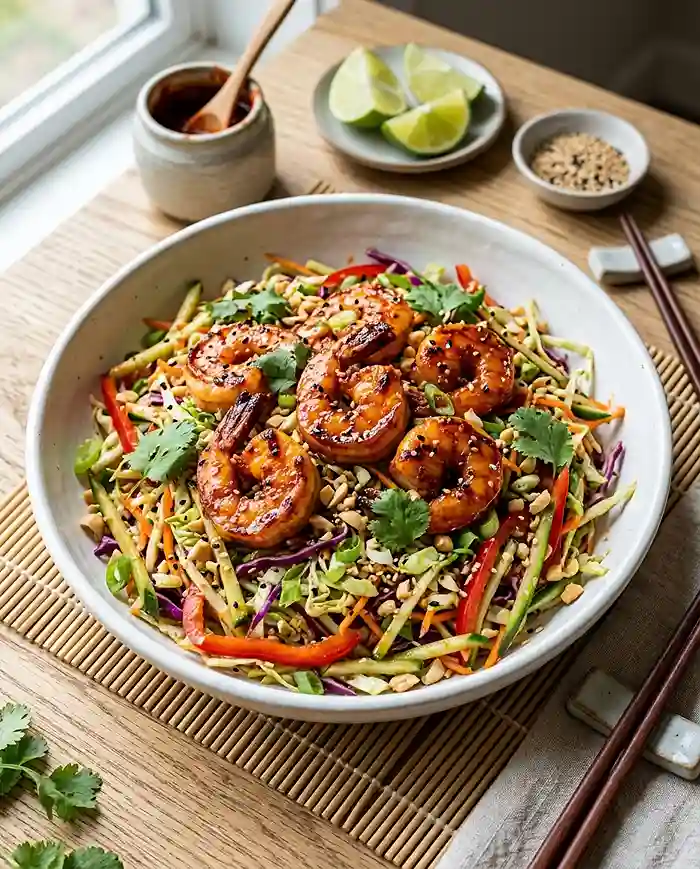
This Gochujang Shrimp Cabbage Crunch Salad is proof that bold, vibrant weeknight dinners don’t have to be complicated. From marinade to table in under 30 minutes, it’s the kind of recipe you’ll keep coming back to all summer long.
Well, if you make it, I’d love to hear how it goes—drop a comment below and tell me your favorite twist. And if you’re saving recipes for later, this one is absolutely worth pinning to your salad board on Pinterest.
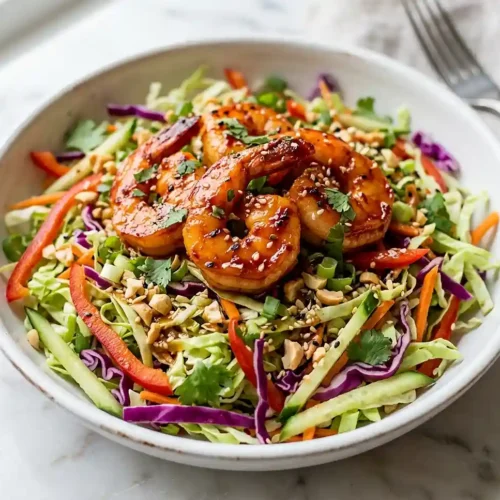
Gochujang Shrimp Cabbage Crunch Salad
Equipment
- Medium bowl
- Large skillet
- Small bowl or jar
- Large mixing bowl
- Whisk
- Knife
- Cutting board
Ingredients
Shrimp Marinade
- 1 lb Large shrimp, peeled and deveined Fresh or thawed frozen both work
- 1 tbsp Sesame oil Toasted sesame oil for deeper flavor
- 1 tbsp Gochujang (Korean chili paste) Adjust up or down for heat level
- 1 tbsp Soy sauce Low-sodium if preferred
- 1 tbsp Honey Maple syrup works for vegan swap
- 2 cloves Garlic, minced Fresh is best here
- 1 tsp Fresh ginger, grated Frozen ginger grates easily
Salad Base
- 4 cups Green cabbage, finely shredded Napa cabbage is a great swap
- 2 cups Red cabbage, finely shredded Adds gorgeous color
- 1 cup Carrots, shredded Pre-shredded bag saves time
- 1 Red bell pepper, thinly sliced Orange or yellow pepper works too
- 3 Green onions, sliced Both white and green parts
- 0.5 cup Cucumber, julienned English cucumber preferred
Toppings
- 0.33 cup Roasted peanuts or cashews, chopped Skip for nut-free; use sunflower seeds
- 2 tbsp Fresh cilantro, chopped Omit if not a fan
- 1 tbsp Sesame seeds White or black both look beautiful
Dressing
- 2 tbsp Lime juice Fresh squeezed only
- 2 tbsp Rice vinegar Adds bright tang
- 1 tbsp Soy sauce Tamari for gluten-free
- 1 tbsp Honey Balances the vinegar
- 1 tbsp Sesame oil Toasted for best flavor
- 1 clove Garlic, minced Just a single clove keeps it mellow
Instructions
- In a medium bowl, whisk together the sesame oil, gochujang, soy sauce, honey, minced garlic, and grated ginger until smooth. Add the shrimp and toss to coat evenly. Let marinate for 10–15 minutes.
- Heat a large skillet over medium-high heat. Cook the shrimp in a single layer for 2–3 minutes per side until pink and lightly caramelized. Remove from heat and set aside.
- Whisk together the lime juice, rice vinegar, soy sauce, honey, sesame oil, and minced garlic in a small bowl or jar. Let sit for about 5 minutes before using.
- In a large bowl, combine the green cabbage, red cabbage, shredded carrots, bell pepper, cucumber, and green onions.
- Top the salad with the warm shrimp. Drizzle with the sesame-lime dressing and toss gently to coat.
- Finish with chopped peanuts or cashews, cilantro, and sesame seeds. Serve immediately while the vegetables remain crisp.