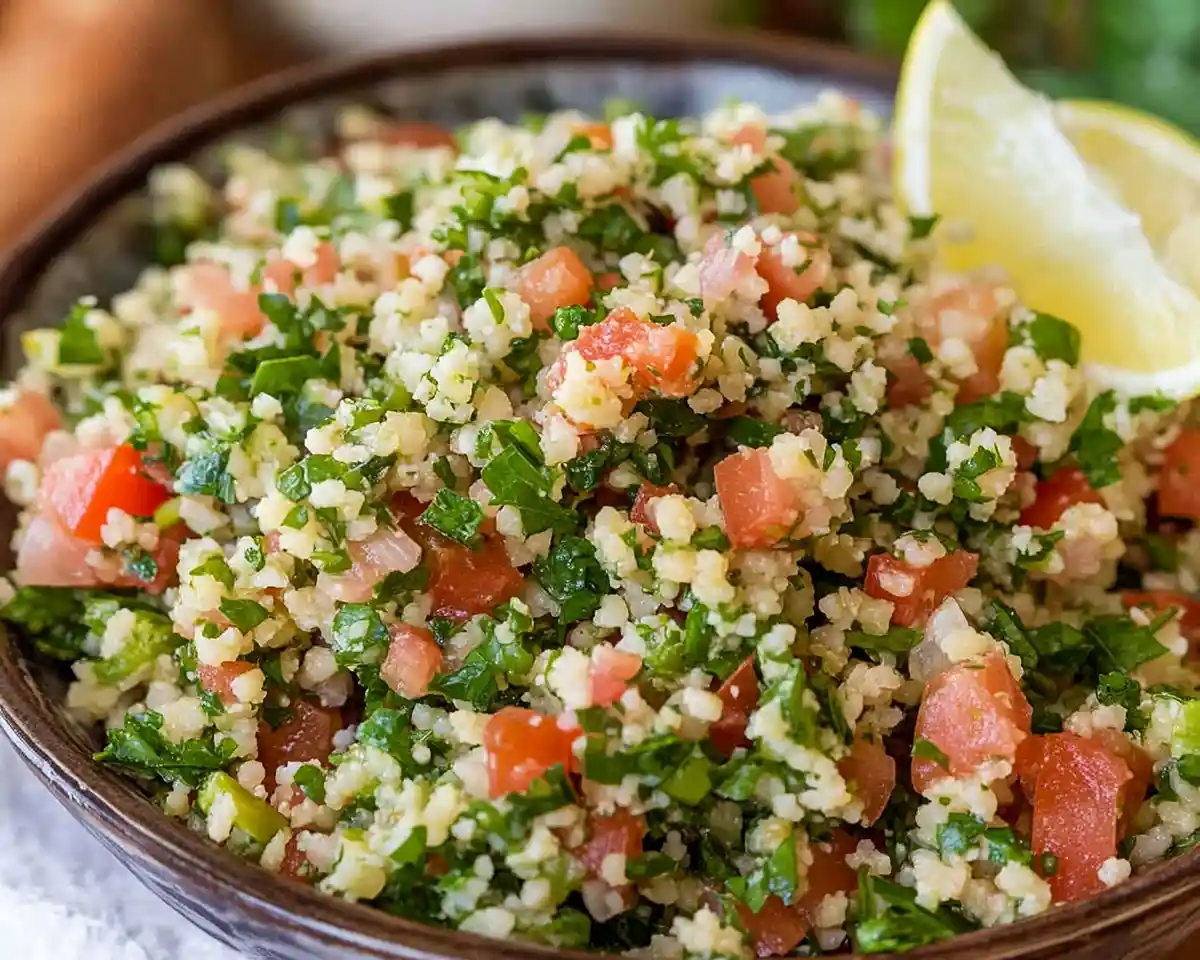
Homemade Tabbouleh
Learn how to make tabbouleh at home in 35 minutes—a vibrant, fresh Mediterranean salad loaded with parsley, mint, and bright lemon. Simple healthy recipe!
There’s something absolutely magical about the first time you make a Homemade Tabbouleh and realize how simple it truly is. I remember standing in my kitchen on a warm July Fourth, watching my grandmother arrange fresh herbs on the counter—parsley towering over everything else.
Well, here’s the thing about tabbouleh—it’s less about cooking and more about respecting beautiful, fresh produce. You’re basically combining tender bulgur, fragrant herbs, vibrant tomatoes, and a zingy lemon dressing that wakes up every single bite. This simple tabbouleh recipe proves that the most nourishing meals don’t require complicated techniques or hard-to-find ingredients.
Why do people fall in love with homemade tabbouleh? Because it tastes like sunshine, smells like a Mediterranean garden, and feels light enough to eat on the hottest days. You’ll have fresh, herbaceous goodness on your table in under 35 minutes, and everyone will ask how you made it look so effortlessly beautiful.
Table of Contents
Ingredients
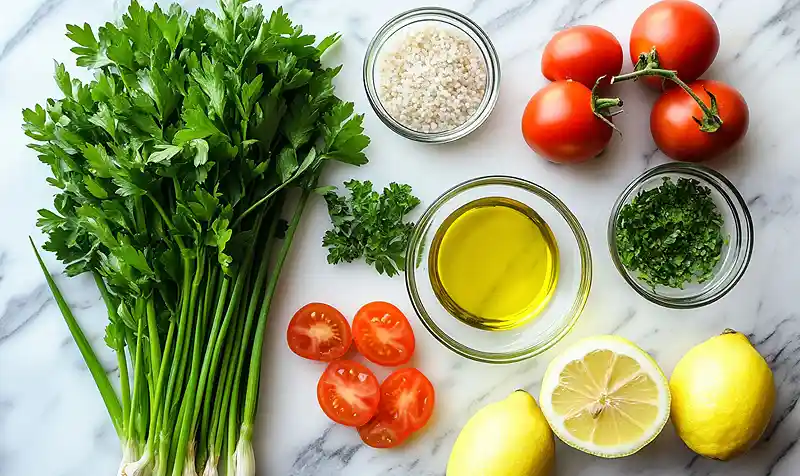
| Ingredient | Amount | Notes |
|---|---|---|
| Fine bulgur | 1 cup | Quality matters here |
| Boiling water | 2 cups | For soaking bulgur |
| Fresh curly parsley, minced | 3 cups | The star ingredient—roughly 1 large bunch |
| Green onions, chopped | 3/4 cup | About 1 medium bunch |
| Fresh mint, minced | 1/4 cup | Approximately 0.25 oz |
| Roma tomatoes, diced | 1 1/2 cups | About 2 large tomatoes |
| Extra virgin olive oil | 1/2 cup | Use quality oil |
| Fresh lemon juice | 1/2 cup | Freshly squeezed is essential |
| Kosher salt | 1 1/2 teaspoons | Adjust to taste |
Instructions
Step 1: Boil water and prep your workspace
Bring a kettle or pot of at least 2 cups of water to a rolling boil while you gather your equipment. Line a fine-mesh colander with a clean linen napkin or doubled cheesecloth and set it nearby—this will be crucial for draining your bulgur later. Having everything ready before you start means the process flows smoothly and nothing sits around getting soggy.
Step 2: Soak the bulgur until tender
Add your fine bulgur to a large mixing bowl, then carefully pour the boiling water over it in one steady motion. The bulgur will absorb the water and expand, becoming tender and fluffy—like tiny clouds made of whole grain. Let it soak undisturbed for at least 30 minutes, though you can let it sit longer if you’re not in a rush.
Step 3: Prep your herbs and vegetables
While the bulgur soaks, mince your curly parsley into delicate, feathery pieces—you want about 3 cups, which is roughly one large bunch. Chop your green onions into thin rings, mince the fresh mint finely (it releases more flavor when minced), and dice your roma tomatoes into small, even cubes. The more precisely you chop, the more evenly the flavors distribute throughout your homemade tabbouleh.
Step 4: Create the bright, zingy dressing
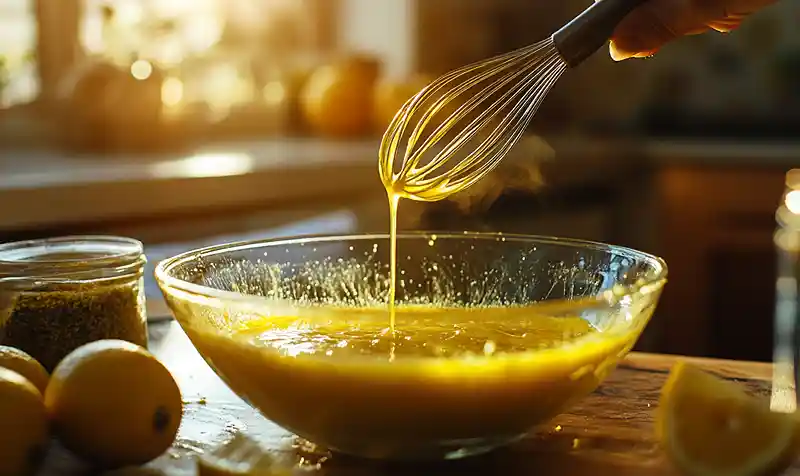
In a separate bowl or measuring cup with a spout, whisk together your extra virgin olive oil, fresh lemon juice, and kosher salt until fully emulsified. The dressing should taste bright and tangy—almost sharp on its own—because it needs to sing through all those fresh herbs. Give it a final vigorous whisk to ensure the salt is completely dissolved.
Step 5: Drain the bulgur with care
Once your bulgur has soaked for 30 minutes and is completely tender, carefully pour it into your lined colander. Gather the edges of the napkin or cheesecloth and gently but firmly squeeze out all excess water—this is the secret to preventing a soggy, waterlogged salad. The bulgur should be moist but definitely not damp.
Step 6: Combine and finish your tabbouleh
Add the drained bulgur to a large mixing bowl with the prepared parsley, green onions, mint, and diced tomatoes. Pour about three-quarters of your dressing over the mixture and toss everything together gently but thoroughly until every grain is coated. Give your remaining dressing another whisk, then pour it over and fold it in—this healthy tabbouleh recipe tastes even better after 30 minutes of marinating when the flavors truly marry together.
Step 7: Serve and celebrate
Divide your fresh, herbaceous homemade tabbouleh into bowls or onto a platter, and finish with a lemon wedge alongside each serving. The brightness of fresh lemon juice right before eating adds another layer of vibrancy that’s absolutely essential. Serve immediately, or refrigerate until you’re ready to enjoy.
Substitutions & Variations
Swap bulgur for a gluten-free grain
If you need a simple tabbouleh recipe that’s gluten-free, quinoa works beautifully in place of bulgur wheat. Use the same amount of quinoa and cooking liquid, and prepare it the same way—it’ll absorb the water and become fluffy within 15 minutes. Millet and farro are also wonderful options if you’re looking to experiment with different whole grains.
Adjust the herb ratio to your preference
You know, not everyone loves parsley as much as I do—if you prefer a milder herb flavor, use 2 cups parsley and increase the mint to 1/2 cup for a more balanced taste. Some people swap cilantro for parsley to create a completely different flavor profile. The beauty of how to make tabbouleh is that you can adjust the herbs to match your personal taste.
Add extra vegetables for more texture
Cucumber, bell peppers, and radishes add wonderful crunch and freshness to this healthy tabbouleh recipe. Dice them the same size as your tomatoes, add them to the salad, and you’ll have even more vibrant color and satisfying texture. Some people even add pomegranate seeds for a touch of sweetness and jewel-like beauty.
Create a protein-forward version
Well, chickpeas, feta cheese, or grilled chicken transform your simple tabbouleh recipe into a complete meal that keeps you satisfied. Add 1 cup of chickpeas or crumbled feta about 15 minutes before serving to prevent sogginess. This turns a light side dish into a hearty lunch that travels beautifully.
Make it creamier with tahini
Whisk 2–3 tablespoons of tahini into your dressing for a richer, more luxurious homemade tabbouleh. The tahini mellows the lemon slightly while adding nuttiness and body. This variation works especially well if you’re serving it as a main course rather than a side.
Want to expand your fresh salad collection? Check out our guide to simple salad dressing tutorials for more vinaigrette techniques, or explore high-protein lunch salads that transform simple ingredients into satisfying meals.
Troubleshooting Tips
My tabbouleh tastes watery or bland
This usually means the bulgur wasn’t drained thoroughly enough, or the dressing was added too early. Make sure you really squeeze out excess water from the soaked bulgur—it should feel moist, not wet. Also taste your dressing before adding it; if it’s not bright and tangy enough to stand on its own, add more lemon juice or salt.
The parsley wilted or turned dark
Fresh herbs can oxidize quickly, especially if you’re mincing them far in advance. Mince your parsley, mint, and green onions as close to serving time as possible—ideally within 15 minutes before assembly. If you need to prep ahead, store the herbs loosely wrapped in damp paper towels in the refrigerator.
My bulgur is mushy instead of tender
You’ve likely soaked it too long or used water that was too hot. Exactly 30 minutes is the sweet spot for tender but not mushy bulgur. If you’ve already gone too far, try draining it and chilling it slightly before mixing with other ingredients to firm it up.
The salad separated or looks dry
If liquid pools at the bottom or the salad looks parched, your dressing needs adjustment. Whisk together an additional 2 tablespoons of lemon juice with 1 tablespoon of olive oil and drizzle it over the salad. Toss gently and let it sit for 10 minutes to redistribute flavors.
Storage & Meal Prep
How to store your homemade tabbouleh
Keep your simple tabbouleh recipe in an airtight container in the refrigerator for up to 3 days. The flavors actually deepen beautifully over time, so it’s perfect for making a day ahead. If liquid pools at the bottom, simply drain it before serving and refresh with a squeeze of lemon juice.
Prepping ahead for the week
You can prepare all your vegetables and herbs separately up to 24 hours before making your healthy tabbouleh recipe. Store each component in its own airtight container, then assemble the salad 30 minutes before serving for the freshest taste. This approach is perfect for meal prep because you’re just doing final assembly when hunger strikes.
Serving Suggestions & Pairings
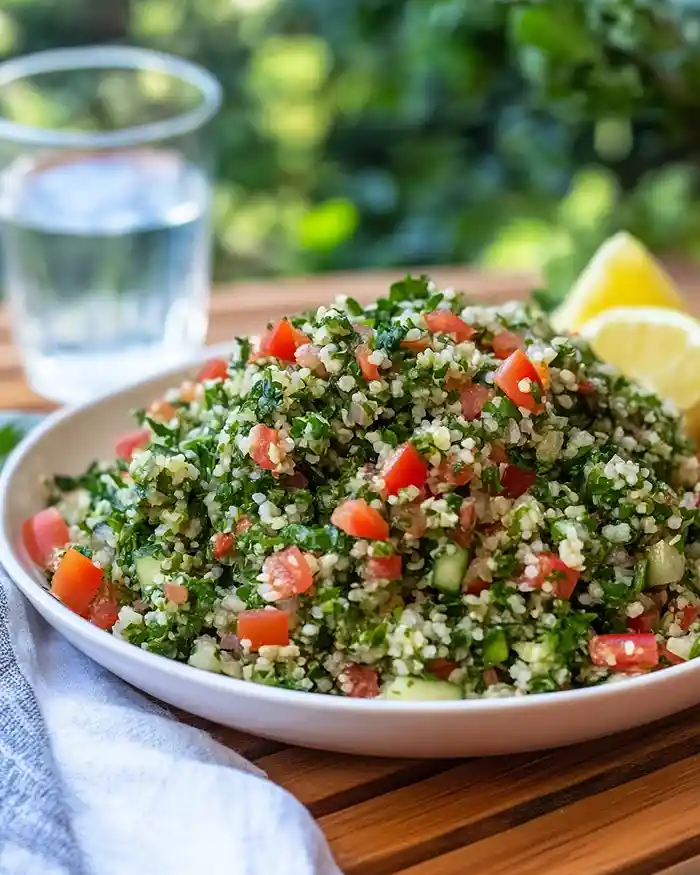
Serve your fresh, herbaceous homemade tabbouleh alongside grilled vegetables, hummus, and warm pita bread for a complete Mediterranean meal. It pairs beautifully with roasted chicken, grilled fish, or lamb—the bright acidity cuts through rich proteins perfectly. For a lighter meal, serve it as a bed of greens with crumbled feta and olives on top.
You can also spoon this simple tabbouleh recipe into lettuce cups for a grain-free appetizer, or use it as a vibrant topping for roasted beets or cauliflower. Many people enjoy it straight from the bowl on warm afternoons, needing nothing more than crusty bread and good company.
FAQs About Homemade Tabbouleh
What are the main ingredients in a traditional tabbouleh salad?
The foundation of any healthy tabbouleh recipe includes bulgur wheat, fresh parsley, mint, green onions, tomatoes, olive oil, and lemon juice. These simple ingredients are combined to create a bright, herbaceous salad that tastes refreshingly light. The proportions matter—parsley should be the dominant herb, not a supporting player.
How to make the perfect tabbouleh with the right texture?
The secret is soaking your bulgur for exactly 30 minutes in boiling water, then draining it thoroughly through cheesecloth. Squeeze out every drop of excess moisture to prevent a soggy salad. Mince your herbs finely and combine everything shortly before serving for maximum freshness and crispness.
What are the most common mistakes when making homemade tabbouleh?
People often over-soak their bulgur, creating a mushy texture instead of tender and fluffy grains. Another common error is adding too much dressing too early, which makes everything soggy and dilutes the fresh flavors. Finally, using pre-minced parsley from a jar instead of fresh leaves removes the bright, vibrant taste that makes this simple tabbouleh recipe shine.
Does bulgur need to be cooked before using in tabbouleh?
No—bulgur for tabbouleh is soaked in boiling water rather than cooked on the stove. The hot water rehydrates the bulgur completely while preserving its tender texture and preventing mushiness. This method is exactly what makes how to make tabbouleh so quick and easy compared to cooking grains traditionally.
Is bulgur healthier than rice as a grain choice?
Bulgur is generally higher in fiber and protein than white rice, making it a more nutritious choice for this healthy tabbouleh recipe. It has a lower glycemic index, meaning it won’t spike your blood sugar as dramatically. Bulgur also contains more minerals and B vitamins, so choosing it for your tabbouleh adds genuine nutritional benefits.
Is homemade tabbouleh actually healthy to eat regularly?
Absolutely—this simple tabbouleh recipe is packed with fresh vegetables, whole grains, and healthy fats from olive oil. The herbs add antioxidants and phytonutrients without any added sugars or heavy creams. You can enjoy this healthy tabbouleh recipe multiple times per week as part of a balanced diet without any guilt whatsoever.
Final Thoughts
Homemade tabbouleh teaches you something important about cooking: sometimes the simplest approaches create the most vibrant, memorable dishes. This simple tabbouleh recipe proves that you don’t need fancy equipment, exotic ingredients, or hours of kitchen time to create something truly special.
You just need respect for fresh produce, a few good ingredients, and the confidence to let those flavors shine through.
The next time someone asks you how you made something so beautiful and delicious, you can smile and share the secret: it wasn’t complicated at all. Just fresh herbs, tender bulgur, and a whole lot of sunshine captured in a bowl.
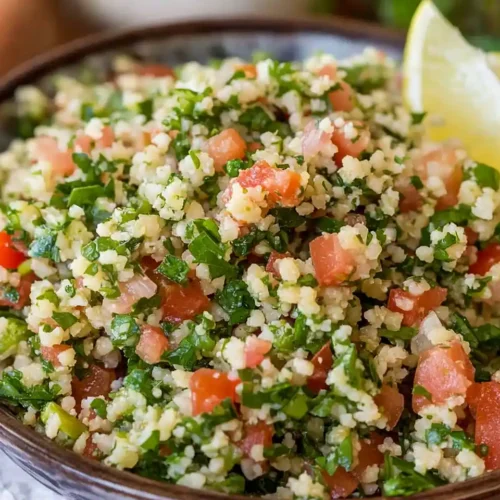
Easy Homemade Tabbouleh
Equipment
- Large mixing bowl
- Fine-mesh colander
- Linen napkin or cheesecloth
- Kettle or pot
- Measuring cups and spoons
- Sharp knife and cutting board
- Whisk
- Spouted bowl or measuring cup
Ingredients
For the Grain Base
- 1 cup Fine bulgur quality matters
- 2 cups Boiling water for soaking bulgur
For the Herbs & Vegetables
- 3 cups Fresh curly parsley, minced roughly 1 large bunch
- ¾ cup Green onions, chopped about 1 medium bunch
- ¼ cup Fresh mint, minced approximately 0.25 oz
- 1.5 cups Roma tomatoes, diced about 2 large tomatoes
For the Dressing
- ½ cup Extra virgin olive oil use quality oil
- ½ cup Fresh lemon juice freshly squeezed is essential
- 1.5 teaspoons Kosher salt adjust to taste
Instructions
- Step 1: Boil water and prep your workspaceBring a kettle or pot of at least 2 cups of water to a rolling boil while you gather your equipment. Line a fine-mesh colander with a clean linen napkin or doubled cheesecloth and set it nearby—this will be crucial for draining your bulgur later. Having everything ready before you start means the process flows smoothly and nothing sits around getting soggy.
- Step 2: Soak the bulgur until tenderAdd your fine bulgur to a large mixing bowl, then carefully pour the boiling water over it in one steady motion. The bulgur will absorb the water and expand, becoming tender and fluffy—like tiny clouds made of whole grain. Let it soak undisturbed for at least 30 minutes, though you can let it sit longer if you’re not in a rush.
- Step 3: Prep your herbs and vegetablesWhile the bulgur soaks, mince your curly parsley into delicate, feathery pieces—you want about 3 cups, which is roughly one large bunch. Chop your green onions into thin rings, mince the fresh mint finely (it releases more flavor when minced), and dice your roma tomatoes into small, even cubes. The more precisely you chop, the more evenly the flavors distribute throughout your homemade tabbouleh.
- Step 4: Create the bright, zingy dressingIn a separate bowl or measuring cup with a spout, whisk together your extra virgin olive oil, fresh lemon juice, and kosher salt until fully emulsified. The dressing should taste bright and tangy—almost sharp on its own—because it needs to sing through all those fresh herbs. Give it a final vigorous whisk to ensure the salt is completely dissolved.
- Step 5: Drain the bulgur with careOnce your bulgur has soaked for 30 minutes and is completely tender, carefully pour it into your lined colander. Gather the edges of the napkin or cheesecloth and gently but firmly squeeze out all excess water—this is the secret to preventing a soggy, waterlogged salad. The bulgur should be moist but definitely not damp.
- Step 6: Combine and finish your tabboulehAdd the drained bulgur to a large mixing bowl with the prepared parsley, green onions, mint, and diced tomatoes. Pour about three-quarters of your dressing over the mixture and toss everything together gently but thoroughly until every grain is coated. Give your remaining dressing another whisk, then pour it over and fold it in—this healthy tabbouleh recipe tastes even better after 30 minutes of marinating when the flavors truly marry together.
- Step 7: Serve and celebrateDivide your fresh, herbaceous homemade tabbouleh into bowls or onto a platter, and finish with a lemon wedge alongside each serving. The brightness of fresh lemon juice right before eating adds another layer of vibrancy that’s absolutely essential. Serve immediately, or refrigerate until you’re ready to enjoy.