Loaded Falafel Salad Bowl
Discover how to make a loaded falafel salad bowl with tahini drizzle—crispy homemade falafel over fresh greens with creamy dressing. Perfect for healthy meal prep!
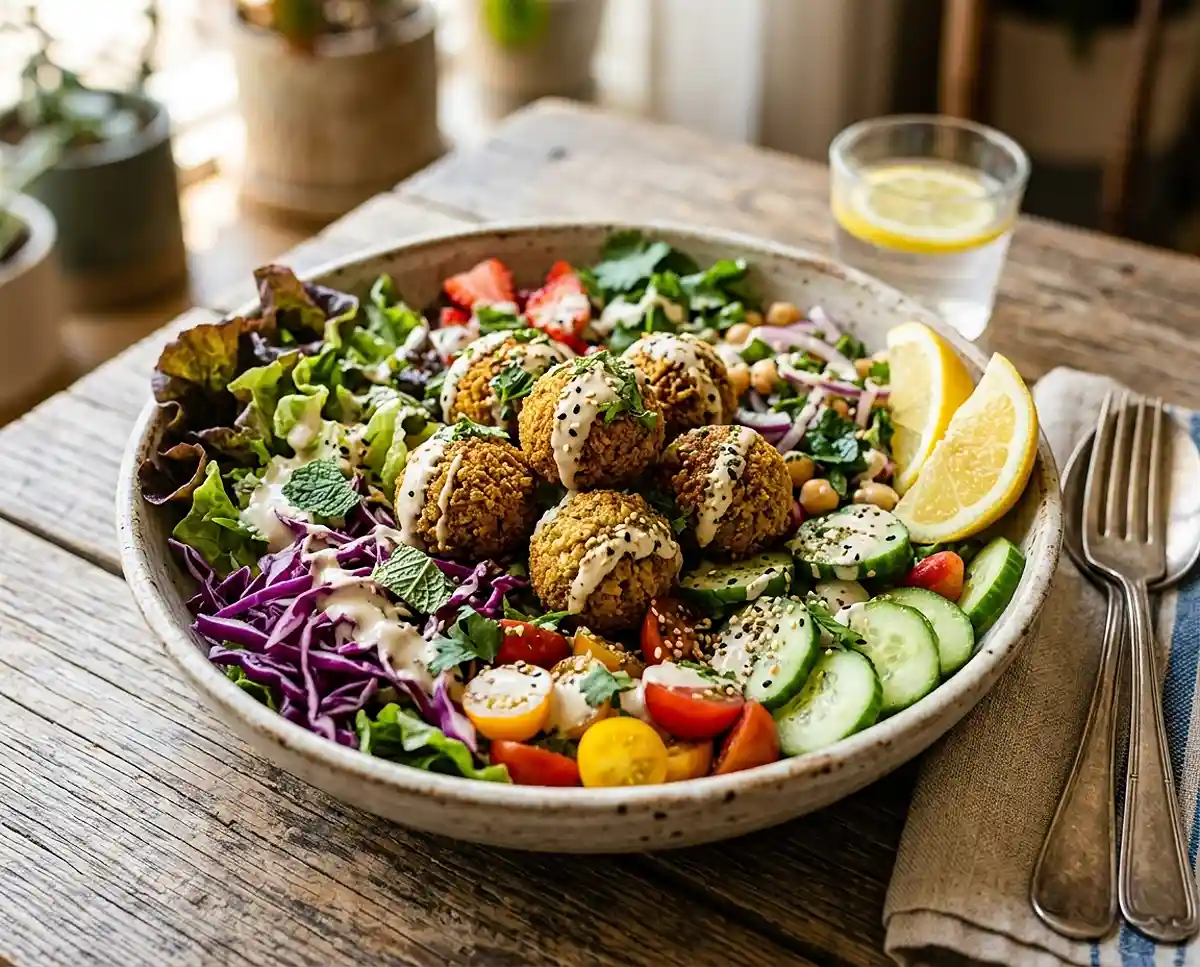
You know what changed everything for me? The moment I stopped treating salads like boring rabbit food and started building them into actual meals. My loaded falafel salad bowl with tahini drizzle is exactly that kind of transformation—a bowl so vibrant and satisfying that my family actually requests it. The crispy golden falafel nestled into a bed of ruby-red cabbage and emerald lettuces creates this gorgeous mosaic that makes healthy eating feel celebratory rather than restrictive.
Well, I’ll never forget serving this at our Fourth of July gathering last summer. Everyone expected the usual grilled burgers, but I brought out these stunning mediterranean falafel bowls instead, and they disappeared faster than anything else on the table. There’s something about that first crunch through a perfectly fried falafel—all herbaceous and warm—that just makes people’s eyes light up.
The tahini dressing salad drizzled over the top ties everything together with this nutty, lemony creaminess that coats every leaf and tomato.
Table of Contents
Ingredients
For the Falafel:
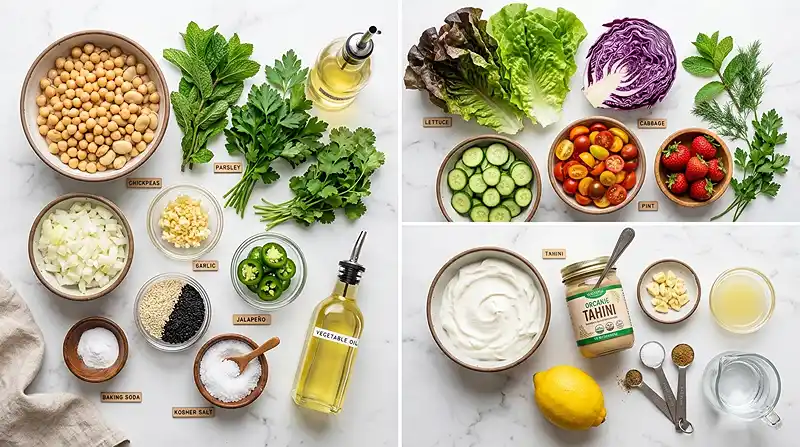
| Ingredient | Amount |
|---|---|
| Dry uncooked chickpeas | ½ cup |
| Dry uncooked fava beans | ½ cup |
| Kosher salt | 1 teaspoon |
| Fresh mint leaves | ¼ cup |
| Flat-leaf parsley leaves | ¾ cup |
| Cilantro leaves | ⅔ cup |
| Small jalapeño (ribs and seeds removed, coarsely chopped) | 1 |
| Garlic cloves, minced | 2 |
| Yellow onion, chopped | ½ cup |
| Sesame seeds | 1 tablespoon |
| Baking soda | 1 teaspoon |
| Vegetable oil for frying | About 3 cups |
For the Salad:
| Ingredient | Amount |
|---|---|
| Red leaf lettuce, torn | 1 head |
| Green leaf lettuce, torn | 1 head |
| Large red cabbage, shredded | ¼ head |
| Persian cucumbers, sliced | 2-3 |
| Cherry tomatoes, halved | 1 pint |
| Baby strawberries (optional) | To taste |
| Fresh mint, cilantro, and parsley | For garnish |
For the Tahini Dressing:
| Ingredient | Amount |
|---|---|
| Greek yogurt | ¾ cup |
| Tahini | ⅓ cup |
| Kosher salt | 1 teaspoon |
| Garlic cloves, minced | 2 |
| Fresh lemon juice | From 1 lemon |
| Water | To thin |
Instructions
Step 1: Soak the Chickpeas and Fava Beans
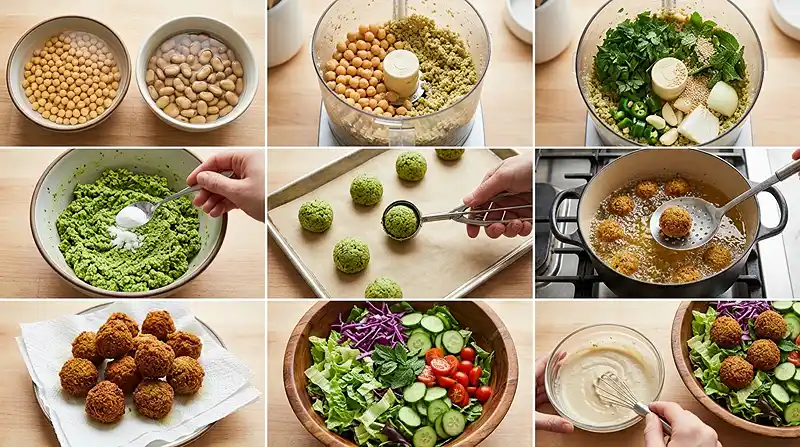
Place your dry chickpeas and fava beans in a medium bowl, covering them generously with cool water—they’ll absorb quite a bit and nearly double in size. Let them soak overnight, or for at least 8-12 hours, until they’re plump and tender when you press one between your fingers. According to best food safety practices with pulses, proper soaking helps ensure both digestibility and food safety for dried legumes.
Step 2: Process the Legumes
Drain your soaked chickpeas and fava beans thoroughly, then pat them completely dry with clean kitchen towels—excess moisture is the enemy of crispy falafel. Transfer them to a food processor along with the kosher salt, and pulse until they resemble coarse, sandy crumbs that hold together when pinched. The texture should look like damp sand at the beach, not smooth hummus—over-processing creates dense, heavy falafel that won’t fry properly.
Step 3: Add the Fresh Herbs and Aromatics
Drop the mint, parsley, cilantro, jalapeño, garlic, onion, and sesame seeds into the food processor with your legume mixture. Pulse everything until the herbs are finely ground and evenly distributed throughout, creating a mixture that smells as intoxicating as a Mediterranean herb garden in full bloom. The falafel mixture should resemble a fine, slightly damp crumb that clumps when you squeeze it—this is the foundation of your loaded falafel salad bowl with tahini drizzle.
Step 4: Chill the Mixture
Transfer your vibrant green falafel mixture to a bowl and fold in the baking soda, which will help create that coveted light, fluffy interior. Cover and refrigerate for at least 30 minutes—this resting time allows the mixture to firm up and the flavors to meld together beautifully. Patience here rewards you with falafel that holds together perfectly when fried rather than crumbling into the oil.
Step 5: Heat the Oil and Form the Falafel
Pour approximately 3 cups of vegetable oil into a heavy-bottomed saucepan or Dutch oven, heating it to around 350°F—if you don’t have a thermometer, drop a tiny bit of mixture in and it should sizzle immediately without burning. Using a small ice cream scoop, pack the falafel mixture tightly and form balls slightly smaller than a golf ball, as dense as freshly packed snowballs. The tight packing prevents them from falling apart during frying.
Step 6: Fry Until Golden
Carefully lower a few falafel balls into the hot oil, being mindful not to overcrowd the pan—working in batches of 4-5 ensures even cooking and maintains oil temperature. Fry until deeply golden brown on the first side, about 2-3 minutes, then gently flip and continue cooking until the entire surface develops that gorgeous burnished crust. The finished falafel should be as golden as autumn leaves, with an aroma that fills your kitchen with warmth.
Step 7: Drain and Rest
Using a slotted spoon, transfer your fried falafel to a paper towel-lined plate to drain excess oil. Let them rest for a minute or two while you continue frying the remaining batches—this brief pause allows the interior to finish cooking from residual heat. Repeat with all remaining falafel mixture until you have a beautiful pile of crispy, herbaceous treasures.
Step 8: Assemble the Salad Base
In your largest serving bowl, combine the torn red and green leaf lettuces, creating a ruffly, voluminous bed of greens. Add the shredded red cabbage for that stunning pop of purple, then scatter the sliced Persian cucumbers and halved cherry tomatoes throughout. If you’re feeling adventurous, tuck in some baby strawberries—their unexpected sweetness pairs beautifully with the tahini dressing salad components.
Step 9: Prepare the Tahini Dressing
Whisk together the Greek yogurt, tahini, salt, minced garlic, and fresh lemon juice in a medium bowl until completely smooth and combined. Research published in the Journal of Human Hypertension shows that tahini consumption may support healthy blood pressure and cardiovascular function, making this creamy dressing both delicious and nutritious. Add water gradually, whisking constantly, until the dressing reaches a pourable consistency that will cascade beautifully over your salad.
Step 10: Top and Serve
Nestle your warm, crispy falafel on top of the assembled salad, letting them sit proudly like little golden crowns. Scatter fresh herbs over everything and serve the mediterranean falafel bowl with the tahini dressing on the side, allowing everyone to drizzle to their heart’s content. Watch as the first forkful—crunchy, creamy, fresh, and warm all at once—converts everyone at your table into falafel salad devotees.
Substitutions
For the Chickpeas and Fava Beans:
If you can’t find dry fava beans, simply use one full cup of dried chickpeas instead—this creates the more common Levantine-style falafel that’s equally delicious. The texture will be slightly different but absolutely traditional. Many grocery stores carry dried fava beans in the international aisle or bulk section if you prefer the Egyptian-inspired original.
For the Fresh Herbs:
Swap the cilantro for additional parsley if cilantro tastes soapy to you—your falafel salad bowl will still burst with fresh, green flavor. Dill makes a lovely addition or substitution, bringing a slightly different Mediterranean profile to your falafel. Fresh basil can work in a pinch, though the flavor profile shifts toward Italian rather than Middle Eastern.
For the Greek Yogurt in the Dressing:
Dairy-free eaters can substitute coconut yogurt or cashew cream for an equally luscious tahini dressing salad that keeps things plant-based. Full-fat sour cream works beautifully if that’s what you have on hand, adding a pleasant tang. For a completely vegan option, blend silken tofu with the tahini for remarkable creaminess without any dairy.
For the Tahini:
Sunflower seed butter creates a nut-free alternative that mimics tahini’s earthy richness surprisingly well. Almond butter works too, though it shifts the flavor toward nuttier territory. Just be mindful that different seed and nut butters have varying consistencies, so adjust your water accordingly.
For the Lettuces:
Romaine hearts provide excellent crunch if you can’t find leaf lettuces, and they hold up beautifully to the loaded falafel salad bowl components. Baby spinach or arugula add nutritional punch and peppery bite. Mixed spring greens from the pre-washed bags work wonderfully for busy weeknights when washing multiple lettuce heads feels overwhelming.
Troubleshooting
My Falafel Fell Apart in the Oil:
This usually happens when the mixture contains too much moisture or wasn’t processed long enough. Make sure to pat your soaked legumes completely dry before processing, and ensure the mixture is fine enough to hold together when squeezed. Chilling the mixture for the full 30 minutes (or even longer) also helps it firm up properly.
The Falafel Are Dense and Heavy:
Over-processing is the culprit here—the mixture should be crumbly, not smooth like hummus. The legumes need texture to create that light, fluffy interior we all love in great falafel. Next time, pulse in shorter bursts and check frequently until you achieve that sandy consistency.
My Salad Greens Turned Soggy:
Always dress your loaded falafel salad bowl with tahini drizzle right before serving, not ahead of time. The acid in the dressing breaks down delicate lettuce leaves quickly, turning them limp and sad. Keep dressing on the side for leftovers or meal prep situations.
The Tahini Dressing Is Too Thick:
Simply whisk in more water, a tablespoon at a time, until you reach your desired consistency. Fresh lemon juice can also thin while adding brightness. Remember that tahini seizes up when first mixed with liquid—keep whisking and it will smooth out beautifully.
My Falafel Browned Too Quickly Outside But Were Raw Inside:
Your oil was likely too hot, creating a dark crust before the interior could cook through. Aim for 350°F and test with a small piece before frying a full batch. Lower the heat slightly and fry longer for properly cooked falafel with evenly golden exteriors.
Storage
Store leftover falafel and salad components separately in airtight containers to maintain their individual textures and freshness. The fried falafel keep well in the refrigerator for 4-5 days, though they’ll lose some crispness—a quick reheat in the oven or air fryer restores their satisfying crunch. The tahini dressing stays fresh for up to one week refrigerated, though you may need to add a splash of water and whisk before serving since it thickens as it chills.
Meal Prep
Oh, here’s where this mediterranean falafel bowl really shines for busy families! Form your falafel balls ahead of time and freeze them unfried on a parchment-lined baking sheet, then transfer to freezer bags for up to three months. When ready to eat, fry directly from frozen—just add an extra minute or two to the cooking time. Prep your salad components separately, storing washed and dried greens with a paper towel in containers, and you’ll have fresh falafel salad bowls ready to assemble all week long.
Serving Suggestions
Pair your loaded falafel salad bowl with tahini drizzle alongside warm, fluffy pita bread for scooping up extra dressing and falafel crumbles. A simple side of pickled vegetables—turnips, cucumbers, or mixed peppers—adds tangy contrast that complements the creamy tahini beautifully. For heartier appetites, serve with a scoop of hummus and a sprinkle of za’atar, or check out our mediterranean seared tuna steak salad for another protein-packed option.
If you love the bright tomato flavors in this bowl, our roasted cherry tomato burrata summer salad takes that element to gorgeous new heights. For those craving something with a bit of southwestern flair instead, the shrimp fajita salad with sizzling peppers offers similarly satisfying textures with completely different flavor profiles.
Variations
Kid-Friendly Falafel Bowl:
Skip the jalapeño entirely and reduce the garlic for little ones who prefer milder flavors in their falafel salad bowl. Cut the falafel into halves or quarters so small hands can manage them more easily. Serve the tahini dressing on the side for dipping—kids love having control over their condiments!
Extra Protein Power Bowl:
Add a soft-boiled egg or two on top for even more staying power in your mediterranean falafel creation. Crumbled feta cheese brings salty richness that pairs magnificently with the tahini dressing salad. Grilled chicken strips work beautifully for households where some members want additional protein options.
Grain Bowl Version:
Serve your falafel over warm quinoa, farro, or fluffy couscous instead of (or alongside) the greens for a heartier meal. The grains soak up that gorgeous tahini dressing wonderfully. This variation works especially well for colder months when you’re craving something more substantial.
Air Fryer Falafel Option:
Goodness, if you want crispness without the deep frying, the air fryer is your best friend! Spray formed falafel lightly with oil and air fry at 375°F for about 12-15 minutes, flipping halfway through. You’ll sacrifice a tiny bit of that ultra-crunchy exterior, but you gain convenience and lighter results.
Completely Vegan Bowl:
Replace the Greek yogurt in the dressing with coconut yogurt or skip it entirely—tahini, lemon, garlic, and water create a delicious dressing on their own. The falafel themselves are naturally plant-based, making this loaded falafel salad bowl with tahini drizzle easily adaptable for vegan diets.
Loaded Falafel Salad Bowl FAQs
What should I put in a falafel salad?
A great falafel salad starts with crisp, fresh greens like romaine, red leaf lettuce, or mixed baby greens as your foundation. Build layers with crunchy vegetables—cucumbers, red cabbage, and cherry tomatoes add color and texture. Top with warm falafel and a creamy dressing, then finish with fresh herbs for that restaurant-quality loaded falafel salad bowl experience.
How do I choose the best toppings for a falafel bowl?
Think about contrast—you want crunchy, creamy, fresh, and warm elements working together harmoniously. Pickled vegetables add tangy brightness, while fresh herbs bring bursts of green flavor throughout. Don’t forget creamy elements like tahini dressing salad, hummus, or crumbled cheese to tie everything together.
Can you tell me about falafel’s origins?
Falafel’s history stretches back centuries to Egypt, where it was traditionally made with fava beans and called ta’amiya. The dish spread throughout the Middle East and Mediterranean regions, with different cultures adapting it—chickpea-based versions became popular in the Levant region. Today, this beloved street food is enjoyed worldwide, making the mediterranean falafel a truly global comfort food.
What pairs well with falafel for a complete meal?
Beyond the salad bowl format, falafel shines tucked into warm pita with pickled vegetables and tahini. Hummus, baba ganoush, and tabbouleh make classic accompaniments that honor the dish’s Middle Eastern roots. For a lighter option, this falafel salad bowl approach gives you all those flavors in a fresh, vegetable-forward presentation.
Why are falafel salads considered a healthy choice?
The combination of plant-based protein from chickpeas and fava beans, fiber-rich vegetables, and heart-healthy fats from tahini creates a nutritionally balanced meal. Unlike many fried foods, falafel’s legume base provides sustained energy without the crash. The abundance of fresh herbs and vegetables in a loaded falafel salad bowl with tahini drizzle means you’re getting vitamins, minerals, and antioxidants in every colorful bite.
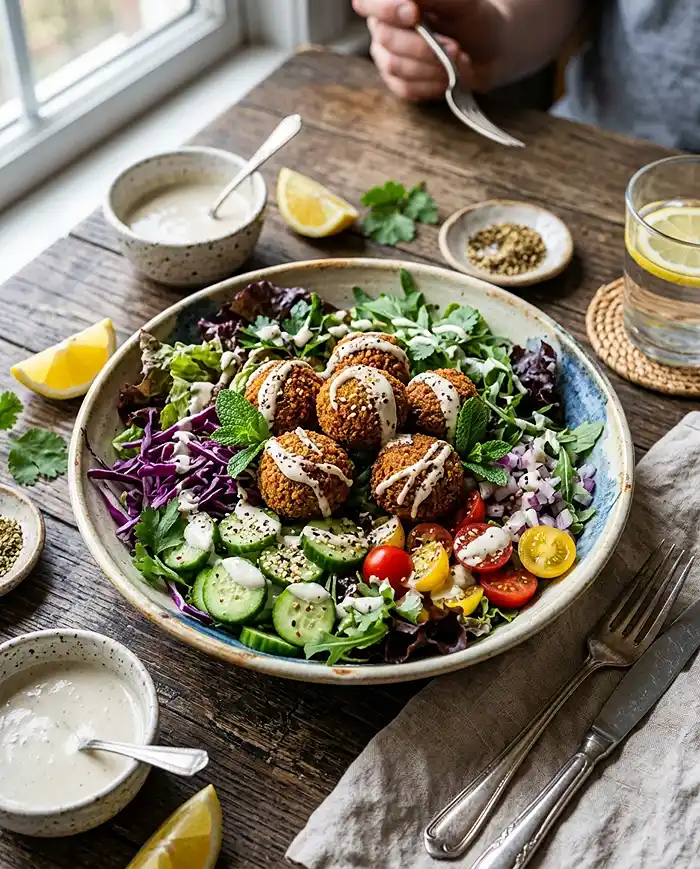
This loaded falafel salad bowl with tahini drizzle brings the vibrant flavors of Mediterranean street food to your weeknight table with surprisingly little effort. Once you’ve made your own falafel from scratch—watching those herb-flecked balls turn golden and gorgeous in the oil—you’ll understand why this ancient dish has captured hearts across cultures and centuries. Now grab that bowl of soaking chickpeas and get ready to create something truly special.
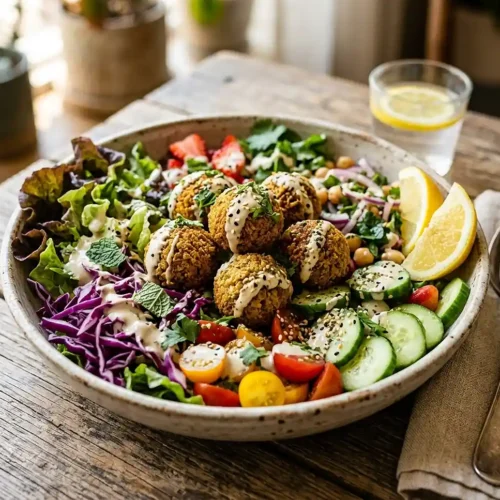
Loaded Falafel Salad Bowl with Tahini Drizzle
Equipment
- Medium bowl
- Food processor
- Heavy-bottomed saucepan or Dutch oven
- Small ice cream scoop
- Slotted spoon
- Paper towels
- Large serving bowl
- Whisk
Ingredients
For the Falafel
- ½ cup dry uncooked chickpeas
- ½ cup dry uncooked fava beans
- 1 teaspoon kosher salt
- ¼ cup mint leaves fresh
- ¾ cup flat-leaf parsley leaves fresh
- ⅔ cup cilantro leaves fresh
- 1 small jalapeño ribs and seeds removed, coarsely chopped
- 2 cloves garlic minced
- ½ cup yellow onion chopped
- 1 tablespoon sesame seeds
- 1 teaspoon baking soda
- 3 cups vegetable oil for frying
For the Salad
- 1 head red leaf lettuce torn
- 1 head green leaf lettuce torn
- ¼ head large red cabbage shredded
- 2-3 Persian cucumbers sliced
- 1 pint cherry tomatoes halved
- baby strawberries optional
- fresh mint, cilantro, and parsley for garnish
For the Tahini Dressing
- ¾ cup Greek yogurt
- ⅓ cup tahini
- 1 teaspoon kosher salt
- 2 cloves garlic minced
- 1 lemon juiced
- water to thin out the sauce
Instructions
- Place your dry chickpeas and fava beans in a medium bowl, covering them generously with cool water—they’ll absorb quite a bit and nearly double in size. Let them soak overnight, or for at least 8-12 hours, until they’re plump and tender when you press one between your fingers.
- Drain your soaked chickpeas and fava beans thoroughly, then pat them completely dry with clean kitchen towels—excess moisture is the enemy of crispy falafel. Transfer them to a food processor along with the kosher salt, and pulse until they resemble coarse, sandy crumbs that hold together when pinched.
- Drop the mint, parsley, cilantro, jalapeño, garlic, onion, and sesame seeds into the food processor with your legume mixture. Pulse everything until the herbs are finely ground and evenly distributed throughout, creating a mixture that resembles a fine, slightly damp crumb that clumps when you squeeze it.
- Transfer your vibrant green falafel mixture to a bowl and fold in the baking soda, which will help create that coveted light, fluffy interior. Cover and refrigerate for at least 30 minutes—this resting time allows the mixture to firm up and the flavors to meld together beautifully.
- Pour approximately 3 cups of vegetable oil into a heavy-bottomed saucepan or Dutch oven, heating it to around 350°F—if you don’t have a thermometer, drop a tiny bit of mixture in and it should sizzle immediately without burning. Using a small ice cream scoop, pack the falafel mixture tightly and form balls slightly smaller than a golf ball.
- Carefully lower a few falafel balls into the hot oil, being mindful not to overcrowd the pan—working in batches of 4-5 ensures even cooking and maintains oil temperature. Fry until deeply golden brown on the first side, about 2-3 minutes, then gently flip and continue cooking until the entire surface develops a gorgeous burnished crust.
- Using a slotted spoon, transfer your fried falafel to a paper towel-lined plate to drain excess oil. Let them rest for a minute or two while you continue frying the remaining batches. Repeat with all remaining falafel mixture.
- In your largest serving bowl, combine the torn red and green leaf lettuces, creating a ruffly, voluminous bed of greens. Add the shredded red cabbage, sliced Persian cucumbers, halved cherry tomatoes, and baby strawberries if using.
- To make the dressing, whisk together the Greek yogurt, tahini, salt, minced garlic, and fresh lemon juice in a medium bowl until completely smooth and combined. Add water gradually, whisking constantly, until the dressing reaches a pourable consistency. Adjust salt as needed.
- Nestle your warm, crispy falafel on top of the assembled salad. Scatter fresh herbs over everything and serve with the tahini dressing on the side, allowing everyone to drizzle to their heart’s content.