Poke Bowl Salad
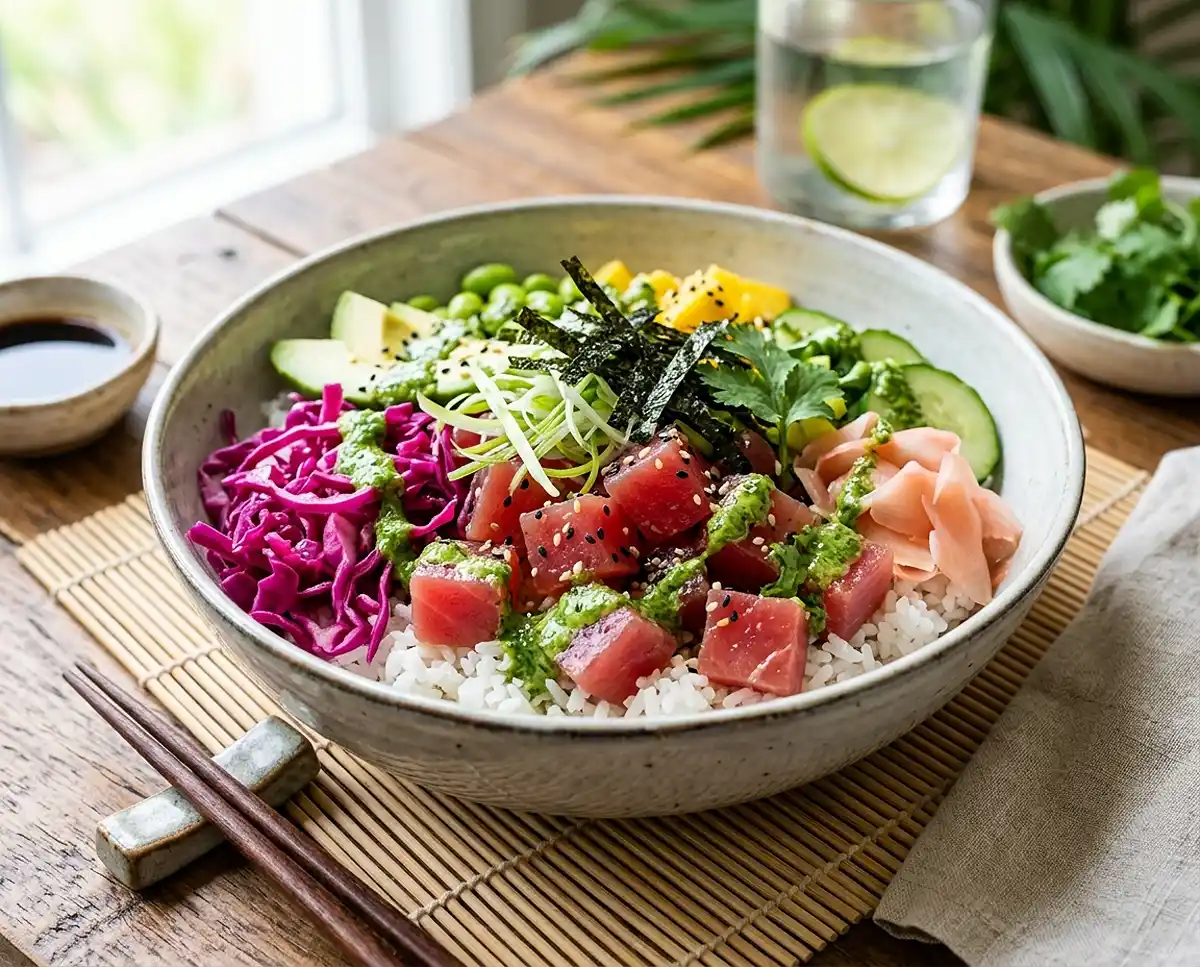
This Poke Bowl Salad with Ahi Tuna and Pickled Ginger brings Hawaiian flavors home with silky raw fish, tangy cabbage, and vibrant cilantro-ginger sauce.
The first time I assembled a poke bowl salad at home, I honestly couldn’t believe how simple it was to recreate those gorgeous restaurant bowls in my own kitchen. There’s something so satisfying about arranging ruby-red cubes of ahi tuna over fluffy sushi rice, watching the colors pop like edible confetti. The whole experience feels like a mini vacation—even on the most ordinary Tuesday evening.
Well, if you’ve ever dreamed of bringing a taste of Hawaii to your dinner table, this hawaiian poke recipe is your new best friend. I started making these bowls regularly after a trip to Maui years ago, and now they’ve become a Fourth of July tradition at our house—light enough for hot summer days yet impressive enough to feel celebratory.
The quick-pickled purple cabbage adds the most gorgeous magenta hue and a tangy crunch that balances beautifully against the buttery ahi.
Why settle for takeout when homemade tastes this fresh? Every forkful delivers silky fish, bright citrus notes, and that signature umami depth from the tamari. The cilantro-ginger sauce ties everything together with a creamy, herbaceous finish that makes this ahi tuna salad absolutely irresistible.
Table of Contents
Ingredients
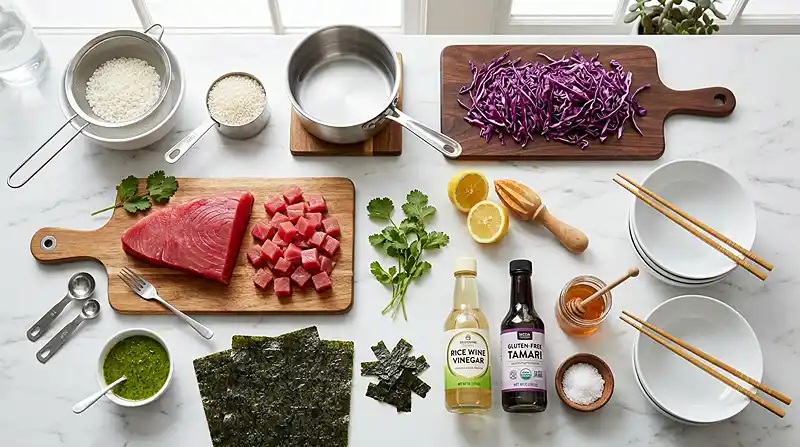
Sushi Rice
| Ingredient | Amount |
|---|---|
| Sushi rice | 1 cup |
| Water | 1½ cups |
Quick-Pickled Purple Cabbage
| Ingredient | Amount |
|---|---|
| Purple cabbage, finely shredded | 4 cups (about ¼ head) |
| Fresh lemon juice | 2 tablespoons |
| Rice wine vinegar | 2 tablespoons |
| Gluten-free tamari (or soy sauce or coconut aminos) | 2 tablespoons |
| Sea salt | 1 teaspoon |
| Raw honey | 1 teaspoon |
Ahi Tuna
| Ingredient | Amount |
|---|---|
| Sushi-grade ahi tuna, cut into ½-inch cubes | 1 pound |
For Serving
| Ingredient | Amount |
|---|---|
| Cilantro-ginger sauce | 1 cup (recipe follows) |
| Nori sheets, thinly sliced or torn | 2 sheets |
Instructions
Step 1: Rinse and Soak the Sushi Rice
Place the sushi rice in a fine mesh sieve and rinse under warm running water, swirling gently with your fingers. Continue rinsing until the water runs completely clear—this removes excess starch and ensures fluffy, separate grains.
Transfer the rinsed rice to a small saucepan and add 1½ cups of water. Let the rice soak undisturbed for 15 minutes; this step helps the grains cook evenly and achieve that signature sticky-yet-tender texture essential for any poke bowl salad.
Step 2: Cook the Sushi Rice
After soaking, bring the rice and water to a boil over medium-high heat. Once bubbling, immediately reduce the heat to low, cover with a tight-fitting lid, and simmer for 20 minutes without peeking.
Remove the saucepan from heat and let it rest, still covered, for an additional 10 minutes. This resting period allows the steam to finish the cooking process, creating rice as glossy as polished pearls. Fluff gently with a fork and divide between four serving bowls.
Step 3: Prepare the Quick-Pickled Cabbage
While the rice cooks, add the finely shredded purple cabbage to a medium mixing bowl. Pour over the lemon juice, rice wine vinegar, tamari, sea salt, and raw honey, then toss everything together until the cabbage is evenly coated.
Allow the cabbage to marinate for at least 10 minutes, stirring once halfway through. You’ll notice the purple deepens into a stunning magenta as the acids work their magic—this vibrant slaw brings both color and crunch to your ahi tuna salad.
Step 4: Prepare the Cilantro-Ginger Sauce
Prepare your cilantro-ginger sauce according to the recipe below (or use your favorite creamy salad dressing variation). This bright, herbaceous sauce is the secret weapon that transforms simple ingredients into something truly special.
The sauce should be smooth and pourable, with visible flecks of fresh cilantro throughout. Make it while the cabbage pickles and the rice rests—timing works out perfectly.
Step 5: Cube the Ahi Tuna
Using a very sharp knife, cut your sushi-grade ahi tuna into clean ½-inch cubes. According to FDA seafood safety guidelines, always purchase fish labeled “sushi-grade” or “sashimi-grade” from a trusted source when preparing raw fish dishes.
Work quickly to keep the tuna cold, and handle the fish as little as possible to maintain its pristine texture and flavor. The cubes should look like deep ruby jewels—that rich red color indicates freshness and quality.
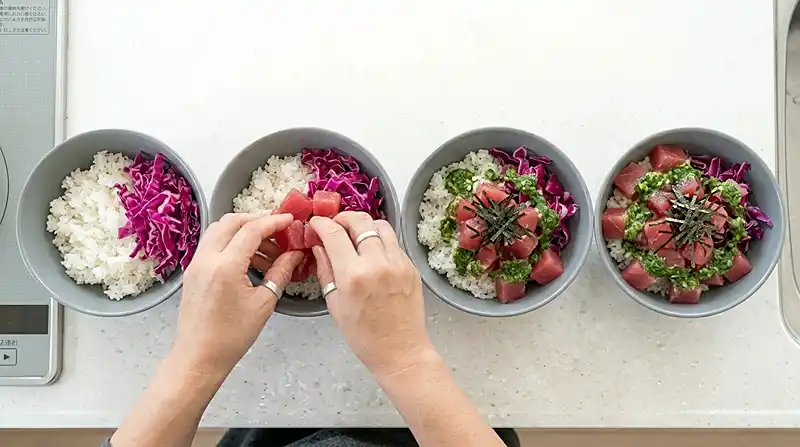
Step 6: Assemble the Poke Bowl Salad
Divide the fluffy sushi rice among four bowls, pressing it gently to one side. Add a generous portion of the quick-pickled cabbage alongside, including some of its tangy liquid—that brine adds incredible flavor.
Arrange the cubed ahi tuna over the rice, then drizzle generously with the cilantro-ginger sauce. Garnish each bowl with torn or sliced nori strips for that authentic hawaiian poke recipe finish. Serve immediately while everything is at its freshest.
Substitutions
Protein Alternatives
Not a fan of raw fish, or simply can’t find sushi-grade ahi? Seared ahi tuna (cooked to rare in the center) works beautifully, as does fresh sushi-grade salmon. For a fully cooked option, try grilled shrimp or baked tofu cubes marinated in tamari and sesame oil.
Rice Variations
Brown rice, quinoa, or cauliflower rice can replace sushi rice for different dietary needs. Keep in mind that brown rice and quinoa will change the traditional poke bowl salad texture but add extra fiber and nutrients.
Cabbage Swaps
Red cabbage can be substituted with green cabbage, though you’ll lose that gorgeous magenta color. Shredded kale or a mix of baby greens also work wonderfully if you prefer softer textures in your ahi tuna salad.
Tamari Alternatives
Coconut aminos provide a soy-free option with a slightly sweeter flavor profile. Regular soy sauce works perfectly if gluten isn’t a concern—just adjust the salt accordingly since it’s saltier than tamari.
Honey Substitutes
Maple syrup or agave nectar can replace the raw honey for a vegan-friendly hawaiian poke recipe. Use the same quantity and expect a slightly different flavor nuance that still complements the other ingredients beautifully.
Troubleshooting
Mushy Rice
Rice that clumps or turns gummy usually wasn’t rinsed thoroughly enough or was stirred during cooking. Always rinse until water runs clear and resist the urge to lift that lid while simmering—patience rewards you with perfect grains.
Fishy-Smelling Tuna
Fresh sushi-grade ahi should smell clean and briny, like the ocean—never “fishy” or ammonia-like. If your tuna has an off odor, it’s not fresh enough for raw consumption and should be returned or thoroughly cooked instead.
Watery Cabbage Slaw
If your pickled cabbage releases too much liquid, simply drain some before serving. Reserve that flavorful brine, though—a drizzle over the assembled bowl adds incredible depth to the overall salad experience.
Bland Flavor
This poke bowl salad relies on quality ingredients and proper seasoning. Taste your pickled cabbage before assembling—if it needs more salt or acid, adjust now. The cilantro-ginger sauce should also be well-seasoned.
Storage
The components of this poke bowl salad store best separately in airtight containers. Cooked sushi rice keeps refrigerated for up to 4 days (reheat with a splash of water), while the pickled cabbage actually improves over 2-3 days as flavors meld. The cilantro-ginger sauce stays fresh for about 5 days refrigerated.
Raw ahi tuna should be consumed the same day it’s purchased for optimal freshness and food safety. If you absolutely must store cubed tuna, keep it in the coldest part of your refrigerator, tightly covered, and use within 24 hours.
Meal Prep
Goodness, this hawaiian poke recipe is surprisingly meal-prep friendly when you approach it strategically! Cook a big batch of sushi rice on Sunday, prepare the quick-pickled cabbage (it keeps beautifully), and make a double batch of cilantro-ginger sauce.
When you’re ready to eat, simply cube fresh ahi tuna and assemble your bowls in minutes. This method works perfectly for easy weeknight dinners when you want something special without spending hours in the kitchen.
Serving Suggestions
This poke bowl salad shines as a complete meal on its own, but you can elevate it further with additional toppings like sliced avocado, edamame, pickled ginger, sesame seeds, or a drizzle of sriracha mayo. Cucumber ribbons add refreshing crunch, while mango chunks bring tropical sweetness.
For beverages, a cold Japanese beer, crisp Riesling, or sparkling water with lime complement the bright, clean flavors beautifully. Serve family-style with all the toppings in separate bowls and let everyone customize their own creation—kids especially love building their own bowls!
Variations
Spicy Ahi Version
Add 1-2 teaspoons of sriracha or sambal oelek to the cubed tuna along with a drizzle of sesame oil for a kick of heat. This variation is incredibly popular at poke restaurants and takes your ahi tuna salad to the next level.
California-Style Bowl
Oh, this one’s a crowd-pleaser! Add diced avocado, cucumber, and imitation crab alongside the ahi tuna for a deconstructed California roll experience. Top with extra sesame seeds and a squeeze of lime.
Vegetarian/Vegan Poke Bowl
Replace the ahi with cubed extra-firm tofu marinated in tamari, rice vinegar, and sesame oil for at least 30 minutes. Watermelon “tuna” (seasoned, seared watermelon) also makes a surprisingly convincing plant-based alternative.
Kid-Friendly Option
For little ones who aren’t ready for raw fish, use cooked shrimp or teriyaki chicken instead. Keep the pickled cabbage on the side (some kids find it too tangy) and let them choose their own toppings.
Low-Carb Version
Skip the sushi rice entirely and serve your hawaiian poke recipe over a generous bed of mixed greens, spiralized cucumber, or cauliflower rice. You’ll still get all those gorgeous flavors with fewer carbohydrates.
Poke Bowl Salad FAQs
Can I use frozen ahi tuna for this poke bowl salad?
Absolutely! In fact, according to Serious Eats’ comprehensive guide to raw fish safety, most sushi-grade fish has been previously frozen to eliminate parasites. Thaw frozen ahi in the refrigerator overnight, never at room temperature, and use immediately once thawed.
How do I know if ahi tuna is sushi-grade?
Look for fish specifically labeled “sushi-grade” or “sashimi-grade” at reputable fish markets or Japanese grocery stores. The flesh should be deep ruby red, translucent, and smell fresh and oceanic—never fishy or ammonia-like. When in doubt, ask your fishmonger directly.
What’s the difference between poke and sashimi?
Poke (pronounced POH-kay) is a Hawaiian dish featuring cubed raw fish typically marinated in sauce and served over rice with toppings. Sashimi is Japanese, featuring thinly sliced raw fish served plain. This ahi tuna salad draws inspiration from traditional Hawaiian poke.
Why does my pickled cabbage turn pink?
Isn’t that color transformation magical? The acids in lemon juice and vinegar react with the anthocyanins (natural pigments) in purple cabbage, causing that stunning magenta shift. It’s completely normal and actually indicates your quick-pickle is working perfectly.
Best way to cut ahi tuna for poke?
Use your sharpest knife and cut against the grain into clean ½-inch cubes. Work quickly to keep the fish cold, and wipe your knife between cuts for the cleanest edges. Uniform cubes ensure even flavor distribution and a beautiful presentation.
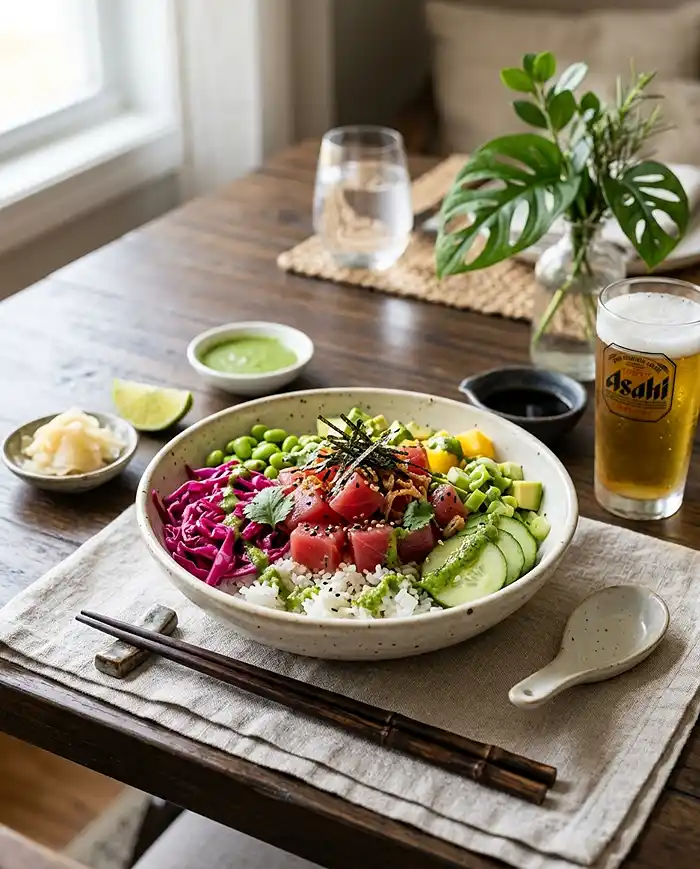
This Poke Bowl Salad with Ahi Tuna and Pickled Ginger has become one of my absolute favorite ways to enjoy fresh, vibrant flavors without hours of cooking. There’s something magical about how such simple ingredients come together into something so special—I hope it brings a little taste of the islands to your table too!
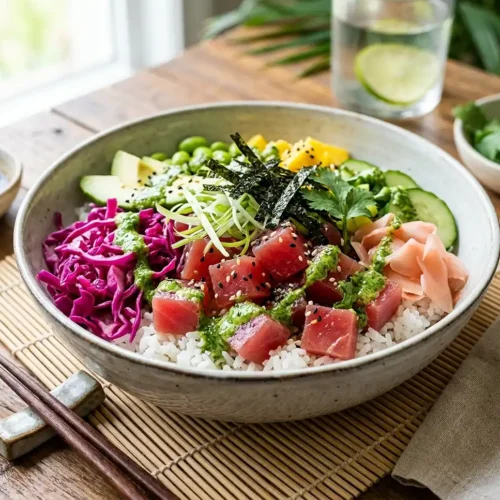
Poke Bowl Salad with Ahi Tuna and Pickled Ginger
Equipment
- Fine mesh sieve
- Small saucepan with lid
- Medium Mixing Bowl
- Sharp knife
- Cutting board
- Fork
- Serving bowls
Ingredients
Sushi Rice
- 1 cup sushi rice
- 1½ cups water
Quick-Pickled Purple Cabbage
- 4 cups purple cabbage finely shredded, about ¼ head
- 2 tablespoons fresh lemon juice
- 2 tablespoons rice wine vinegar
- 2 tablespoons gluten-free tamari or soy sauce or coconut aminos
- 1 teaspoon sea salt
- 1 teaspoon raw honey
Ahi Tuna
- 1 pound sushi-grade ahi tuna cut into ½-inch cubes
For Serving
- 1 cup cilantro-ginger sauce recipe follows
- 2 sheets nori thinly sliced or torn
Instructions
- Place the sushi rice in a fine mesh sieve and rinse under warm running water, swirling gently with your fingers. Continue rinsing until the water runs completely clear to remove excess starch and ensure fluffy, separate grains.
- Transfer the rinsed rice to a small saucepan and add 1½ cups of water. Let the rice soak undisturbed for 15 minutes to help the grains cook evenly and achieve that signature sticky-yet-tender texture.
- After soaking, bring the rice and water to a boil over medium-high heat. Once bubbling, immediately reduce the heat to low, cover with a tight-fitting lid, and simmer for 20 minutes without peeking.
- Remove the saucepan from heat and let it rest, still covered, for an additional 10 minutes. This resting period allows the steam to finish the cooking process. Fluff gently with a fork and divide between four serving bowls.
- While the rice cooks, add the finely shredded purple cabbage to a medium mixing bowl. Pour over the lemon juice, rice wine vinegar, tamari, sea salt, and raw honey, then toss everything together until the cabbage is evenly coated.
- Allow the cabbage to marinate for at least 10 minutes, stirring once halfway through. The purple will deepen into a stunning magenta as the acids work their magic.
- Prepare your cilantro-ginger sauce according to the recipe. The sauce should be smooth and pourable, with visible flecks of fresh cilantro throughout.
- Using a very sharp knife, cut your sushi-grade ahi tuna into clean ½-inch cubes. Work quickly to keep the tuna cold, and handle the fish as little as possible to maintain its pristine texture and flavor.
- Divide the fluffy sushi rice among four bowls, pressing it gently to one side. Add a generous portion of the quick-pickled cabbage alongside, including some of its tangy liquid.
- Arrange the cubed ahi tuna over the rice, then drizzle generously with the cilantro-ginger sauce. Garnish each bowl with torn or sliced nori strips and serve immediately.