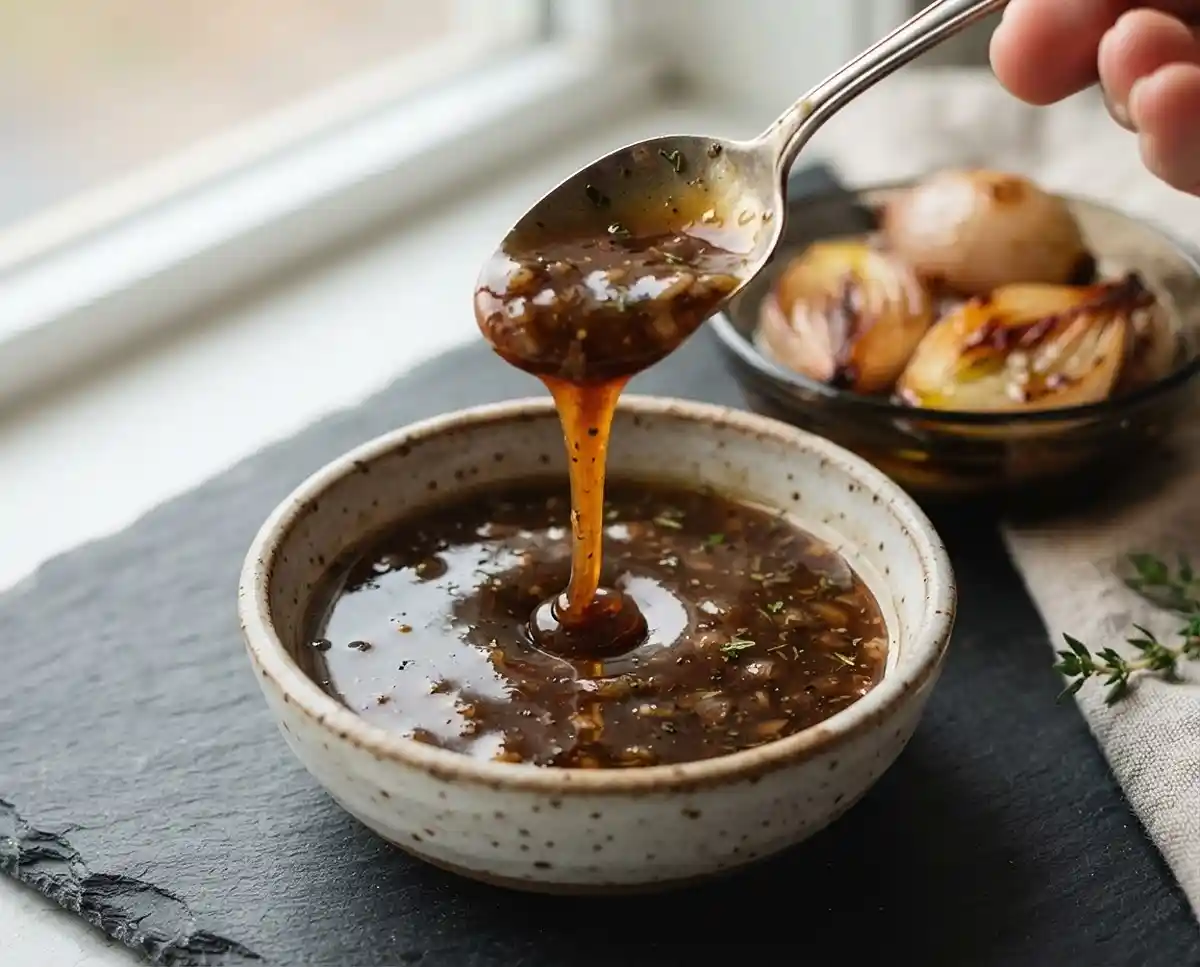
Roasted Shallot Balsamic Dressing
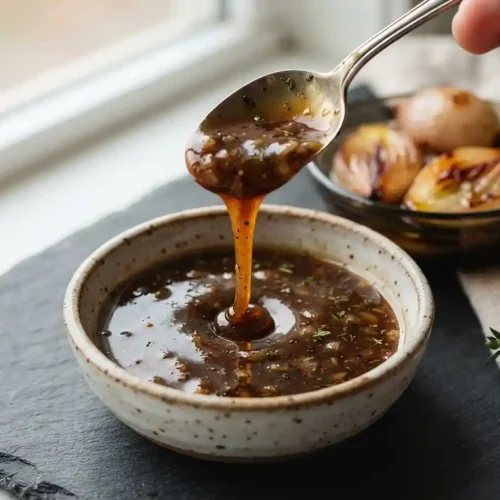
This roasted shallot balsamic dressing takes about 30 minutes and produces something that tastes like it came from a restaurant you can’t stop thinking about. Silky, deeply savory, and just sweet enough — it transforms a simple bowl of greens into something worth sitting down for.
Honestly, I used to grab a bottle from the store without a second thought. Then one crisp October evening I had leftover shallots roasting alongside dinner and threw them in the blender on a whim. The result was so rich and caramelized that my family crowded the kitchen asking what I was making.
Have you ever noticed how roasting completely changes an onion? The sharpness mellows into something almost jammy and sweet. That transformation is exactly what makes this dressing so much more complex than anything you’d shake out of a bottle.
Table of Contents
Ingredients
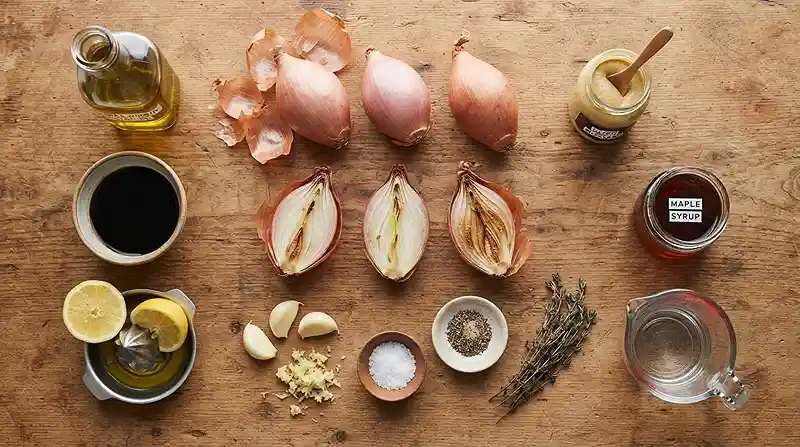
| Category | Ingredient | Amount | Notes |
|---|---|---|---|
| Shallots | Medium shallots, peeled and halved | 3 | Don’t sub regular onion — shallots roast sweeter |
| Fat | Extra-virgin olive oil, divided | 2 tbsp | 1 tbsp for roasting, 1 tbsp for blending |
| Acid | Balsamic vinegar | 3 tbsp | Use a good-quality aged balsamic if you have it |
| Acid | Fresh lemon juice | 1 tbsp | Brightens the deep roasted flavors |
| Emulsifier | Dijon mustard | 1 tsp | Keeps the dressing creamy and emulsified |
| Sweetener | Honey or maple syrup | 1 tsp | Use maple syrup to keep it fully vegan |
| Aromatics | Small garlic clove | 1 | Raw garlic adds a pleasant background heat |
| Seasoning | Kosher salt | 1/2 tsp | Adjust to taste after blending |
| Seasoning | Freshly cracked black pepper | 1/4 tsp | Freshly cracked gives noticeably more punch |
| Seasoning | Dried thyme | 1/4 tsp | Pairs beautifully with roasted shallots |
| Consistency | Water, as needed | 2–3 tbsp | Add gradually to reach your preferred pour |
Instructions
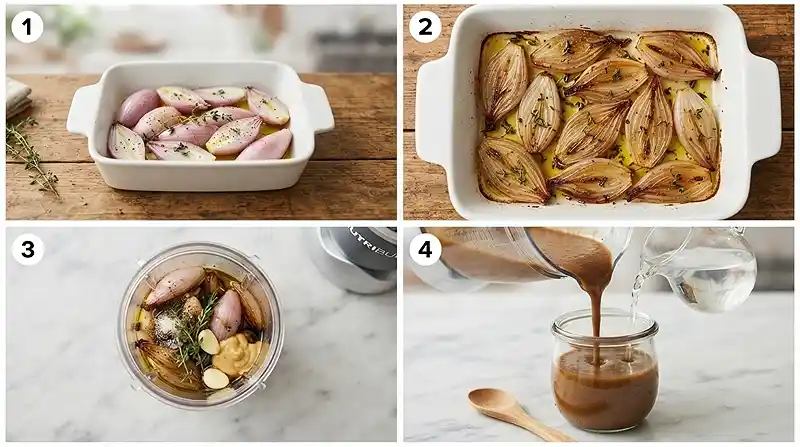
Step 1: Roast the shallots. Preheat your oven to 400°F (200°C). Place the halved shallots cut-side up in a small baking dish and drizzle with 1 tablespoon of olive oil. Roast for 20–25 minutes, turning once halfway through, until they’re very tender, golden at the edges, and smell deeply sweet and caramelized. Let them cool for 5 minutes before blending.
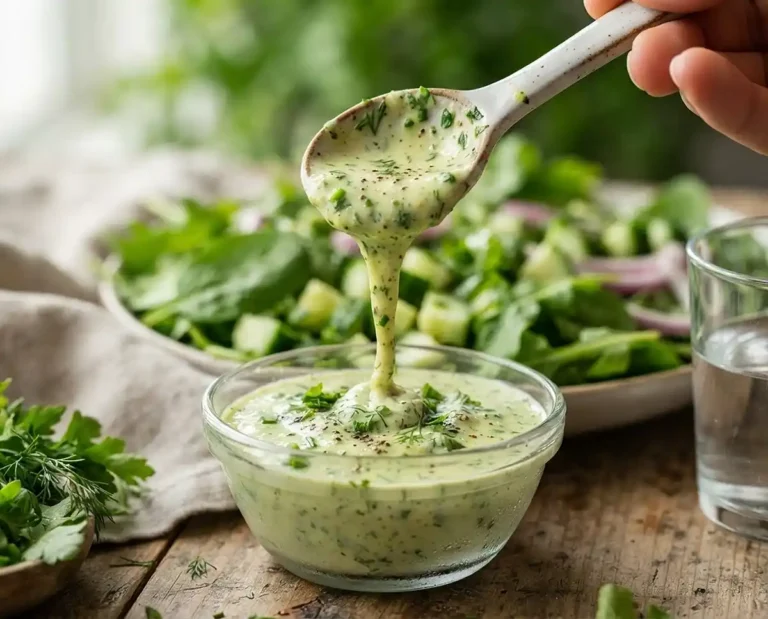
Step 2: Blend the dressing. Add the roasted shallots, remaining olive oil, balsamic vinegar, lemon juice, Dijon mustard, honey, garlic, salt, pepper, and thyme to a blender or food processor. Blend on high for about 45 seconds until completely smooth and creamy — the color should be a warm, glossy mahogany, like a perfectly reduced pan sauce.
Step 3: Adjust the consistency. With the blender running on low, add water one tablespoon at a time until the dressing pours easily but still coats a spoon. In my testing, I found two tablespoons hits the sweet spot for most salads — enough body to cling to greens without weighing them down.
Step 4: Taste and adjust. Dip a clean spoon in and give it a real taste. Add a small splash more balsamic for extra tang, a touch more honey if it feels too sharp, or a pinch of salt to make all the flavors come forward. This step takes 30 seconds and makes a genuine difference.
Step 5: Chill before serving. Pour the dressing into an airtight jar and refrigerate for 20–30 minutes. Chilling lets the flavors settle and meld — the thyme and garlic both bloom and soften during this rest. Give the jar a good shake just before dressing your salad.
Substitutions and Variations
For a fully vegan version of this easy homemade roasted shallot dressing, swap the honey for pure maple syrup in equal amounts. The maple adds its own subtle earthiness that actually works beautifully with the roasted shallot and thyme.
Want something richer? Add one tablespoon of tahini before blending for a creamy, nutty depth that works especially well as a roasted shallot balsamic for meal prep lunches. It thickens the dressing slightly, so you may need an extra tablespoon of water to loosen it.
If you’re out of balsamic, a mix of red wine vinegar plus a half teaspoon of brown sugar gets you close. It won’t have the same depth, but it will still be far better than anything bottled.
Expert Tips and Troubleshooting
After making this dozens of times, the most common issue is a dressing that tastes flat or one-dimensional. Nine times out of ten the shallots needed more time in the oven. They should look genuinely golden, not just softened — that caramelization is where all the flavor lives.
If the dressing turns out too thick after chilling, don’t worry. Just add water a teaspoon at a time and shake the jar vigorously. According to Bon Appetit’s breakdown of what makes a great vinaigrette, emulsified dressings naturally tighten in the cold — a quick shake or stir always brings them back.
Too sharp or acidic? A pinch of salt (not more sweetener) is often the fix. Salt rounds out acidity in a way that sugar can’t, and it prevents the dressing from tipping into candy territory.
Storage and Meal Prep
| Component | Storage Method | Duration |
|---|---|---|
| Finished dressing | Airtight jar in refrigerator | Up to 1 week |
| Roasted shallots (unblended) | Covered container in refrigerator | Up to 5 days |
| Dressed salad | Not recommended — dress just before eating | Same day |
This is one of the best make-ahead roasted shallot balsamic dressings for September salads because a batch on Sunday carries you through the whole week. Roast a double batch of shallots while something else is already in the oven to save time and energy.
Serving Suggestions
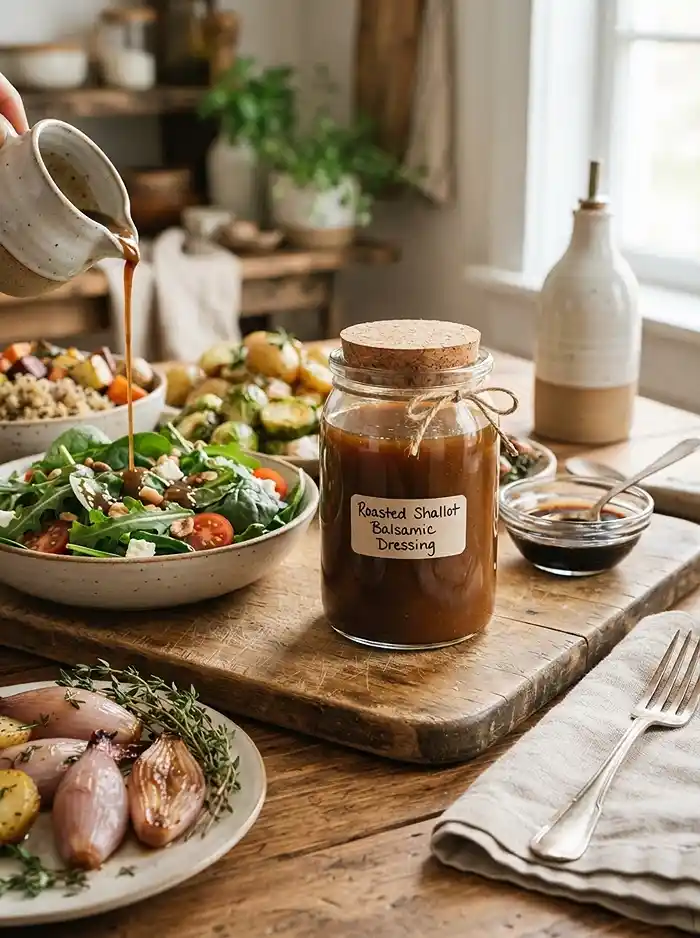
This dressing was practically made for autumn greens — arugula, radicchio, and shaved Brussels sprouts all love its sweet-savory depth. Try it drizzled over our Honeycrisp celery cheddar salad for a fall combination that really sings.
It also doubles beautifully as a marinade or warm grain topping. Spoon it over farro or roasted root vegetables, or use it to bring together a full meal like our harvest chicken farro chop salad. And if you’re building a full potluck spread, pair it alongside our warm potato green bean dill salad for a lineup that covers every base.
Roasted Shallot Balsamic Dressing FAQs
Can I make roasted shallot balsamic dressing without a blender?
Yes, though the texture will be chunkier. Mash the roasted shallots very well with a fork, then whisk in the remaining ingredients until combined. It will taste great but won’t have the silky, creamy consistency that blending creates.
How long does this dressing keep in the refrigerator?
This dressing keeps well for up to one week in an airtight jar. The flavors actually deepen after the first day, making it an ideal make-ahead option for meal prep lunches. Give it a good shake before each use, as natural separation is normal.
Why does my dressing taste too sharp or tangy?
Shallots that weren’t fully caramelized are usually the cause. They need to look golden and jammy, not just soft. You can also add a small pinch of salt — it rounds out acidity more effectively than adding extra sweetener.
What salads pair best with roasted shallot balsamic dressing?
It works beautifully on bitter autumn greens like arugula, radicchio, and endive, which balance its sweetness. It’s also excellent on grain salads, roasted vegetable bowls, and anything with goat cheese, walnuts, or apple slices.
Can I use this dressing as a marinade?
Yes, it makes a wonderful marinade for chicken, salmon, or portobello mushrooms. Use it just as you would any vinaigrette-style marinade — 30 minutes to 2 hours in the refrigerator is plenty of time for the flavors to penetrate.
Conclusion
Seriously, this one little recipe could change how you think about homemade dressing entirely. Once you taste what roasting does to shallots, store-bought balsamic just won’t cut it anymore.
Give it a try this week and let me know in the comments which salad you put it on first — and if you’re saving recipes for fall, this one is absolutely worth a pin.
Roasted Shallot Balsamic Dressing
Equipment
- oven
- Small baking dish
- Blender or food processor
- Airtight Jar
Ingredients
Shallots
- 3 Medium shallots, peeled and halved Don’t substitute regular onion; shallots roast sweeter
Fat
- 2 tbsp Extra-virgin olive oil, divided 1 tbsp for roasting and 1 tbsp for blending
Acid
- 3 tbsp Balsamic vinegar Use a good-quality aged balsamic if available
- 1 tbsp Fresh lemon juice Brightens the deep roasted flavors
Emulsifier
- 1 tsp Dijon mustard Keeps the dressing creamy and emulsified
Sweetener
- 1 tsp Honey or maple syrup Use maple syrup to keep it fully vegan
Aromatics
- 1 small Garlic clove Raw garlic adds pleasant background heat
Seasoning
- ½ tsp Kosher salt Adjust to taste after blending
- ¼ tsp Freshly cracked black pepper Freshly cracked gives more punch
- ¼ tsp Dried thyme Pairs beautifully with roasted shallots
Consistency
- 2–3 tbsp Water Add gradually to reach your preferred consistency
Instructions
- Step 1: Roast the shallots. Preheat the oven to 400°F (200°C). Place the halved shallots cut-side up in a small baking dish and drizzle with 1 tablespoon of olive oil. Roast for 20–25 minutes, turning once halfway through, until very tender, golden at the edges, and caramelized. Let cool for 5 minutes.
- Step 2: Blend the dressing. Add the roasted shallots, remaining olive oil, balsamic vinegar, lemon juice, Dijon mustard, honey or maple syrup, garlic, salt, pepper, and thyme to a blender or food processor. Blend on high for about 45 seconds until completely smooth and creamy.
- Step 3: Adjust the consistency. With the blender running on low, add water one tablespoon at a time until the dressing pours easily while still coating a spoon.
- Step 4: Taste and adjust. Taste the dressing and add more balsamic for extra tang, a touch more honey or maple syrup if needed, or a pinch of salt to balance the flavors.
- Step 5: Chill before serving. Pour the dressing into an airtight jar and refrigerate for 20–30 minutes. Shake well before using.