Sautéed Spring Vegetable Salad
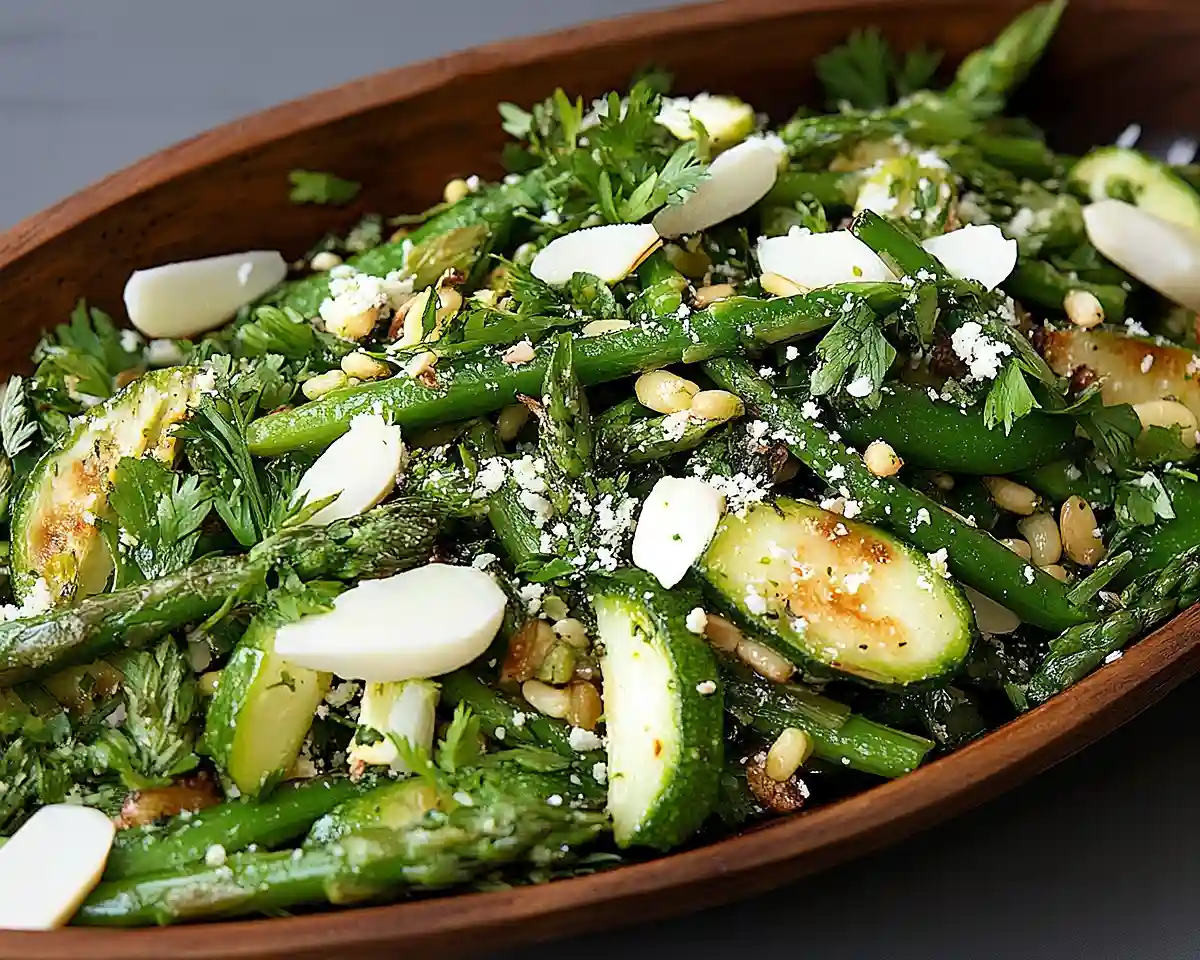
Sautéed Spring Vegetable Salad with tender zucchini, crisp asparagus, pistachios, and lemon Dijon dressing—a warm, vibrant side dish ready in 20 minutes.
You know what I love most about spring? Those first warm weekends when I throw open all the windows, dust off my farmers market tote, and come home with armloads of the brightest, crunchiest vegetables I can find.
Last Easter, I wanted something lighter than our usual heavy sides, so I whipped up this Sautéed Spring Vegetable Salad with whatever looked freshest at the stand—zucchini so green it practically glowed, asparagus as tender as butter, and a handful of pistachios for crunch.
Well, it stole the show. Everyone kept asking if it was complicated, and I just laughed.
Here’s the truth: this warm vegetable salad comes together in about 20 minutes, requires zero fancy techniques, and tastes like you spent all afternoon in the kitchen. The zucchini gets these gorgeous caramelized edges, the asparagus stays al dente and snappy, and that lemon Dijon dressing? It pulls everything together with just the right amount of tang and sweetness.
Whether you’re looking for spring herb recipes that feel special or simple green vegetable dishes to brighten up weeknight dinners, this one delivers every single time.
Table of Contents
Ingredients
| Sautéed Spring Vegetable Salad | |
|---|---|
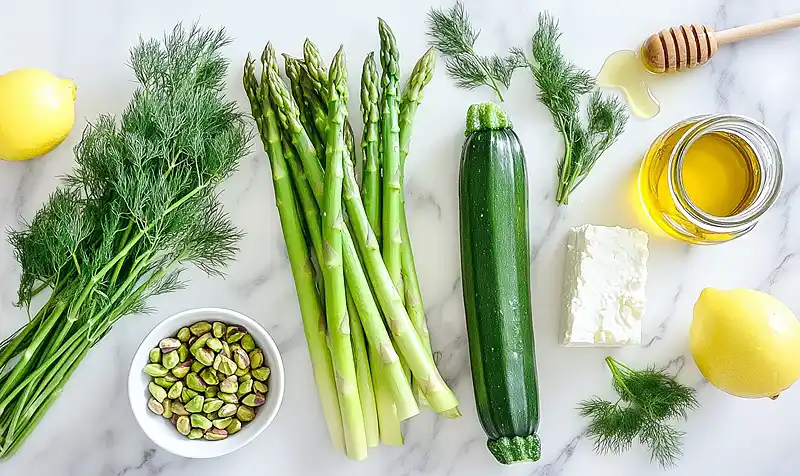
| Avocado oil | 2 tablespoons |
| Medium zucchini, sliced ¾–1 inch thick | 2 |
| Asparagus bundles, trimmed and cut into 2-inch pieces | 2 |
| Kosher salt | Pinch |
| Cracked black pepper | Few turns |
| Crumbled feta | ⅓ cup |
| Salted pistachios, lightly crushed | ⅓ cup |
| Fresh dill, roughly chopped | 2–4 tablespoons |
| Lemon Dijon Dressing | |
|---|---|
| Extra virgin olive oil | ¼ cup |
| Fresh squeezed lemon juice | 1 tablespoon |
| White wine vinegar | 1 tablespoon |
| Honey | 1 tablespoon |
| Dijon mustard | 1 teaspoon |
| Kosher salt | Pinch |
| Cracked black pepper | Few turns |
Instructions
Prepare the Ingredients
Wash and dry your zucchini, then trim off both ends so you’re left with smooth, even pieces. Do the same with the asparagus, snapping off those woody bottom portions that nobody wants to chew.
Slice the zucchini into ¾ to 1-inch thick rounds—thick enough to get a beautiful golden sear without falling apart. Cut your asparagus into 2-inch segments so every bite is fork-friendly and cooks evenly.
Drop the salted pistachios into a Ziplock bag and give them a few gentle taps with a rolling pin or the bottom of a heavy mug until they’re lightly crushed—not pulverized, just broken into rustic pieces. Wash, dry, and roughly chop your fresh dill, letting those feathery fronds fall into a little pile of springtime.
Make the Dressing
In a small mixing bowl, combine the extra virgin olive oil, white wine vinegar, fresh squeezed lemon juice, honey, Dijon mustard, a pinch of kosher salt, and a few turns of cracked black pepper. Whisk everything together until it’s smooth and glossy, with that perfect balance of bright and rich.
Set this spring herb recipes staple aside while you cook the vegetables. The flavors will meld beautifully as it sits.
Sauté the Vegetables
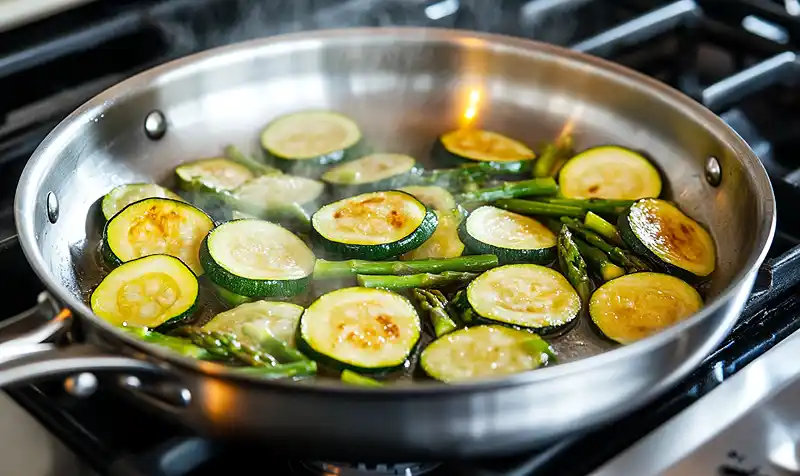
Heat a large sauteuse pan over medium-high heat and add 2 tablespoons of avocado oil, swirling it around until the surface shimmers. Arrange your zucchini slices center-side down in a single layer so each piece makes contact with the hot pan and develops that gorgeous caramelized crust.
Let them sizzle undisturbed for 3 to 4 minutes—resist the urge to peek! You want those edges to turn golden and slightly crispy, as rich and sweet-smelling as roasted chestnuts on a cool evening.
Flip the zucchini over and toss in the prepared asparagus, then season everything with a light pinch of kosher salt and a few grinds of black pepper. Go easy on the salt since the pistachios and feta will add plenty of their own savory punch.
Sauté for another 3 to 5 minutes, stirring occasionally, until the asparagus brightens to a vivid green and softens just enough to pierce with a fork but still has that satisfying snap. If you’re working with thick asparagus, quickly blanch it in hot water for 2 to 3 minutes before adding it to the pan—this prevents the zucchini from turning mushy while the asparagus catches up.
Super thin asparagus, on the other hand, might only need a couple of minutes, so keep tasting as you go.
Assemble
Once your vegetables are cooked to perfection, transfer the sautéed zucchini and asparagus to a serving dish and let them cool for just a minute or two. You want them warm, not scalding.
Scatter the crushed pistachios, crumbled feta, and fresh chopped dill over the top, then drizzle with as much or as little of that lemon Dijon dressing as your heart desires. Give everything a gentle toss, taste for seasoning, and adjust with more salt or pepper if needed.
Serve this healthy entree immediately while it’s still warm and the greens are glossy with dressing.
Substitutions
Out of zucchini? Swap in summer squash, yellow crookneck squash, or even thinly sliced eggplant for a similar tender texture and mild flavor. Just adjust your cooking time slightly depending on thickness.
No asparagus on hand? Green beans, snap peas, or broccolini work beautifully in this sautéed vegetable mix and bring their own crisp, fresh character. Trim and cut them into similar-sized pieces so everything cooks evenly.
Prefer a different nut? Swap pistachios for slivered almonds, toasted walnuts, or even sunflower seeds if you’re nut-free. Each one adds its own unique crunch and richness.
Not a feta fan? Try crumbled goat cheese, shaved Parmesan, or a dairy-free cashew cheese for a creamy, tangy finish. If you’re keeping it vegan, nutritional yeast adds a nice savory depth without the dairy.
Missing fresh dill? Basil, parsley, mint, or chives all bring that bright, herbaceous note to your spring herb recipes collection. Use whatever’s freshest in your garden or fridge.
Troubleshooting
Zucchini turning mushy? You’re probably overcrowding the pan or cooking over heat that’s too low. Give each piece space to breathe, and make sure your oil is shimmering hot before adding the vegetables so they sear instead of steam.
Asparagus too tough? Thick spears need a quick blanch before sautéing, or you can simply slice them thinner on the diagonal to speed up cooking. Always snap off those woody ends—they’re never going to soften, no matter how long you cook them.
Dressing tastes flat? Add a pinch more salt, an extra squeeze of lemon juice, or a tiny drizzle of honey to wake up the flavors. Fresh ingredients make all the difference, so use good quality olive oil and freshly squeezed lemon for the best results.
Salad getting watery? Let your sautéed vegetables cool for a few minutes before tossing with dressing, and make sure they’re well-drained if you blanched the asparagus. Excess moisture dilutes the dressing and makes everything soggy.
Storage and Meal Prep Advice
Store any leftover Sautéed Spring Vegetable Salad in an airtight container in the fridge for up to 3 days. The vegetables will lose some of their crisp texture, but the flavors actually deepen as they marinate in the dressing. You can enjoy it cold straight from the fridge, at room temperature, or gently rewarmed in a skillet over low heat.
For meal prep, sauté your zucchini and asparagus ahead of time and store them separately from the dressing, pistachios, feta, and dill. When you’re ready to eat, assemble everything fresh so the greens stay vibrant and the nuts keep their crunch. This makes it easy to pack green vegetable dishes for work lunches or quick weeknight dinners all week long.
serving Suggestions and Pairings
This warm vegetable medley shines as a healthy entree on its own, especially if you add grilled chicken, seared salmon, or crispy chickpeas for extra protein. It’s also perfect alongside roasted lamb, herb-crusted pork tenderloin, or a simple rotisserie chicken for an effortless spring dinner.
Serve it at Easter brunch, Mother’s Day lunch, or any backyard gathering where you want something colorful and fresh that doesn’t require turning on the oven. Pair it with crusty sourdough bread, a chilled glass of Sauvignon Blanc, and maybe a light quinoa pilaf or these simple salad dressing tutorials to round out the meal. If you’re looking for more vegetable-forward inspiration, check out this high-protein lunch salads collection or these easy prep-ahead vegetable ideas for your weekly rotation.
Variations and Dietary Adjustments
Kid-Friendly Version: Skip the feta and Dijon mustard, and swap the lemon dressing for a simple drizzle of olive oil and a squeeze of fresh orange juice. Kids love the natural sweetness of sautéed zucchini, and the pistachios add fun crunch without being too adventurous.
Vegan and Dairy-Free: Omit the feta or replace it with a sprinkle of nutritional yeast and a handful of toasted sunflower seeds for that salty, umami punch. The rest of the recipe is already plant-based and delicious.
Gluten-Free: This Sautéed Spring Vegetable Salad is naturally gluten-free as written, so you’re good to go! Just double-check that your Dijon mustard and any packaged ingredients don’t contain hidden gluten fillers.
Low-Carb and Keto: Keep the recipe exactly as is—it’s already low in carbs and fits beautifully into a keto lifestyle. You might even add a little extra avocado oil or top it with sliced hard-boiled eggs for more healthy fats.
Add Grains: Toss the warm vegetables with cooked farro, quinoa, or orzo to turn this into a heartier grain bowl that works as a complete healthy entree. Oh, the grains soak up all that tangy dressing and make every bite even more satisfying.
Sautéed Spring Vegetable Salad FAQs
What is a spring vegetable salad?
A spring vegetable salad highlights the season’s freshest produce—think asparagus, zucchini, snap peas, radishes, and tender greens—often dressed with bright, herbaceous flavors like lemon, dill, and Dijon. It can be served warm or cold and celebrates the crisp, vibrant character of spring herb recipes.
Can spring mix salad be sautéed?
Not exactly—spring mix greens are delicate leafy lettuces that wilt quickly and turn soggy when heated. However, heartier spring vegetables like asparagus, zucchini, and snap peas sauté beautifully and create a warm, satisfying base for salads like this one.
What does sautéed vegetables mean?
Sautéing means cooking vegetables quickly in a small amount of oil or fat over medium-high heat, stirring or flipping occasionally so they develop golden, caramelized edges while staying tender-crisp inside. It’s one of the fastest, most flavorful ways to prepare green vegetable dishes without losing their natural texture.
What should I sauté my vegetables with?
Use a neutral, high-heat oil like avocado oil, grapeseed oil, or refined coconut oil for the best searing results. You can also use olive oil, though it has a lower smoke point—just don’t let the pan get too hot. Season with kosher salt, cracked black pepper, and fresh herbs to let the vegetables’ natural sweetness shine.
What are 10 spring vegetables?
Spring brings asparagus, zucchini, snap peas, artichokes, radishes, baby carrots, fava beans, spring onions, new potatoes, and tender spinach. Doesn’t that list just make you want to head to the farmers market and fill your basket with the season’s best? Each one offers a unique texture and flavor perfect for fresh, vibrant spring herb recipes.
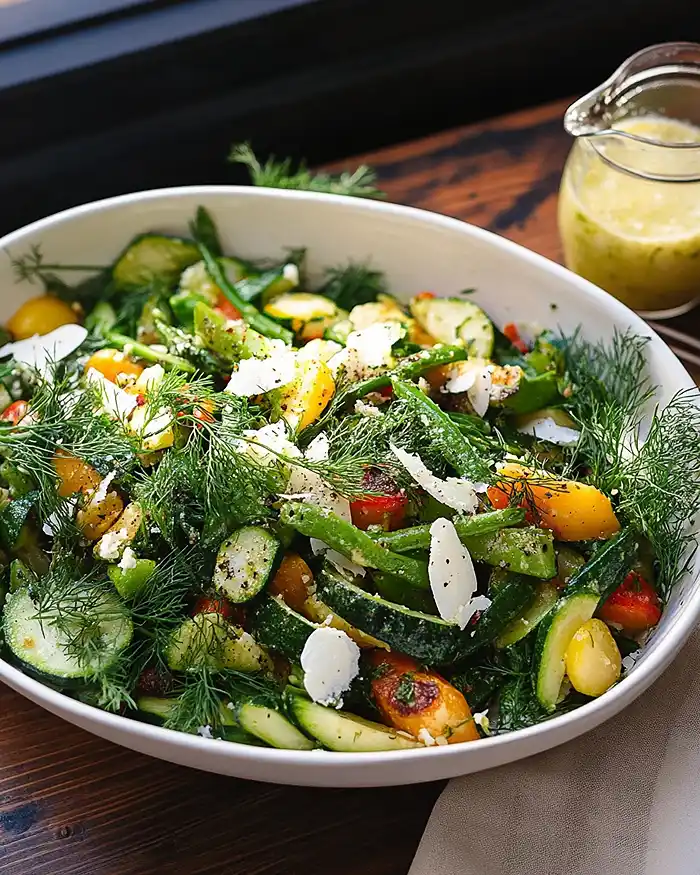
Whether you’re hosting a springtime gathering or just craving something fresh and nourishing on a busy weeknight, this Sautéed Spring Vegetable Salad delivers big flavor with minimal fuss. For more expert guidance on selecting and preparing seasonal produce, the Academy of Nutrition and Dietetics offers helpful tips to make the most of spring’s bounty. Now go grab those beautiful vegetables, heat up your skillet, and enjoy every colorful, crunchy bite!
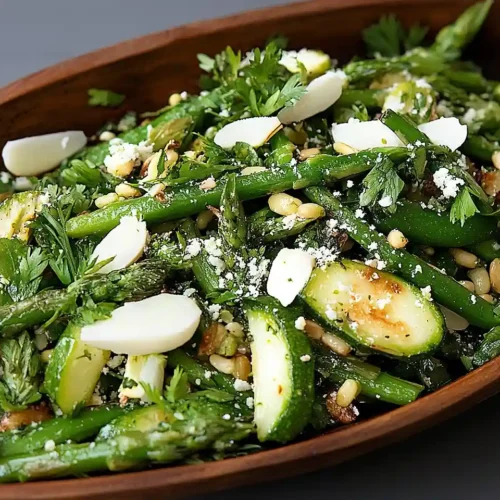
Sautéed Spring Vegetable Salad
Equipment
- Large sauteuse pan
- Small mixing bowl
- Whisk
- Ziplock bag
- Knife
- Cutting board
Ingredients
Sautéed Spring Vegetable Salad
- 2 tablespoons avocado oil
- 2 medium zucchini remove ends and slice ¾-1 inch thick pieces
- 2 bundles asparagus trim ends and slice into 2-inch long pieces
- 1 pinch kosher salt lightly season the vegetables
- few turns cracked black pepper to taste
- ⅓ cup crumbled feta
- ⅓ cup salted pistachios lightly crushed
- 2-4 tablespoons dill fresh, roughly chopped
Lemon Dijon Dressing
- ¼ cup extra virgin olive oil
- 1 tablespoon lemon juice fresh squeezed
- 1 tablespoon white wine vinegar
- 1 tablespoon honey
- 1 teaspoon Dijon mustard
- 1 pinch kosher salt to taste
- few turns cracked black pepper to taste
Instructions
- Wash and dry your zucchini, then trim off both ends so you’re left with smooth, even pieces. Do the same with the asparagus, snapping off those woody bottom portions that nobody wants to chew.
- Slice the zucchini into ¾ to 1-inch thick rounds—thick enough to get a beautiful golden sear without falling apart. Cut your asparagus into 2-inch segments so every bite is fork-friendly and cooks evenly.
- Drop the salted pistachios into a Ziplock bag and give them a few gentle taps with a rolling pin or the bottom of a heavy mug until they’re lightly crushed—not pulverized, just broken into rustic pieces. Wash, dry, and roughly chop your fresh dill, letting those feathery fronds fall into a little pile of springtime.
- In a small mixing bowl, combine the extra virgin olive oil, white wine vinegar, fresh squeezed lemon juice, honey, Dijon mustard, a pinch of kosher salt, and a few turns of cracked black pepper. Whisk everything together until it’s smooth and glossy, with that perfect balance of bright and rich.
- Set this dressing aside while you cook the vegetables. The flavors will meld beautifully as it sits.
- Heat a large sauteuse pan over medium-high heat and add 2 tablespoons of avocado oil, swirling it around until the surface shimmers. Arrange your zucchini slices center-side down in a single layer so each piece makes contact with the hot pan and develops that gorgeous caramelized crust.
- Let them sizzle undisturbed for 3 to 4 minutes—resist the urge to peek! You want those edges to turn golden and slightly crispy, as rich and sweet-smelling as roasted chestnuts on a cool evening.
- Flip the zucchini over and toss in the prepared asparagus, then season everything with a light pinch of kosher salt and a few grinds of black pepper. Go easy on the salt since the pistachios and feta will add plenty of their own savory punch.
- Sauté for another 3 to 5 minutes, stirring occasionally, until the asparagus brightens to a vivid green and softens just enough to pierce with a fork but still has that satisfying snap. If you’re working with thick asparagus, quickly blanch it in hot water for 2 to 3 minutes before adding it to the pan—this prevents the zucchini from turning mushy while the asparagus catches up. Super thin asparagus, on the other hand, might only need a couple of minutes, so keep tasting as you go.
- Once your vegetables are cooked to perfection, transfer the sautéed zucchini and asparagus to a serving dish and let them cool for just a minute or two. You want them warm, not scalding.
- Scatter the crushed pistachios, crumbled feta, and fresh chopped dill over the top, then drizzle with as much or as little of that lemon Dijon dressing as your heart desires. Give everything a gentle toss, taste for seasoning, and adjust with more salt or pepper if needed.
- Serve this healthy entree immediately while it’s still warm and the greens are glossy with dressing.