Spring Beet and Blood Orange Citrus Salad
Discover how roasted golden beets and jewel-toned blood oranges create an unforgettable spring citrus recipe your whole table will love.
Vibrant, juicy, and full of seasonal color, this Spring Beet and Blood Orange Citrus Salad is a true spring showstopper—discover more fresh flavors in our spring salad collection.
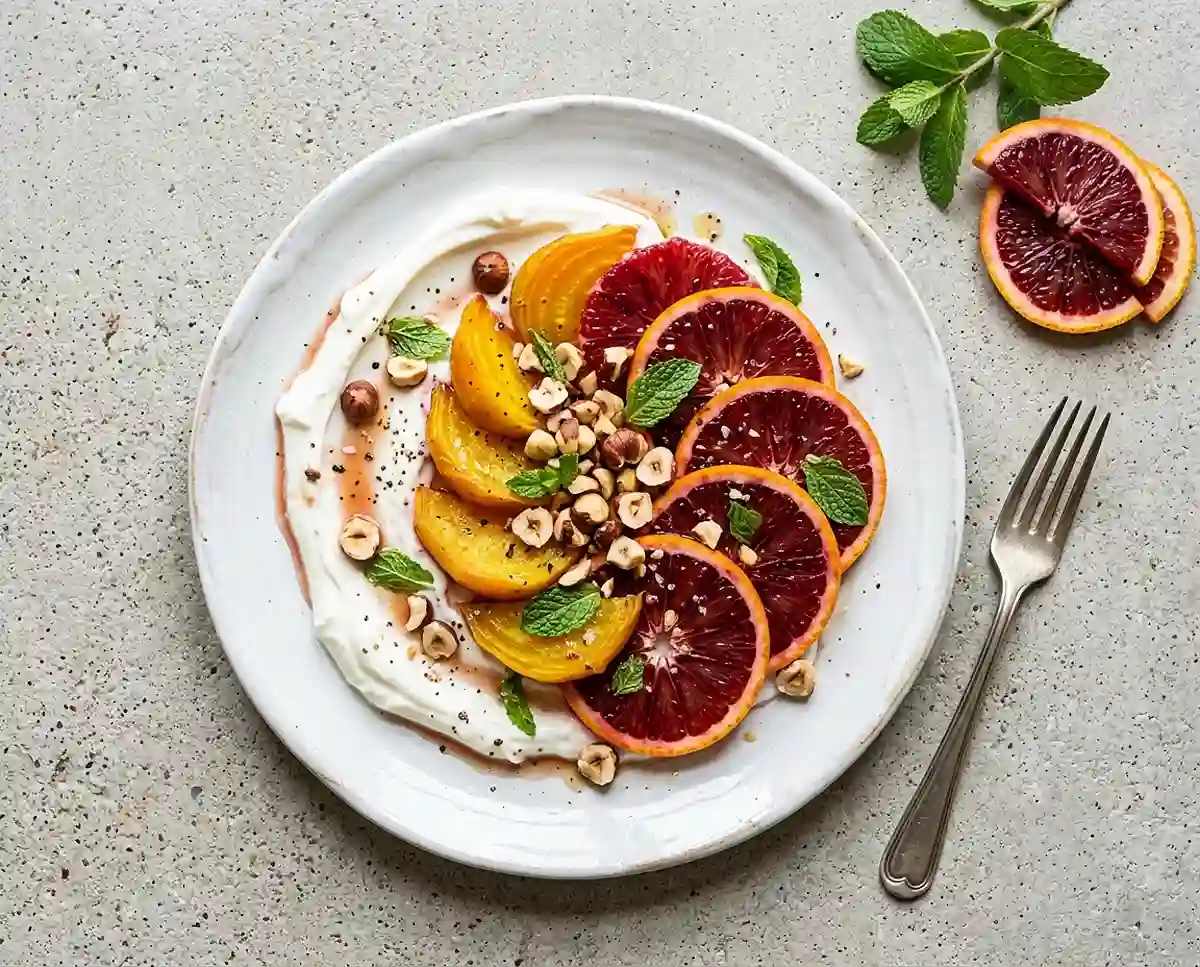
The moment I plated my first Spring Beet and Blood Orange Citrus Salad, I knew this dish was special. Those sunset-gold beet wedges nestled against ruby-streaked orange slices looked like something from a fancy restaurant—but it came together in my regular Tuesday-night kitchen. Honestly, this beet orange salad has become my secret weapon for impressing guests without breaking a sweat.
Have you ever noticed how certain dishes just capture the feeling of a season? This spring citrus recipe does exactly that. The earthy sweetness of roasted golden beets paired with tangy, berry-kissed blood oranges creates something magical. It’s become our Easter table centerpiece, and my neighbor has requested it for every spring potluck since.
That creamy yogurt base catches all the gorgeous juices while toasted hazelnuts add the most satisfying crunch. Your kitchen will smell incredible—all caramelized beets and fragrant toasted nuts.
Table of Contents
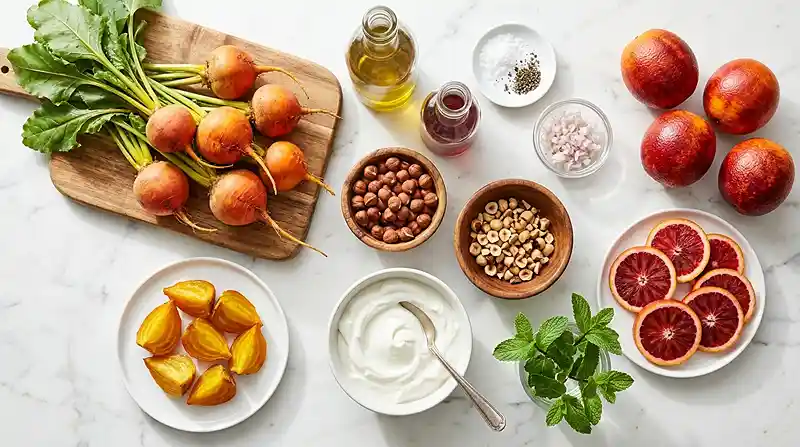
Ingredients for Spring Beet and Blood Orange Citrus Salad
| Category | Ingredient | Amount | Notes |
|---|---|---|---|
| Roasted Beets | Golden beets, organic | 6 medium | Red beets work but will stain other ingredients |
| Roasted Beets | Extra-virgin olive oil | 2 tbsp + extra | Plus additional for drizzling |
| Roasted Beets | Salt and pepper | To taste | Freshly cracked pepper preferred |
| Toppings | Hazelnuts | ¼ cup | Almonds or pistachios substitute well |
| Citrus | Blood oranges | 4 whole | Cara Cara oranges work when blood oranges unavailable |
| Dressing | Shallot | 1 small | Finely chopped |
| Dressing | Red wine vinegar | 2 tbsp | Sherry vinegar adds deeper flavor |
| Dressing | Extra-virgin olive oil | 2 tbsp | Quality matters here |
| Base | Greek yogurt, 2% | 1 cup | Full-fat creates richer base |
| Garnish | Fresh mint leaves | A few sprigs | Basil or microgreens also lovely |
Instructions
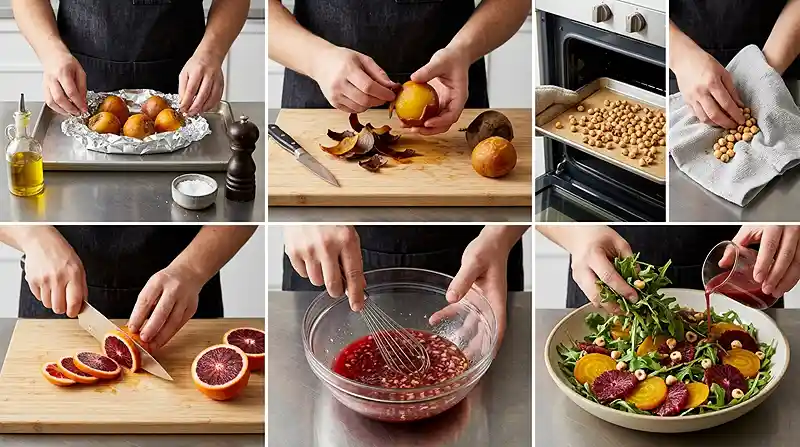
- Preheat your oven to 425°F (220°C). This high heat caramelizes the beets’ natural sugars, transforming them from raw and earthy to candy-sweet with gorgeous golden edges. Position your oven rack in the center for even roasting.
- Place all six beets in the center of a large piece of aluminum foil. Drizzle generously with olive oil and season with salt and pepper. Wrap the foil tightly around the beets to create a sealed packet—think of it like tucking them into a cozy sleeping bag. Set the packet on a rimmed baking sheet.
- Roast the beets for 45 minutes to 1 hour, depending on their size. They’re ready when a knife slides through the center like butter through warm bread. In my testing, I found that medium beets typically take about 50 minutes, while larger ones need the full hour.
- Carefully unwrap the foil packet (watch for steam!) and let the beets cool until you can handle them comfortably. The skins should slip off easily when you rub them gently with your fingers or a paper towel. If they resist, pop them back in the oven for another 10 minutes.
- While the beets roast, toast your hazelnuts on a separate rimmed baking sheet for 5 minutes at the same temperature. Watch them closely—you want them golden and fragrant, not burnt. The kitchen should fill with a warm, nutty aroma that tells you they’re perfect.
- Transfer the hot hazelnuts to a clean kitchen towel. Wrap them up and rub vigorously—the papery skins will flake off. Don’t worry about removing every bit; some skin adds rustic charm. Roughly chop the nuts and set aside.
- Prepare your blood oranges by slicing a thin piece off the top and bottom of each fruit, creating flat surfaces. Stand each orange on its flat bottom and use a sharp knife to cut away the peel and white pith in downward strokes, following the curve of the fruit. Those jewel-toned interiors should gleam like stained glass windows.
- Slice the peeled oranges into ¼-inch rounds. Pick out any seeds with the tip of your knife and arrange the slices on a prep plate. Save any juice that escapes—it’s liquid gold for the dressing.
- Build your dressing in a medium bowl. Squeeze the juice from half a blood orange (about 2 tablespoons) into the bowl. Add the finely chopped shallot and red wine vinegar. Let this mixture sit for 2 minutes—the acid softens the shallot’s bite.
- Whisk in the olive oil until the dressing emulsifies into a beautiful rosy-orange color. Season with salt and pepper. After making this dozens of times, I’ve learned that the dressing should taste slightly more acidic than you think—it mellows once it meets the sweet beets.
- Cut the cooled beets into wedges and toss them gently with about half the dressing. Let them marinate while you prepare the plates. The beets will absorb those bright citrus notes beautifully.
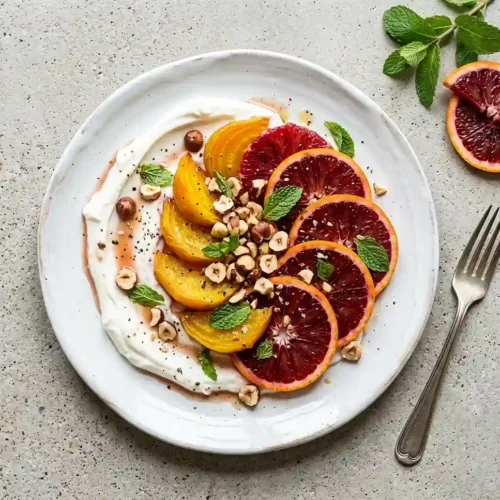
- Divide the Greek yogurt evenly among four plates, spreading it into a soft cloud in the center. Arrange the dressed beet wedges and orange slices artfully over the yogurt. Drizzle the remaining dressing over everything, scatter the chopped hazelnuts on top, and finish with fresh mint leaves.
Substitutions and Variations
This blood orange salad adapts beautifully to different dietary needs and seasonal availability. For a vegan version, swap the Greek yogurt for coconut yogurt or cashew cream—both provide that luscious base without dairy. My family’s favorite variation uses whipped goat cheese instead of yogurt for a tangy, sophisticated twist.
When blood oranges aren’t in season (they’re typically available December through April according to Specialty Produce , Cara Cara oranges make an excellent substitute with their pink-tinged flesh and low acidity. Regular navel oranges work in a pinch, though you’ll miss some of that berry-like complexity.
For added protein, crumble burrata cheese over the top or add some quinoa salad with preserved lemon alongside. Candied walnuts or pecans can replace hazelnuts if that’s what you have in your pantry.
Expert Tips and Troubleshooting For beet orange salad
In my testing, I found that the biggest mistake home cooks make is assembling this salad too far in advance. The yogurt becomes watery and the beets start bleeding into everything if the salad sits more than 15 minutes before serving. Keep components separate until the last moment.
Selecting the perfect blood oranges makes all the difference. Look for fruits that feel heavy for their size—that weight indicates juiciness. The skin should have a deep orange color with burgundy blushing; avoid any with soft spots or dried-out stems. Smaller blood oranges often pack more intense flavor than large ones.
Golden beets offer milder, sweeter flavor than red varieties and won’t stain your beautiful orange slices pink. If you can only find red beets, keep them separated from the oranges until the very last second, and warn your guests their lips might turn temporarily purple.
Don’t skip marinating the shallots in the citrus juice and vinegar. This quick pickle step takes that sharp raw-onion edge away, leaving you with sweet, mellow flavor that complements rather than competes with the other ingredients.
Storage and Meal Prep
| Component | Storage Method | Duration |
|---|---|---|
| Roasted beets (undressed) | Airtight container, refrigerated | 5 days |
| Toasted hazelnuts | Room temperature, sealed jar | 2 weeks |
| Citrus dressing | Glass jar, refrigerated | 1 week |
| Sliced blood oranges | Covered plate, refrigerated | 2 days |
| Assembled salad | Not recommended | Serve immediately |
For make-ahead success, roast the beets and toast the hazelnuts up to five days before you need them. Store them separately in airtight containers. The dressing can be whisked together and refrigerated for a week—just bring it to room temperature and shake well before using.
Slice the oranges no more than a few hours ahead to maintain their jewel-like appearance. If you’re prepping for a dinner party, keep the yogurt in its original container until plating time. This spring citrus recipe comes together quickly once components are ready, making it perfect for entertaining.
Serving Suggestions
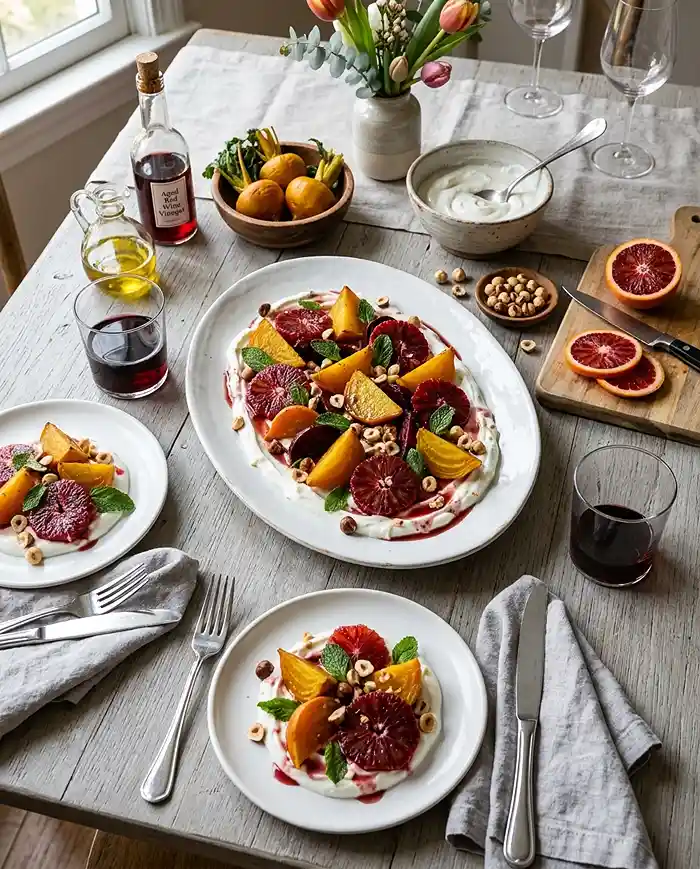
This beet orange salad shines as an elegant first course for spring dinner parties or Easter celebrations. The creamy yogurt base pairs wonderfully with grilled lamb chops or herb-crusted salmon. For a lighter meal, serve larger portions alongside crusty bread and a glass of crisp rosé.
The vibrant colors also make it a stunning addition to brunch spreads. Try it alongside a fresh pea shoot and strawberry spring salad for a seasonally-inspired feast, or serve it after a simple lettuce radish salad as part of a multi-course meal.
FAQs About Spring Beet and Blood Orange Citrus Salad
Can I make this Spring Beet and Blood Orange Citrus Salad ahead of time?
Yes, but keep components separated until serving. The roasted beets, toasted hazelnuts, and dressing store beautifully for up to five days refrigerated. Slice oranges the morning of, and spread yogurt on plates just before guests arrive.
How do I prevent my beets from bleeding onto the oranges?
Golden beets won’t bleed at all, which is why this recipe specifically calls for them. If using red beets, dress them separately and place them on the plate last. Work quickly and serve immediately to keep colors distinct.
What can I substitute for blood oranges when they’re out of season?
Cara Cara oranges make the best substitute with their rosy flesh and sweet-tart flavor profile. Navel oranges work too, though the salad loses some visual drama. Ruby red grapefruit segments add similar color and pleasant bitterness if you enjoy that flavor.
Why does my yogurt base become watery?
Greek yogurt releases liquid when it sits with acidic ingredients. To prevent this, don’t dress the yogurt directly—instead, spread plain yogurt on plates and drizzle dressing over the beets and oranges only. Using thick, strained Greek yogurt also helps.
Can I use canned beets instead of roasting fresh ones?
Roasting is strongly recommended for this recipe. Canned beets lack the caramelized sweetness and firm texture that make this salad special. If time is tight, look for pre-rooked beets in the refrigerated produce section—they’re much closer to homemade than canned.
This Spring Beet and Blood Orange Citrus Salad deserves a spot in your regular rotation—it’s gorgeous enough for company but simple enough for a weeknight treat. Seriously, save this recipe to Pinterest so you don’t lose it when blood orange season rolls around! I’d love to hear how yours turns out in the comments below.
Spring Beet and Blood Orange Citrus Salad
Equipment
- Rimmed Baking Sheet
- Aluminum foil
- Sharp knife
- Medium bowl
- Whisk
- Kitchen towel
Ingredients
Roasted Beets
- 6 medium golden beets organic preferred; red beets work but will stain other ingredients
- 2 tbsp extra-virgin olive oil plus extra for drizzling
- salt and freshly cracked pepper to taste
Toppings
- ¼ cup hazelnuts almonds or pistachios substitute well
Citrus
- 4 blood oranges Cara Cara oranges work when blood oranges unavailable
Dressing
- 1 small shallot finely chopped
- 2 tbsp red wine vinegar sherry vinegar adds deeper flavor
- 2 tbsp extra-virgin olive oil quality matters here
Base
- 1 cup Greek yogurt, 2% full-fat creates richer base
Garnish
- a few sprigs fresh mint leaves basil or microgreens also lovely
Instructions
- Preheat your oven to 425°F (220°C). This high heat caramelizes the beets’ natural sugars, transforming them from raw and earthy to candy-sweet with gorgeous golden edges. Position your oven rack in the center for even roasting.
- Place all six beets in the center of a large piece of aluminum foil. Drizzle generously with olive oil and season with salt and pepper. Wrap the foil tightly around the beets to create a sealed packet. Set the packet on a rimmed baking sheet.
- Roast the beets for 45 minutes to 1 hour, depending on their size. They’re ready when a knife slides through the center like butter through warm bread. Medium beets typically take about 50 minutes, while larger ones need the full hour.
- Carefully unwrap the foil packet (watch for steam!) and let the beets cool until you can handle them comfortably. The skins should slip off easily when you rub them gently with your fingers or a paper towel. If they resist, pop them back in the oven for another 10 minutes.
- While the beets roast, toast your hazelnuts on a separate rimmed baking sheet for 5 minutes at the same temperature. Watch them closely—you want them golden and fragrant, not burnt.
- Transfer the hot hazelnuts to a clean kitchen towel. Wrap them up and rub vigorously—the papery skins will flake off. Don’t worry about removing every bit; some skin adds rustic charm. Roughly chop the nuts and set aside.
- Prepare your blood oranges by slicing a thin piece off the top and bottom of each fruit, creating flat surfaces. Stand each orange on its flat bottom and use a sharp knife to cut away the peel and white pith in downward strokes, following the curve of the fruit.
- Slice the peeled oranges into 1/4-inch rounds. Pick out any seeds with the tip of your knife and arrange the slices on a prep plate. Save any juice that escapes for the dressing.
- Build your dressing in a medium bowl. Squeeze the juice from half a blood orange (about 2 tablespoons) into the bowl. Add the finely chopped shallot and red wine vinegar. Let this mixture sit for 2 minutes to soften the shallot’s bite.
- Whisk in the olive oil until the dressing emulsifies into a beautiful rosy-orange color. Season with salt and pepper. The dressing should taste slightly more acidic than you think—it mellows once it meets the sweet beets.
- Cut the cooled beets into wedges and toss them gently with about half the dressing. Let them marinate while you prepare the plates. The beets will absorb those bright citrus notes beautifully.
- Divide the Greek yogurt evenly among four plates, spreading it into a soft cloud in the center. Arrange the dressed beet wedges and orange slices artfully over the yogurt. Drizzle the remaining dressing over everything, scatter the chopped hazelnuts on top, and finish with fresh mint leaves.