Traditional Greek Horiatiki Salad
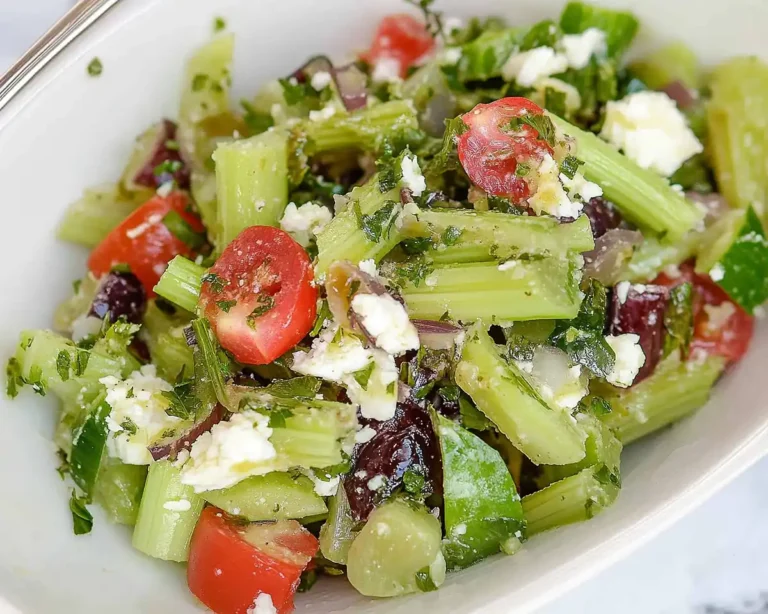
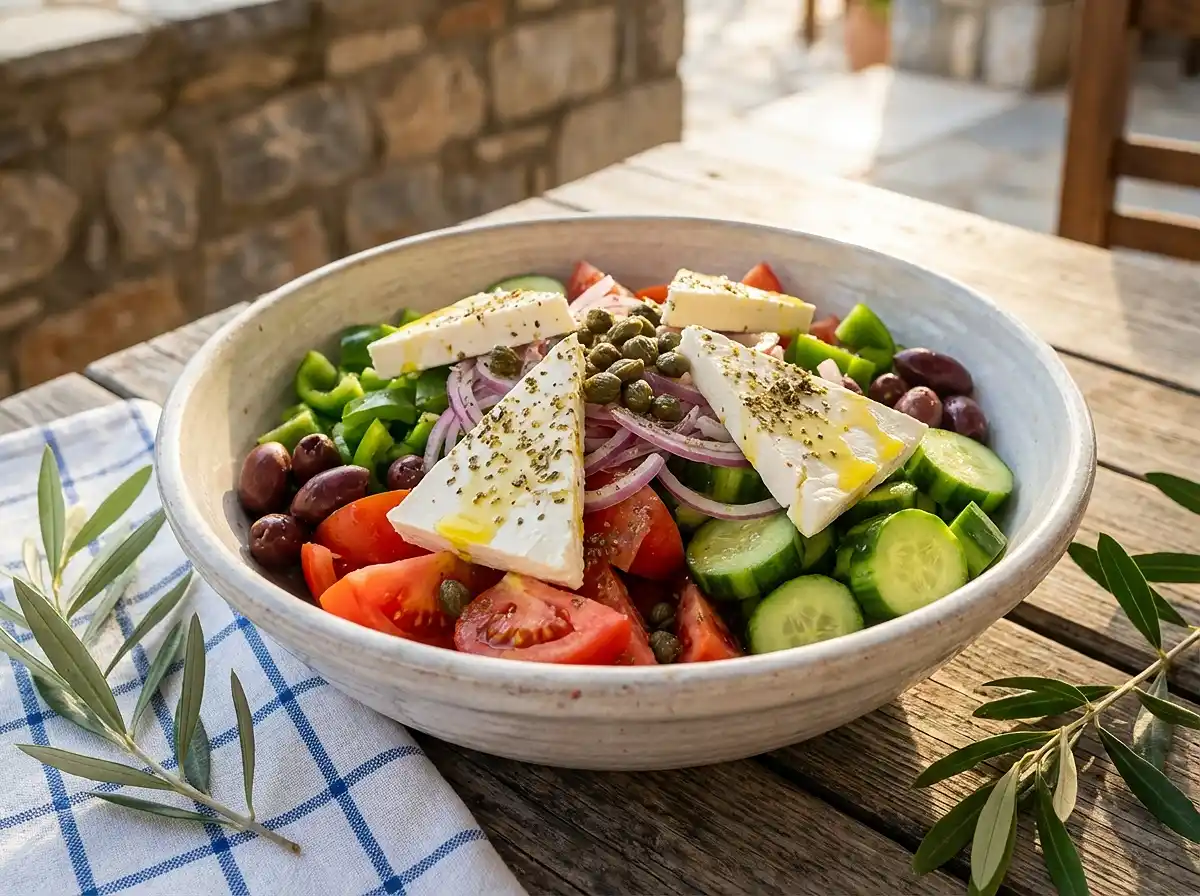
This Traditional Greek Horiatiki Salad is fresh, vibrant, and authentically Mediterranean. Tomatoes, feta, olives, and capers in a simple vinaigrette — no cooking!
You know what? Every salad I make gets measured against one unforgettable bowl. Years ago, a friend’s Greek grandmother set a platter of horiatiki salad on the table during an Easter potluck, and the moment I tasted it — ripe tomatoes still warm from the garden, a thick slab of salty feta, glossy olives, and olive oil pooling at the bottom like liquid gold — I understood why an entire country built their food identity around something this simple. That platter didn’t come home with leftovers, and I’ve been chasing that flavor ever since.
What makes this traditional Greek horiatiki salad so different from the chopped Greek salad you find at most American restaurants is what’s not in it. There’s no lettuce, no fancy dressing, no fussy technique. It’s pure, honest Greek style food at its best — chunky vegetables, quality olive oil, red wine vinegar, a generous block of sheep’s milk feta laid proudly on top, and dried oregano scattered like confetti.
Isn’t it remarkable that the most beloved salad on the planet is also one of the simplest to make? Whether you’re planning a Greek night food spread for friends or just craving something cool and nourishing on a warm evening, this recipe delivers every time. Let’s bring a little piece of the Greek islands to your kitchen.
Why This Traditional Greek Horiatiki Salad Is Worth Making Properly
The magic of a true horiatiki lies in the quality of each ingredient, since there’s nowhere for anything to hide. The tomatoes need to be ripe and flavorful — this is a salad that was born in the sun-soaked Greek countryside, where vine-ripened tomatoes burst with a sweetness you can practically smell from across the room. When every component is fresh and good, the simplest preparation becomes extraordinary.
The health benefits are genuinely impressive, too. According to Healthline’s evidence-based guide to Kalamata olive nutrition, these deep purple olives are rich in oleic acid and polyphenol antioxidants linked to reduced inflammation and improved heart health. Combined with extra virgin olive oil, tomatoes loaded with lycopene, and protein-rich feta cheese, this traditional Greek salad is essentially the Mediterranean diet on a single plate.
Authentic Greek feta is a world apart from the crumbly, generic versions found at most grocery stores. True PDO-certified feta is made from sheep’s milk (or a blend of sheep’s and goat’s milk) and has a creamier texture and tangier, more complex flavor, as recognized by the European Commission’s PDO Feta designation. It’s the single ingredient that elevates a good horiatiki into something truly memorable.
Table of Contents
Ingredients
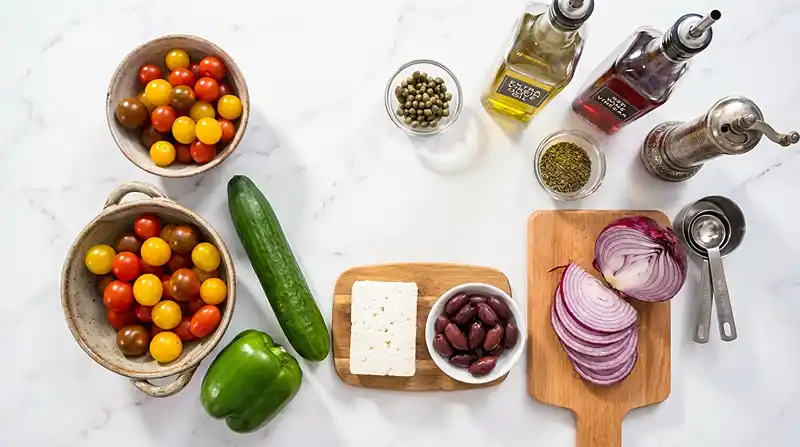
For the Salad
| Ingredient | Amount | Notes |
|---|---|---|
| Tomatoes | ¾ pound | Campari, cocktail, or cherry; cut in bite-size quarters |
| English cucumber | 1 | Halved lengthwise, cut in ½-inch slices (or 3–4 Persian cucumbers) |
| Green bell pepper | 1 medium | Cored, seeded, cut in bite-size pieces |
| Kalamata olives, pitted | 1 cup | |
| Red onion | ½ cup | Thinly sliced |
| Greek sheep’s milk feta cheese | 8 ounces | Drained, cut into triangles |
| Capers | 2 tablespoons | Drained and rinsed |
For the Dressing
| Ingredient | Amount |
|---|---|
| Fruity extra virgin olive oil | ¼ cup |
| Red wine vinegar | 2 tablespoons |
| Dried oregano | 1 teaspoon |
| Kosher salt | ¾ teaspoon |
| Freshly ground black pepper | ½ teaspoon |
Instructions
Step 1: Prepare the Vegetables
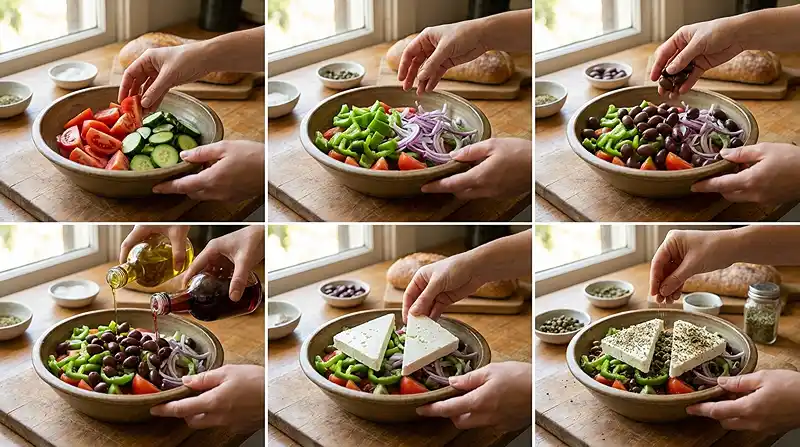
Cut the tomatoes into bite-size quarters, collecting any juices — those juices are liquid gold and will become part of the dressing at the bottom of the bowl. Halve the English cucumber lengthwise and slice into thick half-moons, cut the green bell pepper into chunky, irregular pieces, and thinly slice the red onion. The colors on your cutting board should look as vivid as a Mediterranean sunset — deep reds, bright greens, and soft purples all waiting to come together.
Step 2: Combine the Salad
Place the tomatoes with their juices, cucumber slices, green bell pepper pieces, sliced red onion, and pitted Kalamata olives in a large, wide bowl. Toss everything together gently so the vegetables are loosely mingled without being crushed. Alternatively, if you want a more dramatic presentation for Greek night food, arrange the ingredients on a large platter and toss only lightly.
Step 3: Season and Dress
Sprinkle the kosher salt and freshly ground black pepper directly over the vegetables. Drizzle the fruity extra virgin olive oil and red wine vinegar evenly across the top — you should catch the bright, fruity aroma of good olive oil the moment it hits the tomatoes. Give the salad one more gentle toss so the dressing coats everything in a thin, glistening layer.
Step 4: Top with Feta, Oregano, and Capers
Lay the thick triangles of feta cheese proudly across the top of the salad — in Greece, the feta is never crumbled or mixed in; it sits on top like the crown jewel of the dish. Sprinkle the dried oregano generously over the feta and vegetables, then scatter the rinsed capers across the surface. Finish with one final drizzle of olive oil directly over the feta before serving.
Substitutions
Swap Feta for a Dairy-Free Alternative
If you’re avoiding dairy, marinated tofu or a quality vegan feta can stand in, though the flavor will be different from the traditional Greek experience. For the closest match, look for a vegan feta made with coconut oil and almond milk, which mimics the tanginess and creaminess. This keeps your Greek night food spread accessible for everyone at the table.
Use a Different Olive Variety
Kalamata olives are traditional, but if they’re unavailable, Gaeta or Niçoise olives offer a similar briny depth. Castelvetrano olives are milder and buttery, which some people prefer. Avoid bland canned black olives — they won’t deliver the punch this traditional Greek horiatiki salad needs.
Replace Green Bell Pepper
Green bell pepper is authentic, but not everyone loves its slightly bitter edge. A yellow or orange bell pepper gives a sweeter note while still maintaining the crunchy texture. Some traditional Greek recipes also include banana peppers for a mild, tangy twist.
Vinegar Alternatives
Red wine vinegar is classic, but white wine vinegar or sherry vinegar both work without disrupting the flavor profile. A squeeze of fresh lemon juice instead of (or alongside) the vinegar adds brightness that many Greek cooks prefer during summer months. For more tangy, oil-based dressing ideas, explore this no-mayo Italian tuna salad with lemon vinaigrette that uses a similar Mediterranean approach.
Troubleshooting
The Salad Is Watery at the Bottom
Tomatoes release juice naturally, and in a true horiatiki, that liquid mingles with the olive oil and vinegar to create a gorgeous dressing you’re meant to soak up with crusty bread. If it bothers you, lightly salt the tomato quarters separately and let them drain in a colander for five minutes before adding them to the bowl.
The Feta Is Too Salty
Well… some feta blocks are saltier than others depending on the brand and brining time. Soak overly salty feta in cold water or milk for 15 to 20 minutes before cutting — this pulls out excess salt while keeping the creamy texture intact. You can also reduce the kosher salt in the seasoning to compensate.
The Onion Is Too Sharp
Raw red onion in a traditional Greek horiatiki salad should add a gentle bite, not overpower everything else. Soak your sliced onion in ice water for 10 minutes before adding it — this mellows the sharpness dramatically while keeping the beautiful purple color and crunch. You can also use less onion or slice it paper-thin.
It Tastes Flat or Bland
This almost always means the salad needs better olive oil, more salt, or more vinegar. The olive oil especially matters here — a fruity, peppery extra virgin olive oil transforms the entire dish in a way that neutral oil never will. Taste, adjust, and don’t be shy with the seasonings.
Storage
This traditional Greek horiatiki salad is best enjoyed the day it’s made, when the tomatoes are juicy and the cucumbers are at their crispest. You can store leftovers in an airtight container in the refrigerator for up to one day, though the vegetables will soften and release more liquid overnight. Give it a gentle toss and an extra drizzle of olive oil before serving again.
Meal Prep
The smartest approach to prepping this salad ahead of time is to chop all the vegetables and store them in a container with the olives, then keep the dressing ingredients, feta, and capers separate until you’re ready to assemble. This way everything stays crisp and the feta doesn’t absorb too much dressing. When it’s time to eat, toss, dress, top with feta, and you’ve got a stunning Greek style food platter in about two minutes. For more make-ahead lunch inspiration, try this protein-packed Mexican tuna salad alongside your horiatiki for a Mediterranean-meets-Southwestern spread.
Serving Suggestions
This traditional Greek horiatiki salad is stunning served family-style on a wide platter with thick slices of crusty bread on the side for mopping up the juices at the bottom — in Greece, that bread-dipping is considered the best part. It pairs beautifully alongside grilled lamb chops, chicken souvlaki, warm pita, hummus, and tzatziki for a complete Greek night food feast. For a lighter meal, serve it with a cup of avgolemono soup or a simple lentil stew.
If you’re building a larger spread, it works wonderfully next to this classic Southern tuna salad with egg — the contrast between Mediterranean brightness and creamy Southern comfort is surprisingly delicious on the same table.
Variations
Add Protein for a Main Dish
Goodness, this salad becomes a complete dinner when you add sliced grilled chicken, seared shrimp, or even canned chickpeas over the top. Season the protein with a pinch of oregano and lemon to keep it cohesive with the Greek flavors. It’s the easiest way to turn a traditional Greek side into a hearty main course.
Chopped Horiatiki Style
Instead of keeping the vegetables in large, rustic pieces, chop everything into a uniform small dice for a more composed, scoopable version. This variation is wonderful served in lettuce cups or spooned over toasted pita chips as an appetizer. It’s the same traditional Greek flavors in a more snackable format.
Kid-Friendly Version
Skip the olives, capers, and raw onion if your little ones are picky eaters, and cut the feta into small cubes they can pick up easily. Cherry tomatoes halved, cucumber slices, and mild feta with a drizzle of olive oil make a simple plate that most kids will actually enjoy. Serve with pita triangles on the side for dipping into the olive oil pooling at the bottom.
Vegan Version
Replace the feta with a plant-based feta or seasoned, pressed tofu marinated in lemon juice and olive oil. Keep everything else exactly the same — the olives, olive oil, and capers provide plenty of richness and depth even without the cheese. Season a bit more aggressively with salt and oregano to compensate for the missing feta saltiness.
Traditional Greek Horiatiki Salad FAQs
Can I make traditional Greek horiatiki salad ahead of time?
You can prep the vegetables and store them separately up to a few hours ahead, but the salad is best assembled right before serving. The tomatoes release juice and the cucumbers soften as they sit, so freshly tossed always tastes brightest. Keep the feta, dressing, and capers separate until the moment you’re ready to plate.
How is a horiatiki different from an American-style Greek salad?
The biggest difference is the complete absence of lettuce — a true traditional Greek horiatiki salad never includes greens of any kind. It’s also far simpler: chunky vegetables, quality olive oil, vinegar, feta on top, and oregano. American versions tend to add romaine lettuce, more complex dressings, and sometimes ingredients like pepperoncini or banana peppers.
What type of feta should I use?
For the most authentic experience, look for Greek sheep’s milk feta, ideally PDO-certified, which guarantees it was made in Greece from sheep’s or goat’s milk using traditional methods. It has a creamier, tangier flavor than cow’s milk feta. Block feta that you slice yourself holds its shape far better than pre-crumbled options.
Why is the feta placed on top instead of mixed in?
In Greece, the feta is always placed as a thick slab or triangles across the top of the salad — never crumbled and tossed. This presentation allows each diner to break off the amount they want with their fork, and it prevents the feta from dissolving into the dressing. After all, isn’t that dramatic slab of white cheese against all those vibrant colors half the beauty of this dish?
Best way to choose ripe tomatoes for this salad?
Look for tomatoes that feel heavy for their size and have a deep, uniform color with a slight give when gently pressed. They should smell fragrant and sweet at the stem end — if they don’t smell like much, they won’t taste like much either. Campari, cocktail, and ripe cherry tomatoes are the most reliable choices when peak summer heirloom varieties aren’t in season.
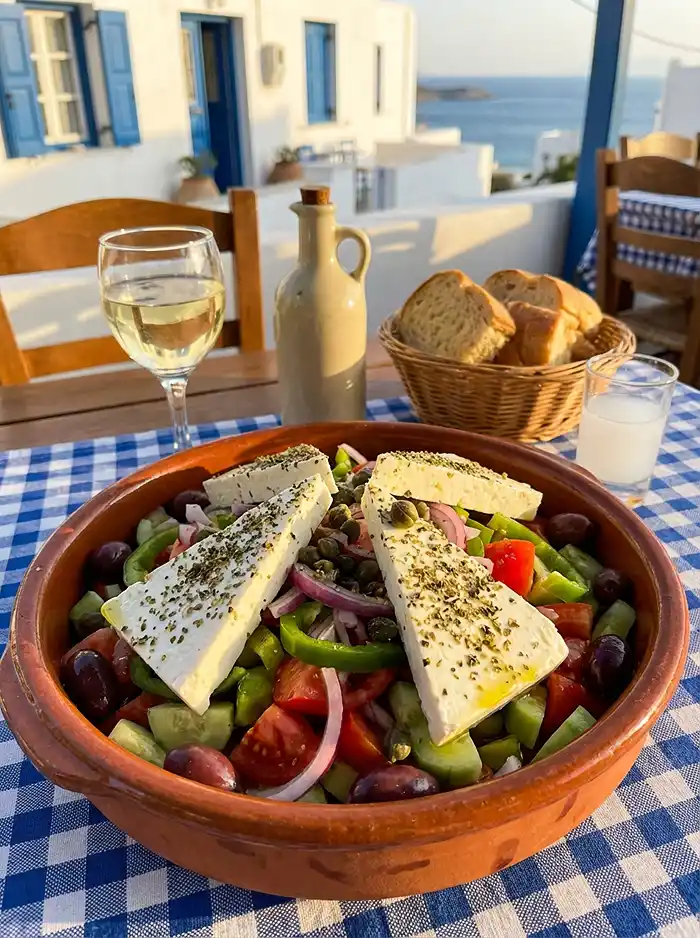
This recipe was created to help home cooks experience the honest, sun-drenched beauty of an authentic Greek village salad. Make it with the best ingredients you can find — that’s the whole secret.
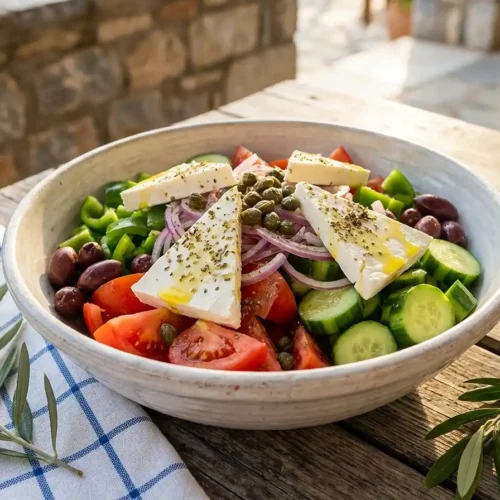
Traditional Greek Horiatiki Salad
Equipment
- Large bowl or platter
- Cutting board
- Sharp knife
Ingredients
For the Salad
- ¾ pound tomatoes Campari, cocktail, or cherry; cut in bite-size quarters
- 1 English cucumber halved lengthwise and cut in 1/2-inch slices (or 3-4 Persian cucumbers)
- 1 medium green bell pepper cored, seeded, and cut in bite-size pieces
- 1 cup Kalamata olives pitted
- ½ cup red onion thinly sliced
- 8 ounces Greek sheep’s milk feta cheese drained and cut into triangles
- 2 tablespoons capers drained and rinsed
For the Dressing
- ¼ cup fruity extra virgin olive oil plus more for drizzling
- 2 tablespoons red wine vinegar
- 1 teaspoon dried oregano
- ¾ teaspoon kosher salt
- ½ teaspoon freshly ground black pepper
Instructions
- Place the quartered tomatoes with any juices, cucumber slices, green bell pepper pieces, thinly sliced red onion, and pitted Kalamata olives in a large bowl. Toss gently to combine. Alternatively, arrange the ingredients on a large platter and toss lightly for a more dramatic presentation.
- Season the vegetables with kosher salt and freshly ground black pepper. Drizzle the extra virgin olive oil and red wine vinegar evenly over the top, then toss gently so the dressing coats everything in a thin, glistening layer.
- Top the salad with thick triangles of feta cheese — do not crumble or mix it in. Sprinkle the dried oregano generously over the feta and vegetables, then scatter the rinsed capers across the surface. Finish with one final drizzle of olive oil directly over the feta before serving.